
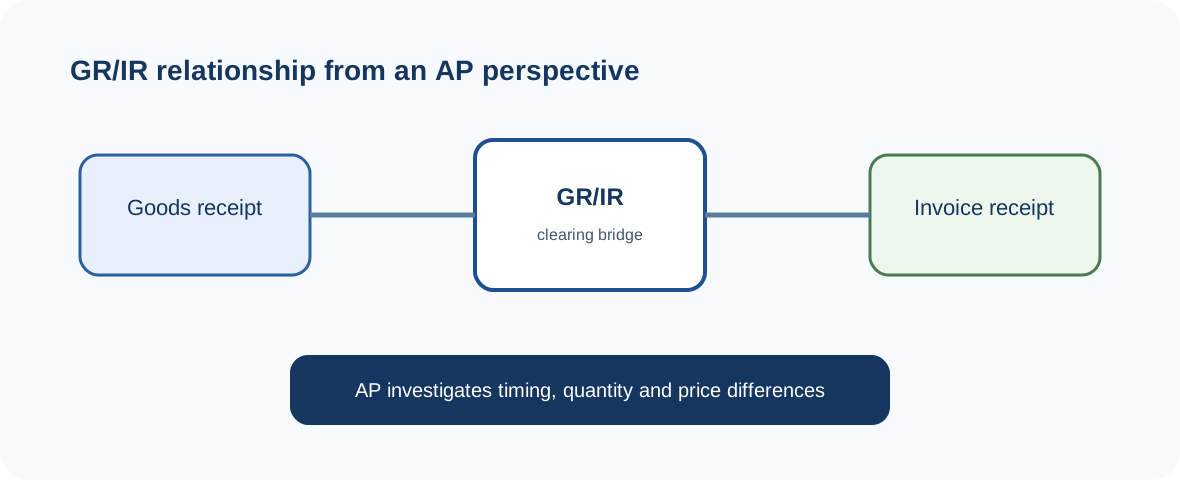
The GR/IR clearing account records the timing gap between goods receipts and invoice receipts for purchase-order-based procurement. From an AP perspective, invoice receipt normally debits GR/IR and credits the supplier payable, while an earlier goods receipt has credited GR/IR. Matching quantities and values bring the relevant balance toward zero; open balances point to missing or mismatched business events that need investigation.
Why AP should care about GR/IR
GR/IR sits across procurement and finance. A purchase order is created in purchasing, a goods receipt confirms that goods arrived, and a supplier invoice creates the payable. SAP uses a clearing account so receipt and invoice can be posted in either sequence without forcing the supplier liability to exist before an invoice is received.
An AP analyst should therefore read GR/IR as process evidence. A balance can indicate that the warehouse received more than was invoiced, that an invoice arrived before the remaining goods, or that price and quantity details do not align. The accounting symptom belongs to a cross-functional process, so the root cause may sit with receiving, purchasing, the supplier or invoice processing.
What the debit and credit sides are telling you
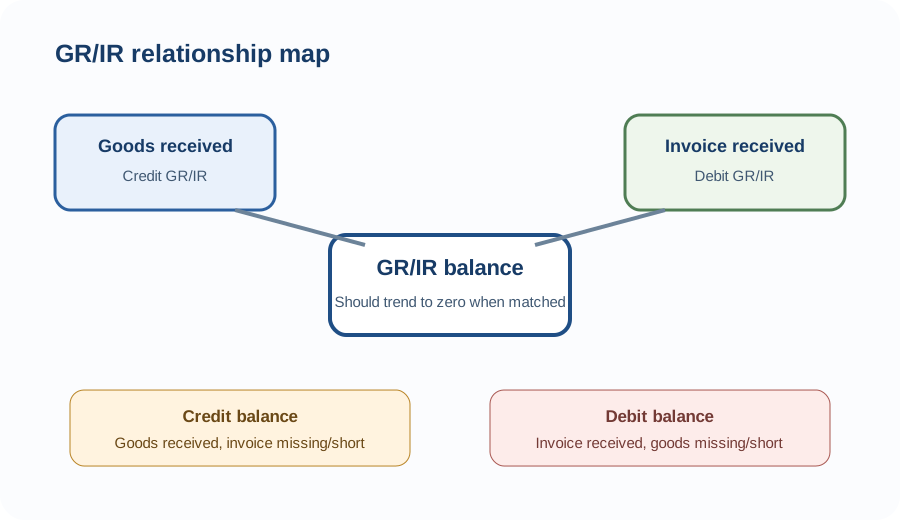
At goods receipt, SAP commonly posts the received value to inventory or consumption and credits GR/IR. At invoice receipt, the supplier liability is credited and GR/IR is debited. When the underlying receipt and invoice match, the related postings can clear. SAP documentation also explains that a credit balance generally represents goods received but not yet invoiced, while a debit balance can represent invoiced goods not yet received.
The operational interpretation matters more than memorizing signs. Ask which business event is still expected. If another invoice is legitimately due, an open credit balance may simply be timing. If no more invoice or receipt should arrive, the item becomes an exception requiring investigation and a controlled correction or clearing decision.
Common AP investigation questions
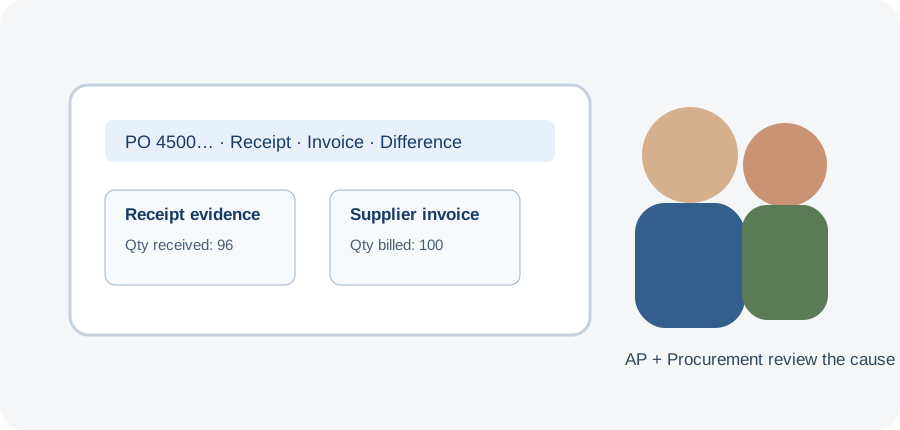
Start with the purchase-order item. Was the full quantity received? Was the invoice posted against the correct order and item? Are there partial deliveries or partial invoices? Did the supplier bill a different quantity or price? Are planned delivery costs involved? Is a further receipt or invoice still expected?
SAP’s reconciliation functions are designed around these exceptions. They help identify purchase-order items whose goods and invoice receipts have not cleared, but the business decision still depends on evidence about what actually happened.
Period-end control: explain before you clear
Open GR/IR items matter at period end because they represent goods received but not invoiced, or invoices received for goods not yet received. SAP provides analysis and adjustment mechanisms so those situations can be presented appropriately in financial reporting. Clearing should not become a shortcut around unresolved process evidence.
Consultant thinking: design ownership across teams
A good GR/IR process makes ownership visible. Receiving teams own receipt accuracy, procurement owns purchase-order correctness and supplier follow-up, AP owns invoice quality and payable accounting, and finance owns reconciliation and close controls. The system can show the mismatch; the operating model determines who resolves it.
Continue with Vendor Account Clearing, Vendor Ageing Analysis, Duplicate Invoice Checks, Payment Run Exceptions and Proposal Review, and the SAP FI / FICO hub.