

In SAP FI, supplier accounts are managed on an open-item basis. An invoice normally remains open until an offsetting payment, credit memo or other eligible item is selected and cleared. The selected items must balance according to the clearing rules; when clearing is posted, the items receive clearing information and no longer appear as outstanding supplier items.
What vendor clearing actually changes
Clearing does not erase the original invoice or payment. It links the accounting items so SAP can distinguish settled supplier obligations from items that still require action. This matters for AP ageing, payment proposals, supplier statements, reconciliation and period-end review. SAP documentation describes customer and supplier accounts as open-item-managed accounts, with clearing used to close the matched items.
Manual and automatic clearing solve different workloads
Manual account maintenance is useful when a finance user needs judgement: selecting a particular invoice, handling a credit memo, deciding how to treat a small difference or understanding an unusual reference. Automatic clearing is better suited to high-volume items that can be grouped by consistent criteria. SAP's automatic clearing logic groups eligible open items by predefined and configured criteria and clears groups whose relevant balances net to zero.
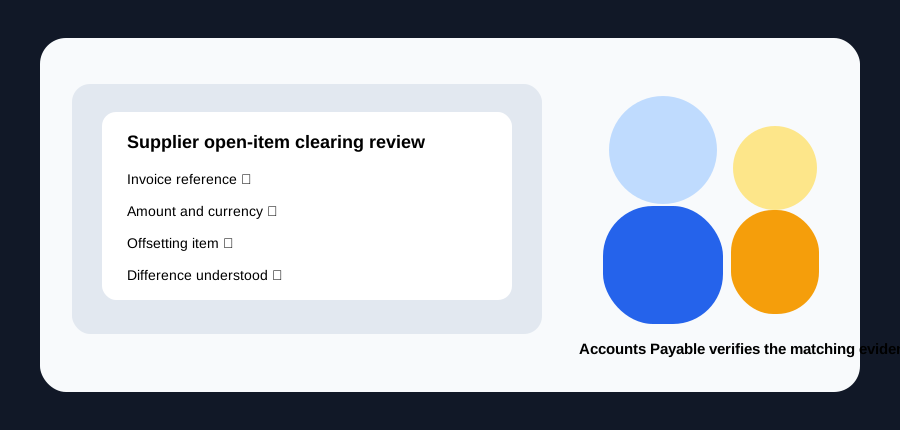
Differences need an accounting reason, not just a workaround
If the selected items do not balance, the user must understand why. A permitted small difference may be handled within configured tolerances. In other cases a residual item can leave the true remaining amount open, or a partial payment can remain separately visible. The right treatment depends on the commercial event and configured policy; simply forcing a match can hide a dispute, short payment, duplicate, bank charge or posting error.
Controls that keep clearing reliable
Finance should control who can clear, which accounts and company codes they can access, what tolerances apply, and how exceptional differences are reviewed. References such as invoice numbers, payment advice, assignment fields and remittance information improve matching quality. Period-end review should focus on old unmatched payments, unusual debit balances, repeated residual items and clearings that do not have an understandable business basis.
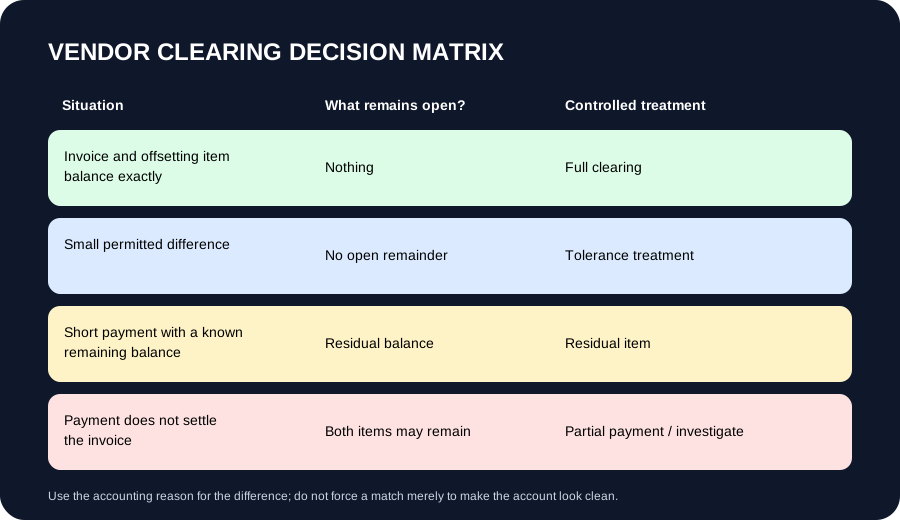
How a consultant should think about the process
Start with the business event, then the matching rule. Ask which documents are expected to offset, which references are reliable, whether the payment is full or partial, how tolerances are governed, and which exceptions need human review. Configuration should support a defensible clearing process rather than compensate for weak payment references or poor upstream master data.
Continue with Automatic and Manual Clearing, Vendor Invoice Posting Lifecycle, Automatic Payment Program, and the SAP FI / FICO hub.