
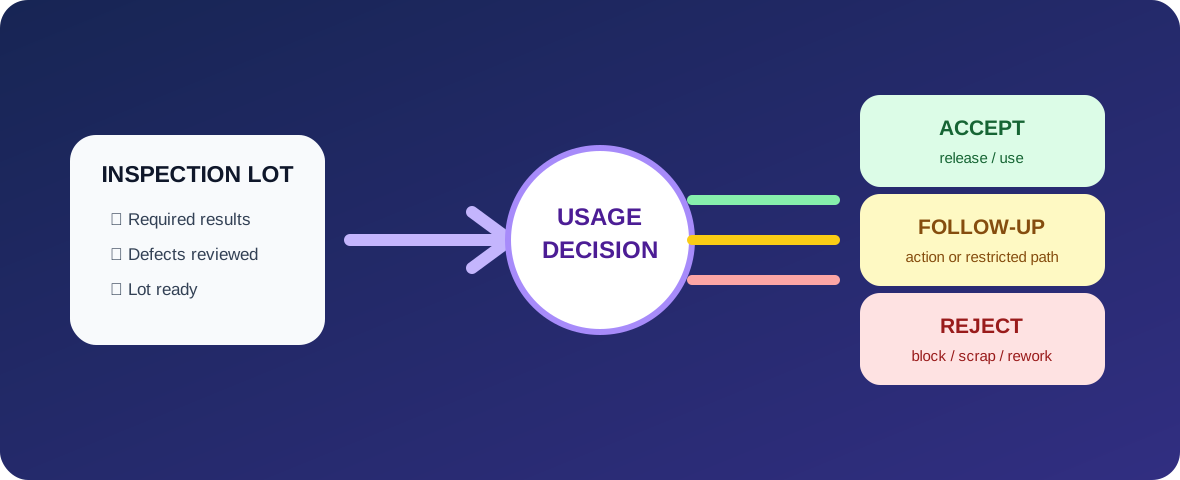
In SAP QM, the usage decision records whether an inspection lot is accepted, rejected or assigned another configured disposition after inspection. It evaluates the inspection outcome at lot level and can trigger follow-on actions depending on the process design, including stock-related consequences where applicable. It should be treated as a controlled quality decision supported by recorded results, not as an administrative step used merely to close old inspection lots.
Why the usage decision matters
An inspection creates evidence, but evidence alone does not tell the business what to do with the inspected material or output. Someone must decide whether the lot is acceptable, whether restrictions remain, whether rework or investigation is required, or whether another disposition applies.
The usage decision provides that governance point. SAP Help describes the usage decision as the completion of an inspection and supports valuation using selected usage-decision codes. The available codes and follow-up actions depend on the configured catalog and process.
What happens before the decision
The inspection lot provides the context. Inspection lots connect the inspection trigger with specifications, quantities, results and subsequent decisions. During in-process inspection or final inspection, results are recorded against the required characteristics and defects may be captured where needed.
Before making a usage decision, the responsible person should know whether required results are complete, whether characteristics were accepted or rejected, whether outstanding defects need action and whether the inspected quantity and sample support the intended disposition.
Usage-decision codes and valuation
Organizations configure catalogs and code groups to represent the dispositions relevant to their process. A code can communicate more than a generic “pass” or “fail”: the business may distinguish unrestricted acceptance, conditional acceptance, rejection, rework-related outcomes or other controlled statuses appropriate to the process.
The code should carry consistent meaning. If different plants use the same code for materially different outcomes, reporting and governance become unreliable. Conversely, too many nearly identical codes make decision quality harder to analyze.
Stock and follow-on consequences
Depending on the inspection scenario and configuration, a usage decision can be associated with stock postings or follow-up actions. The exact behavior is process-specific: procurement inspection, production inspection and other origins can have different business consequences. This is why the decision code, stock status and follow-up action should be designed together rather than independently.
A consultant should verify what the organization intends an “accepted” or “rejected” code to do operationally. A label that sounds correct is insufficient if its follow-on behavior releases stock that should remain restricted or fails to trigger required action.
Controls consultants should ask about
- Who is authorized to make the usage decision?
- Must all required results be recorded first?
- How are rejected characteristics and open defects handled before closure?
- What does each decision code mean consistently across the organization?
- Which stock postings or follow-up actions can the decision trigger?
- How are reversals or corrections governed if a decision was wrong?
- How are acceptance rates, rejection patterns and recurring causes reviewed?
Strong decision quality depends on the underlying master data: inspection plans define the inspection structure, master inspection characteristics support reusable quality criteria, and sampling procedures help define how much is inspected.
Key takeaway
The usage decision is the bridge between quality evidence and business action. Its purpose is not simply to finish an inspection lot; it is to record an authorized, traceable disposition whose meaning and consequences are understood.