
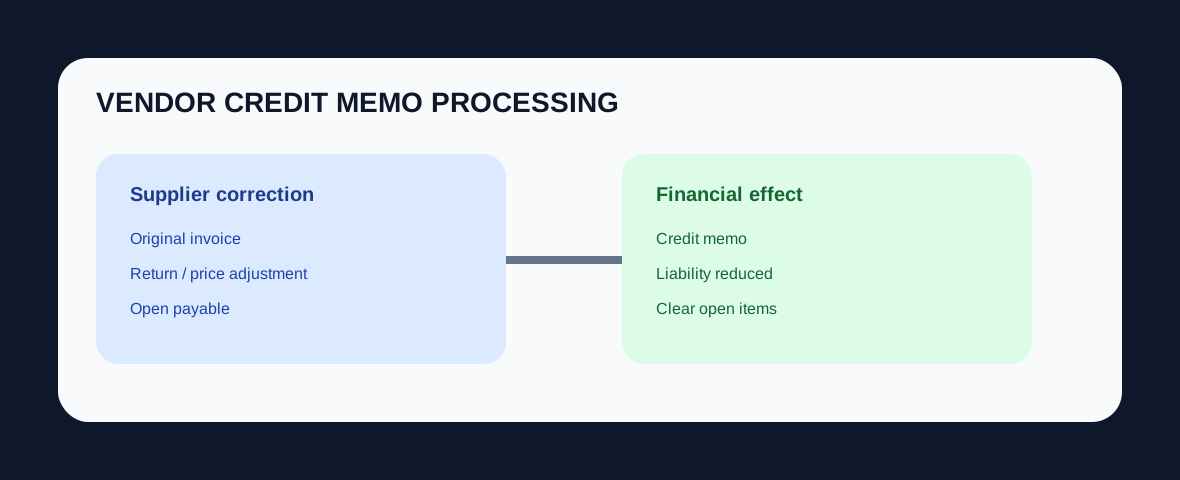
In SAP FI, a supplier credit memo records an amount the supplier owes back to the company or uses to reduce an existing payable. It can arise from returns, overbilling, price corrections, rebates or other agreed adjustments. The credit memo creates a debit on the supplier account and an offsetting credit to the appropriate expense, inventory, asset, tax or other account depending on the business context.
Start with the business reason
A credit memo should not be treated as a free-standing negative invoice without explanation. The processing team should know whether it corrects an earlier invoice, relates to a return, adjusts price or quantity, or settles another documented supplier claim.
PO-based and non-PO credit memos
In procurement-related processing, SAP supports supplier credit memos with a purchasing-document reference. SAP Help documents checks on credited quantity and amount so a credit does not exceed what has already been invoiced. For non-PO corrections, the financial account assignment and business evidence must be supplied directly.
Accounting and open-item effect
A supplier invoice normally creates a credit on the supplier account; a supplier credit memo moves in the opposite direction and reduces the liability. If the credit memo and invoice are both open, they can later be cleared against one another when the amounts and references support the match.
Controls consultants should test
Test references, tax treatment, quantities, amounts, tolerances, duplicate-credit risk, approval requirements, open-item matching and clearing. A posted credit should be both financially correct and explainable from the underlying business event.
Continue with Vendor Invoice Posting Lifecycle, Supplier Reconciliation Accounts, Open Item Management, and the SAP FI / FICO hub.