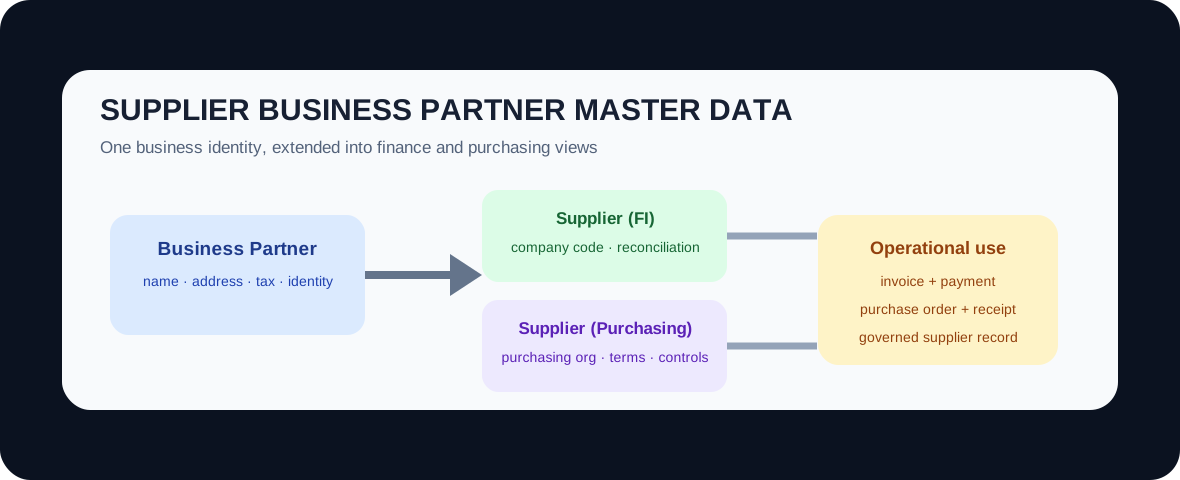
In SAP S/4HANA, supplier master data is maintained through the Business Partner approach. Common identity information belongs to the Business Partner, while supplier roles extend it for company-code accounting and purchasing-organization needs. This lets Finance and Procurement use the same governed supplier identity while maintaining the organizational settings each process requires.
Why the model separates identity from role data
A supplier has shared facts such as legal name, address, communication details and tax identifiers. Finance additionally needs accounting controls, while Purchasing needs procurement settings. The Business Partner model keeps the common identity together and extends it with application roles rather than creating unrelated identities for each function.
Supplier finance data
The finance-oriented supplier role carries company-code-specific accounting data. This includes the reconciliation account and payment-related settings used by Accounts Payable. The reconciliation account connects supplier subledger activity to the general ledger, so supplier postings are reflected in financial reporting without routine direct posting to that reconciliation account.
Supplier purchasing data
The purchasing-oriented supplier role carries purchasing-organization data used in procurement. Depending on the process, this can include purchasing terms, order currency, delivery-related settings and other supplier controls. A supplier used for purchase orders may therefore need both purchasing and company-code extensions to support the complete procure-to-pay process.
Governance controls matter
Supplier data affects purchasing, invoice processing, payment, tax and reporting. Wrong bank details can create payment risk; duplicate suppliers can fragment spend and increase duplicate-payment exposure; incorrect accounting settings can affect classification and reconciliation. Useful controls include approvals, duplicate checks, restricted maintenance of sensitive fields and clear ownership between Finance and Procurement.
Consultant thinking
Design ownership before discussing individual fields. Ask who validates legal identity, who approves bank changes, who chooses accounting settings, who creates purchasing extensions and which changes require segregation of duties. This makes the supplier record a trusted cross-functional master rather than a collection of fields.
For related concepts, see FI integration with MM and SD, open-item management and automatic and manual clearing.
Key takeaway
Supplier Business Partner master data combines one shared identity with role-specific Finance and Purchasing extensions. The structure supports integrated processes while preserving organizational controls and ownership.