
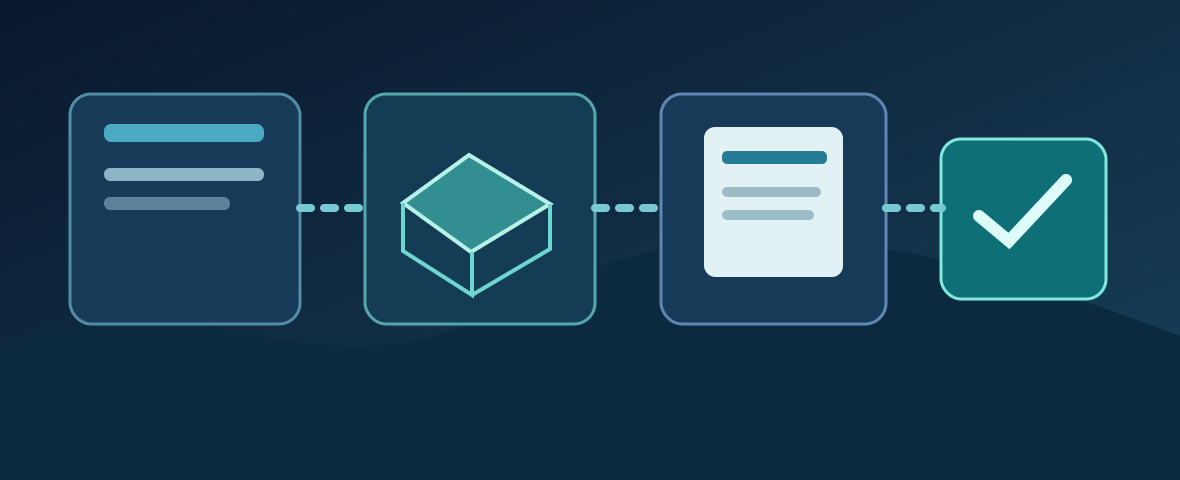
MM–FI integration connects the purchasing and receipt evidence in Materials Management to the supplier invoice and financial postings in FI. Logistics Invoice Verification checks invoices against procurement documents and creates linked logistics and accounting records. The GR/IR clearing account bridges goods receipts and invoice receipts when their timing, quantities or prices differ.
One supplier invoice, several responsible teams
Purchasing owns the order and commercial conditions, the warehouse confirms physical receipt, Accounts Payable checks the invoice, and Finance needs reliable period and liability information. Their responsibilities differ, but each must be able to trace its decision to the same purchase order, receipt and accounting record. Integration is a control chain, not merely an automatic field transfer.
Purchase order, goods receipt and invoice are distinct events
A purchase order is the authorized commercial commitment; it does not normally create the supplier liability on approval. Goods receipt records delivered quantities and the relevant inventory or cost treatment, often with GR/IR as an offset. The supplier invoice creates a claim for payment and, where references match, offsets the clearing account. SAP documents different posting outcomes depending on price control and entry sequence.

GR/IR is an evidence bridge—not a suspense bin
When the goods have arrived but the invoice is missing, GR/IR can remain open. The reverse sequence can also occur. Missing or mismatched receipts, invoice quantities, delivery costs and prices may create differences that require investigation. SAP GR/IR reconciliation supports purchase-order-based review, but a year-end clearing decision must follow the real business status and approved accounting rules.
Worked example: a quantity difference
A buyer orders 100 components at ₹2,000 each. The warehouse records 80 received, but the supplier invoices all 100. The difference could mean an early invoice, a missing receipt or an error in the supplier claim. Accounts Payable should not assume delivery merely because the invoice exists; Purchasing and Receiving must examine the evidence and decide what to correct or hold under the configured control policy.

Where the Financial Accounting decisions sit
Material valuation methods, purchasing account assignments, tax treatment and invoice-price differences affect the final journal entries. With standard-price materials, price differences may be treated differently from moving-average-price stock; for assigned purchases, costs or assets may be involved. A consultant should trace the configuration and actual generated FI line items instead of assuming a universal debit-credit pattern for every invoice.
Who investigates a mismatch?
Procurement checks commercial price, quantity and order changes; Receiving validates goods movements and delivery dates; Accounts Payable confirms invoice references, taxes and tolerances. Finance reviews the GR/IR age and period-end implications. SAP offers reconciliation worklists that place purchasing and FI information together, but cross-functional ownership and documented correction decisions remain essential.
Consultant thinking: test the exception path
Design integration tests for ordinary three-way matching and for partial receipt, early invoice, mismatched price, corrections and reversals where relevant. Verify FI entries as well as invoice screens. Ask how blocks, tolerances and GR/IR ownership should behave before calling the process ready.
Related topics include Parked Vendor Invoices, Duplicate Invoice Checks, Accounts Payable Month-End Closing, Supplier Master Data Controls, and the SAP FI / FICO hub.