
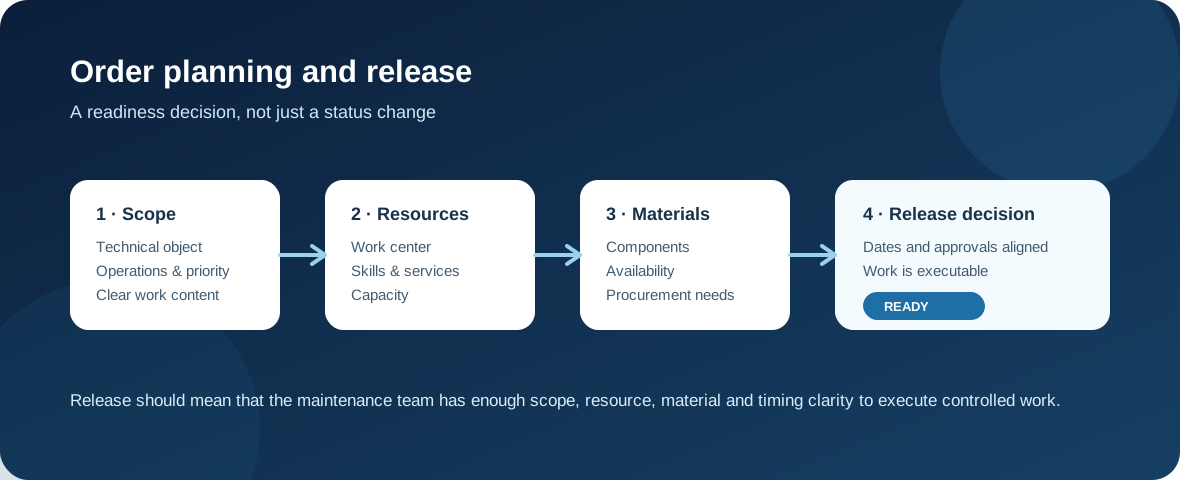
Order planning in SAP EAM / PM turns a maintenance requirement into executable work by defining the technical scope, operations, responsible work center, materials, services, dates and other resources. Release is the control point that moves the order out of planning and allows the process to progress toward scheduling and execution. A good release therefore represents readiness, not merely the existence of an order.
Planning gives the maintenance order enough detail to be executable
A maintenance order may begin with a known need, a notification or a planned maintenance event. Planning adds what technicians and schedulers need: the work scope, where it happens, who is responsible, which parts or external services are needed, and what dates or constraints matter.
Release separates planned work from work that can move forward
Creating an order does not necessarily mean the job is ready. In phase-based maintenance processing, SAP distinguishes planning, approval, preparation, scheduling and execution. SAP documentation notes that only after a maintenance order has been released can it move toward scheduling.
Material and capacity checks are practical readiness signals
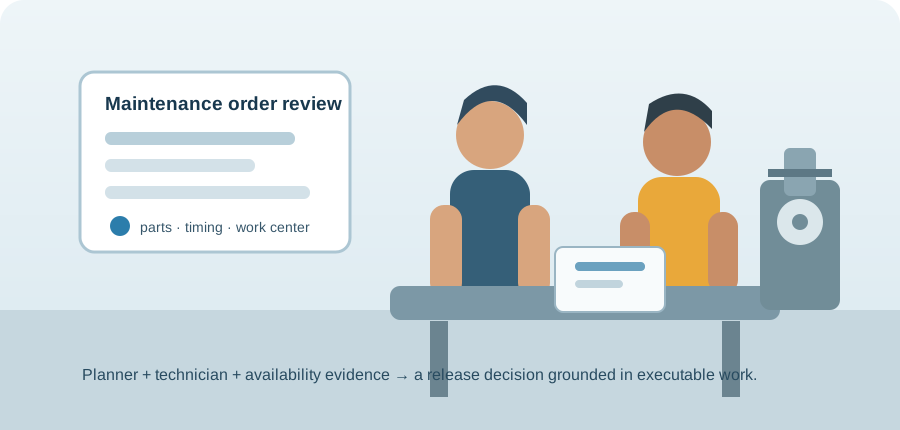
Planners should know whether required components are available or must be procured, and whether the responsible work center has realistic capacity. SAP supports material availability checks for maintenance orders, giving planners a concrete signal about component readiness before execution.
Approval and release are related but not identical
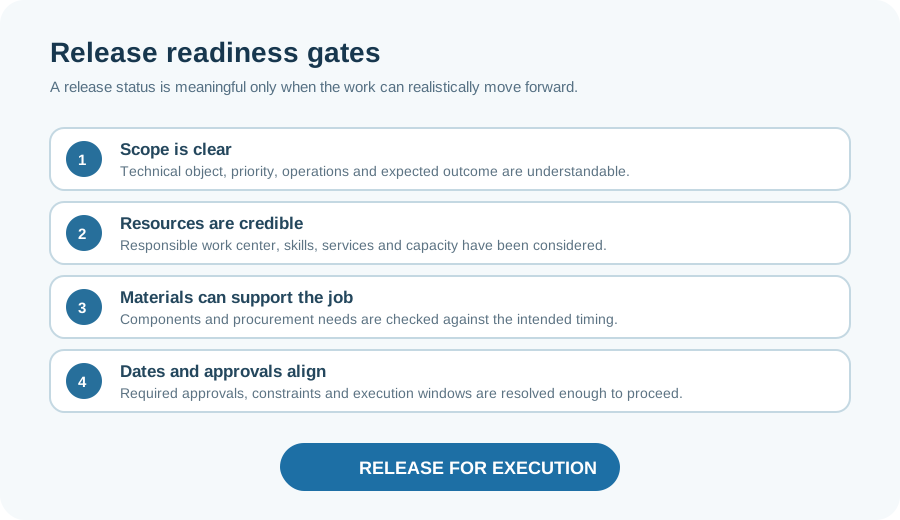
Some maintenance processes use approval workflows before release; others use simpler status handling. Approval answers whether the organization authorizes the work, while planning answers whether the work is defined well enough to perform. The exact sequence depends on the order type and process design.
What changes after release
Once released, the order can move into downstream preparation, scheduling and execution according to the process in use. Technicians can perform and confirm the planned work, while material issues, services and time confirmations contribute to actual cost and maintenance history.
Consultant questions before release
Ask whether the correct technical object and priority are used, whether operations are understandable, whether the work center and required skills are identified, whether critical materials or services are available, whether dates reflect operational constraints, and whether approvals are complete where required. Also clarify who can release orders and how exceptions are governed.
Continue with Maintenance Orders, Maintenance Notifications, Work Centers in Maintenance, Corrective Maintenance, and the SAP EAM / PM hub.