

In SAP EAM / PM, a maintenance order organizes the work required on a technical object. It can hold operations, work centers, planned labor, materials, external services, dates, costs and status information. Once the job is appropriately planned and released, technicians execute and confirm the work; completion then preserves maintenance history and supports cost follow-up.
Notification and order serve different purposes
A maintenance notification is useful for capturing a malfunction, request or observation. The maintenance order goes further: it is the work-management object used to plan and control execution. An order can be created with reference to a notification when the reported issue needs executable work, and orders can also be created directly where the maintenance need is already known.
What the order must bring together
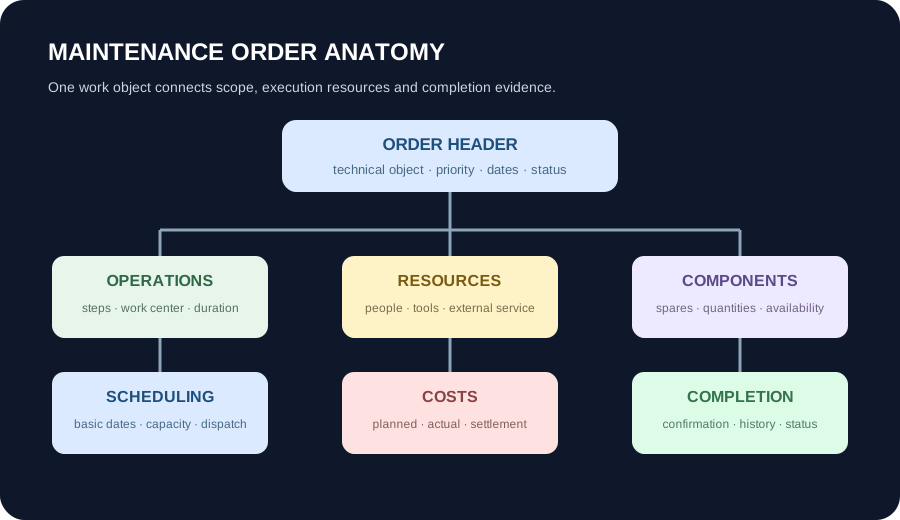
The header identifies the technical object, priority, dates and organizational responsibility. Operations describe the work steps and can reference work centers and durations. Components represent required spare parts; external services or tools can also be planned where relevant. Scheduling and cost information help planners understand whether the job can be performed in the intended window and with the required resources.
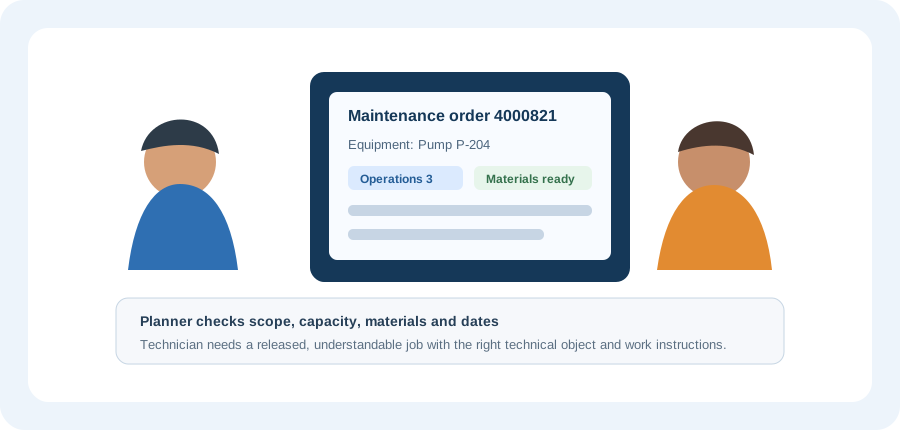
Release is a readiness decision
Creating an order does not mean the work is ready to execute. Planning should establish enough scope, resources, material availability and timing for the maintenance team to act safely and efficiently. Order status provides a controlled way to distinguish planning from released work and later stages of execution.
Execution, confirmation and completion create history
During execution, technicians and supervisors record progress and confirmations as required by the process. Material issues, labor, external services and other postings can contribute to actual cost. Technical completion signals that the maintenance work is finished from the technical perspective while preserving the order and its history for later analysis and follow-up.
Consultant and process-owner control questions
Check whether the correct equipment or functional location is used, whether the priority reflects business impact, whether operations are clear, whether the responsible work center and required parts are available, whether external services are controlled, and whether confirmations and completion statuses reflect what actually happened. Poor order discipline weakens maintenance history, cost visibility and future planning.
Continue with Maintenance Notifications, Corrective Maintenance, Work Centers in Maintenance, Preventive Maintenance, and the SAP EAM / PM hub.