
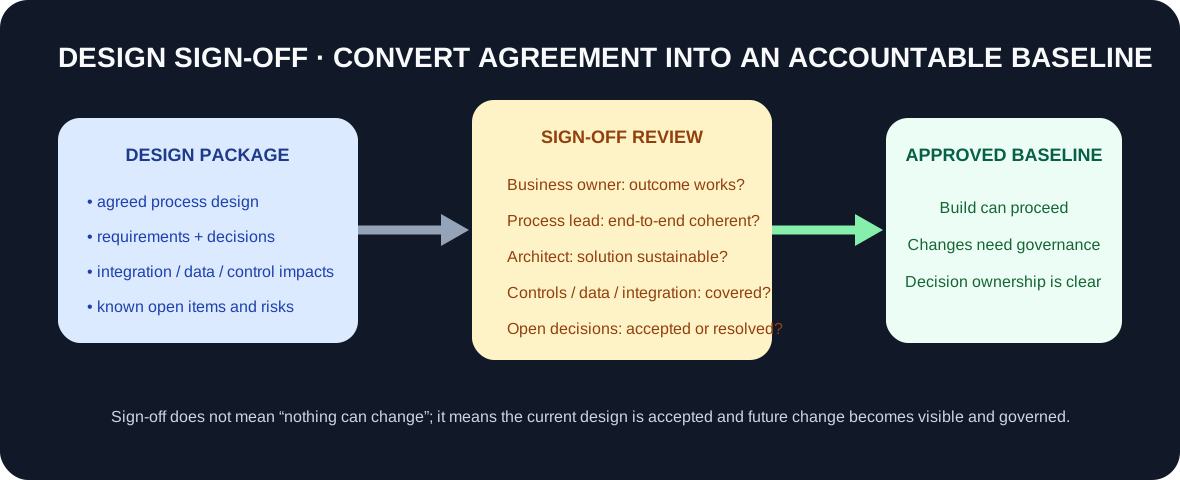
Design sign-off is the formal acceptance of an ERP process and solution baseline by the accountable business and project stakeholders. Before approval, teams confirm that requirements and Fit-to-Standard outcomes are represented, major design decisions are resolved, cross-functional impacts are understood, and any remaining open items have explicit owners and due dates. The signed baseline then becomes the reference for build, testing, and change control.
What is actually being signed off?
Sign-off should approve a defined baseline—not a vague statement that “workshops are complete.” Depending on the project, that baseline may include process designs, configuration decisions, requirements, integrations, reports, forms, data needs, roles and controls, extensions, assumptions, and decision records. The exact artifacts vary, but stakeholders need to know what their approval covers.
This is closely related to the solution blueprint and the way solution design decisions are made. Sign-off marks the point at which those decisions are sufficiently stable to govern downstream delivery.
Who should approve?
Approval should come from people with authority over the decisions being accepted. A business process owner may approve the target process and control outcomes. Functional or solution leads confirm design completeness. Data, integration, security, architecture, and change stakeholders may provide required approvals for their areas. The project governance model defines who is accountable, consulted, and informed.
A senior person's signature is not useful if that person did not understand the scope of approval. Conversely, workshop participants should not be treated as formal approvers unless they have delegated authority.
What evidence should exist before sign-off?
- Traceability: material requirements and Fit-to-Standard outcomes can be traced to design decisions.
- Cross-functional review: upstream and downstream process impacts have been considered.
- Integration and data impacts: interfaces, migration, master data, and reporting dependencies are known at the appropriate design level.
- Controls and security: important control objectives and access implications are understood.
- Open items: unresolved questions are visible, owned, dated, and assessed for whether they block approval.
- Decision records: material alternatives and exceptions have an accountable decision.
Can a design be signed off with open items?
Sometimes, yes—but only when the open items are understood and non-blocking. A minor wording decision may not justify delaying an entire process baseline. An unresolved tax treatment, integration architecture, or control requirement might. The project should explicitly distinguish blocking decisions from controlled residual actions rather than treating every open point as equal.
What changes after sign-off?
Sign-off does not mean the design can never change. It means changes are no longer informal. A new requirement or changed assumption should be evaluated for scope, effort, schedule, risk, testing, data, training, and other impacts, then approved through the project's change process. That protects the baseline and makes the consequences of change visible.
For global programs, the baseline may also interact with global template governance and the process for evaluating local requirements.
Common weak sign-off patterns
- Approving a document that stakeholders have not reviewed.
- Calling silence or lack of response “approval.”
- Hiding unresolved design decisions in meeting notes.
- Signing process design without checking cross-functional impacts.
- Allowing build to change the signed design without change governance.
- Treating sign-off as a ceremonial milestone rather than an accountability mechanism.
Consultant thinking: make the approval decision easy to understand
A consultant should be able to tell an approver: what is being approved, what changed since the last review, which major decisions were made, which open items remain, what risks they create, and what happens if approval is delayed. That clarity is more valuable than a large document sent without context.
Key takeaway
Design sign-off creates a controlled bridge from exploration and design into build. Its value comes from a clear baseline, accountable approval, visible residual issues, and disciplined change control—not from the signature alone.