
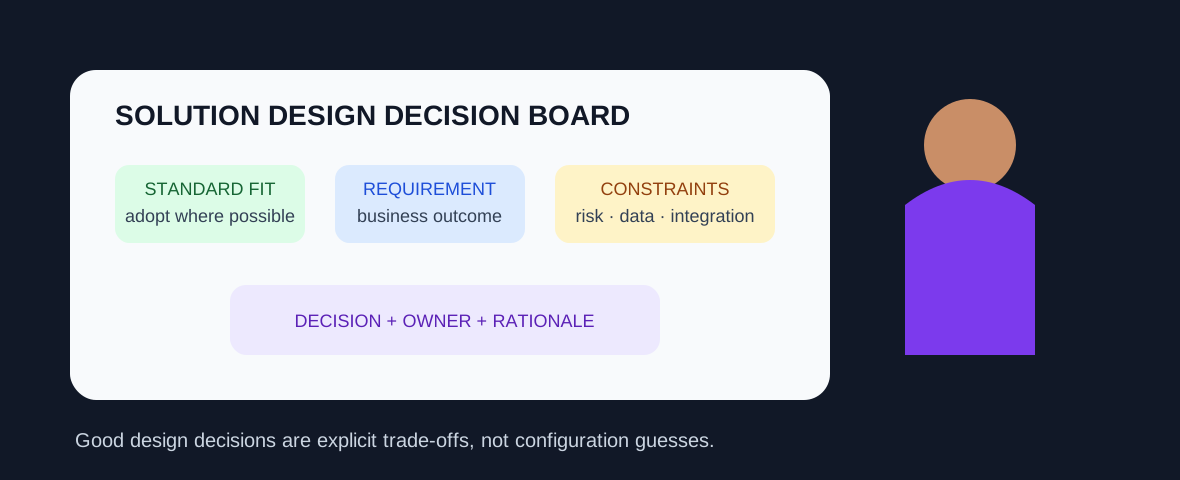
Solution design decisions in SAP projects are usually made by comparing a business requirement with standard SAP capability, then evaluating alternatives across process fit, configuration, extensibility, integration, data, security, controls, user experience and delivery risk. The decision should have an owner, rationale and traceable requirement rather than being an undocumented preference.
Design starts with business need, not with customization
SAP Cloud ALM describes requirements as business expectations not fulfilled by the standard solution, often captured during fit-to-standard workshops. That framing matters: a project should first understand the desired business outcome and validate whether standard capability satisfies it. Only then should the team discuss a gap and its solution options.
This connects directly with fit-to-standard and fit-gap analysis. A design decision is the next layer: once a meaningful gap or requirement exists, which solution approach should the team choose?
A practical decision sequence
Start by confirming the requirement and its acceptance criteria. Demonstrate or validate the standard process. If there is a gap, identify viable alternatives: adopt standard with process change, configure within standard, extend through approved extensibility, integrate another capability, or consciously defer the requirement. Then compare the alternatives against architecture principles, business value, effort, risk and maintainability.
SAP Activate emphasizes fit-to-standard and prioritised requirements, with high-priority requirements refined through design before implementation in sprints. That supports a disciplined principle: design detail should be proportional to the importance and uncertainty of the requirement.
Who should be involved
The business process owner validates the outcome and policy. Functional consultants explain standard capability and configuration. Architects test alignment across the landscape. Integration, data, security and development specialists evaluate impacts in their domains. The project or product owner helps prioritise value and delivery trade-offs. For material decisions, governance should make the final choice explicit.
What should be documented
Record the requirement, options considered, selected approach, rationale, assumptions, dependencies, owner and acceptance criteria. This turns design from meeting memory into project evidence. It also makes future change easier because teams can understand why the solution exists.
Common mistake
A weak project jumps directly from “the business does it differently” to “we need customization.” A stronger team asks whether the difference is truly valuable, whether standard can support the outcome, and what lifecycle cost comes with each alternative.