
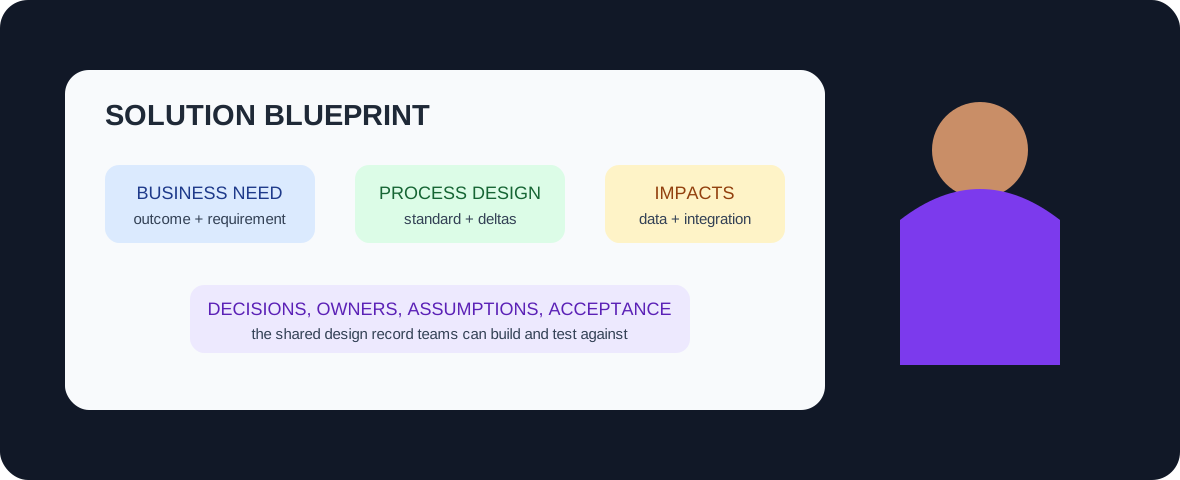
In an SAP project, a solution blueprint is a structured description of how agreed business requirements will be supported by the target solution. It typically connects the business process with standard SAP capability, approved gaps or extensions, data and integration impacts, roles, controls, assumptions, dependencies and acceptance criteria. The exact document name varies by project methodology, but the purpose is consistent: create a traceable design baseline for build and testing.
Blueprinting is a design activity, not a document-writing exercise
Modern SAP delivery emphasizes fit-to-standard and capturing requirements where standard capability does not satisfy the agreed business outcome. The blueprint should therefore be the result of discovery, workshops and design decisions—not a generic template completed before those conversations happen.
This follows naturally from fit-to-standard, fit-gap analysis and solution design decisions. Once a requirement or justified delta exists, the team needs a reliable record of what will actually be implemented.
What a useful blueprint should capture
A practical blueprint should state the process outcome, requirement or decision being addressed; the standard capability considered; the selected solution approach; key configuration or extensibility boundaries; data and integration implications; controls and roles; assumptions and dependencies; and the acceptance criteria that will later prove the design works.
It does not need to become a configuration manual. The useful level of detail is enough for the build team to understand the intended solution and for testers to trace what must be validated.
What a blueprint is not
It is not automatically a promise to customize every business preference. It is not a substitute for fit-to-standard workshops. And it should not be a frozen document that ignores later approved decisions. When the design changes through governance, the blueprint or equivalent design record should change too.
Think like a consultant
When reviewing a blueprint, ask whether another consultant could understand the business reason, the chosen approach, the important constraints, who approved the decision and what test would prove success. If those answers are missing, the project has documentation but not necessarily a usable design baseline.
Key takeaway
The value of a solution blueprint is traceability. It converts workshop conclusions and requirements into a shared design that guides build, integration and testing while preserving the reasons behind important choices.