
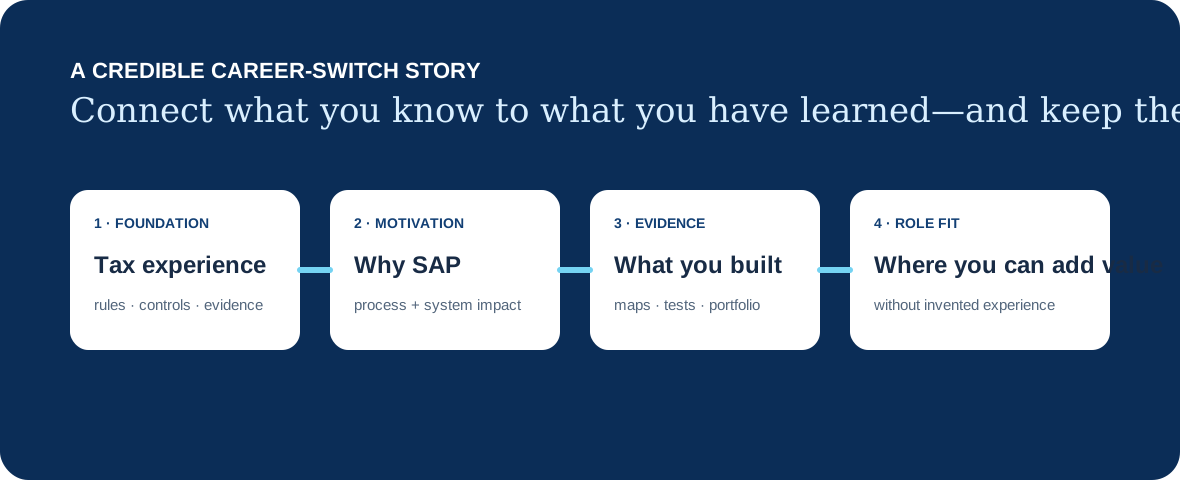
Explain the switch in four parts: what you genuinely did in tax, why SAP is a logical extension of that work, what SAP capabilities you have actually learned and demonstrated, and which entry point you are realistically targeting. Keep tax-domain experience, SAP learning evidence and client implementation experience clearly separated.
Lead with the business foundation you already have
Start with the work you can defend under questioning: interpreting tax rules, reconciling outcomes, managing evidence, investigating exceptions, coordinating with Finance or business teams, or supporting compliance. This establishes a useful domain foundation without implying that the work happened inside an SAP implementation.
Explain why SAP is a logical next step
Your motivation should connect to the work itself. Tax outcomes depend on business processes, master and transaction data, accounting entries and compliance outputs. SAP documentation shows that tax codes and related settings participate in tax calculation and posting, while Document and Reporting Compliance supports electronic documents and statutory reporting. That makes an interest in SAP a credible extension of understanding how tax decisions are operationalized in enterprise systems.
Show evidence instead of saying “I am learning SAP”
Interviewers can evaluate concrete work more easily than broad statements. Refer to a process map you built, contrasting tax scenarios you analyzed, test cases with expected and actual results, or a transaction-to-compliance evidence chain. Be ready to explain assumptions, what the artifact demonstrates, and what you would investigate if the expected result did not occur.
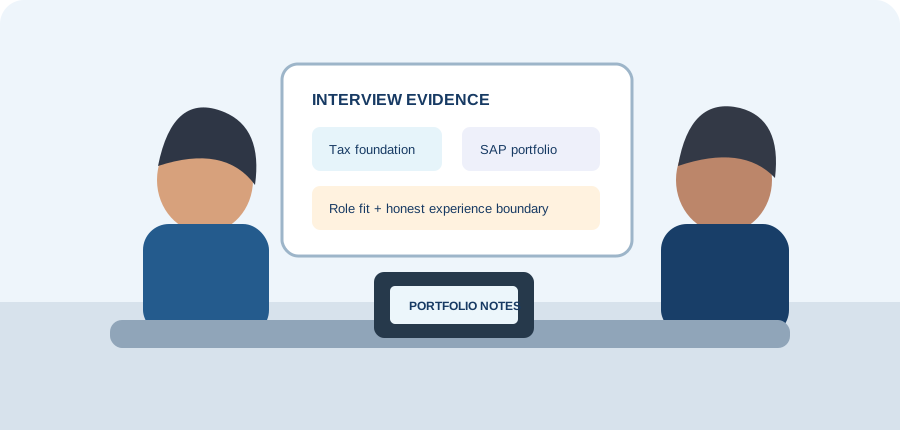
Keep the experience boundary explicit
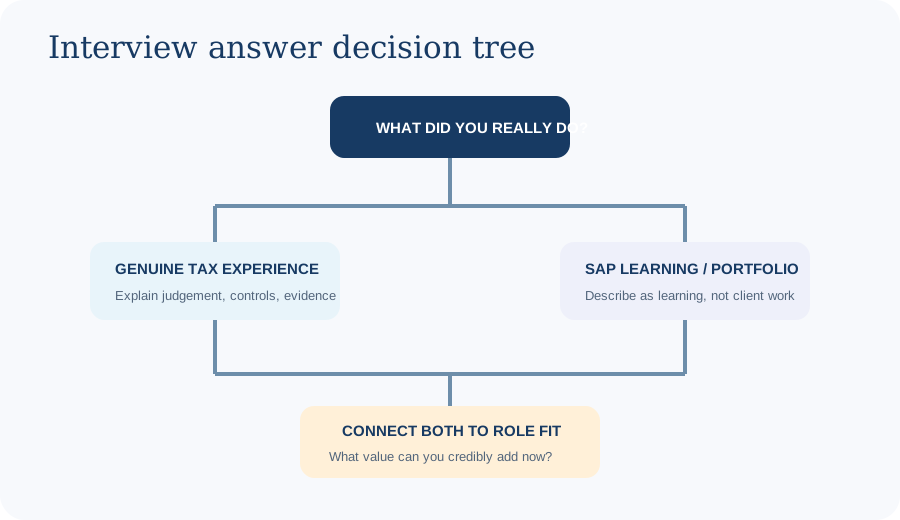
If your SAP exposure is self-study, sandbox practice, formal learning or portfolio work, say so. Do not re-label tax operations as SAP implementation, support or rollout experience. A clear boundary makes the rest of your evidence more trustworthy and gives the interviewer a realistic basis for judging trainability and role fit.
Connect your evidence to a realistic role
Do not end the answer with “I want to work in SAP.” Explain where your background is most relevant—for example, finance processes with tax impact, compliance-oriented work, testing and business analysis, or a junior functional path where domain knowledge is valuable. The exact role depends on the employer and system landscape, so avoid claiming a universal best-fit job title.
Prepare for the obvious follow-up questions
An interviewer may ask why you are leaving tax, what SAP process you understand end to end, what you have practiced, where you struggled, how you tested your understanding, or what you still need to learn. Strong answers acknowledge gaps and show how you are closing them rather than trying to sound senior.
A concise interview structure
One useful structure is: “My foundation is…”, “I became interested in SAP because…”, “I have built evidence through…”, and “I am targeting roles where…”. The wording should remain personal and truthful; the structure simply keeps the answer focused on evidence and fit.
Consultant thinking: credibility compounds
The objective is not to make the transition sound effortless. It is to show that your tax judgement has relevance, that you understand the new system context you are entering, and that you can distinguish demonstrated capability from experience you still need to gain.
Continue with Best-Fit SAP Paths, Which Existing Skills Transfer?, Skills Gaps to Close, Build a Transition Portfolio, and the Careers & Career Switching hub.