
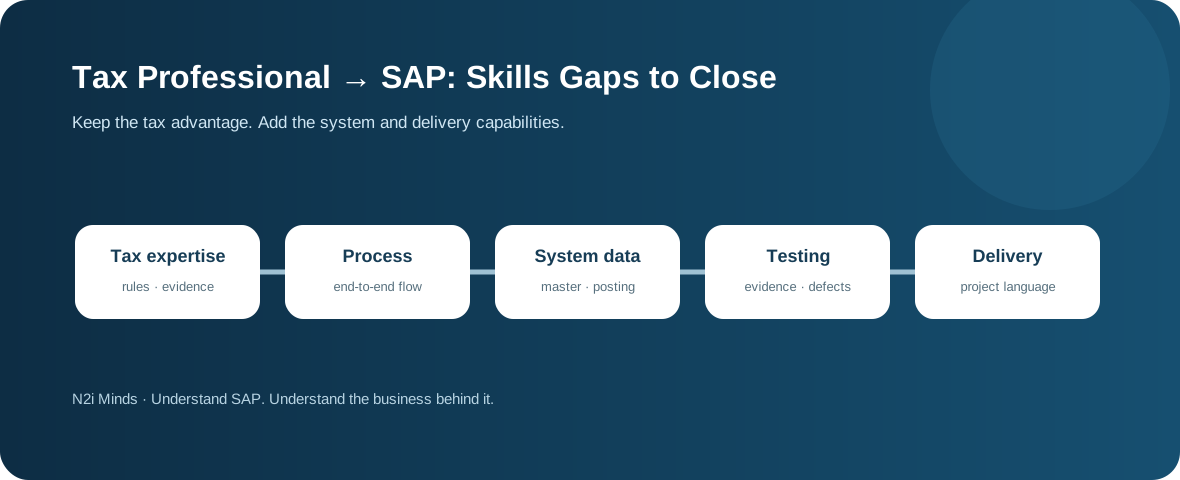
A tax professional moving into SAP usually needs to close five main gaps: end-to-end business-process fluency, SAP data and posting concepts, tax and compliance functionality in the system, testing and troubleshooting practice, and project-delivery vocabulary. Existing tax expertise remains valuable, but it should be presented as domain experience—not as SAP implementation experience until that experience has actually been earned.
Gap 1: connect tax rules to end-to-end business processes
Tax work often starts from a statutory question. SAP consulting requires seeing where that question sits inside a larger transaction. A supplier invoice touches procurement and Accounts Payable; a customer invoice touches sales and receivables; tax-relevant master data and organizational structures can influence the result. Learning the process before the screen prevents tax knowledge from becoming isolated from the transaction that creates the posting.
Gap 2: learn the SAP data and posting model
A tax professional should become comfortable distinguishing master data, configuration and transaction data, and tracing how they combine in an accounting document. In SAP Finance, tax codes and related tax settings can influence calculation and posting. The practical skill is not memorizing fields; it is being able to explain which data element drives which business outcome and where an incorrect result should be investigated.
Gap 3: understand compliance as a system process
Modern SAP tax work can extend beyond tax calculation into electronic documents, statutory reporting and reconciliation. SAP Document and Reporting Compliance supports processes for electronic documents and statutory reporting. A career switcher should learn how source transactions, required data, validation, submission status, exceptions and reconciliation fit together rather than treating compliance as a final filing step.
Gap 4: practice testing, evidence and troubleshooting
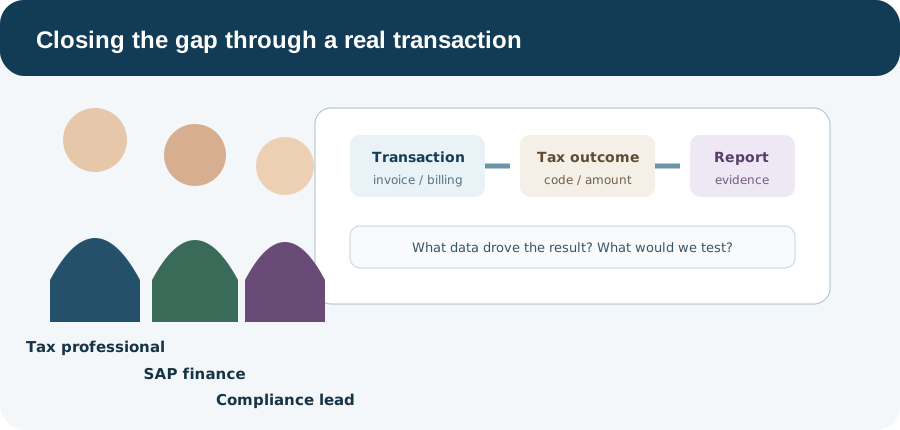
Consultants must prove that a design works. Build simple scenarios that vary customer or supplier data, transaction type, tax treatment and expected posting outcome. Record the expected result, actual result and evidence, then diagnose any difference. This develops the habit of separating a data problem, process problem, configuration issue and misunderstanding of the tax rule.
Gap 5: learn project language and experience boundaries
SAP projects use concepts such as requirements, fit-to-standard discussions, configuration, integration, test cycles, defects, cutover and support. Understanding this vocabulary helps a tax professional contribute in the right context. It is equally important to describe self-study, sandbox practice or portfolio work truthfully and not label it as client implementation experience.
A practical way to close the gaps
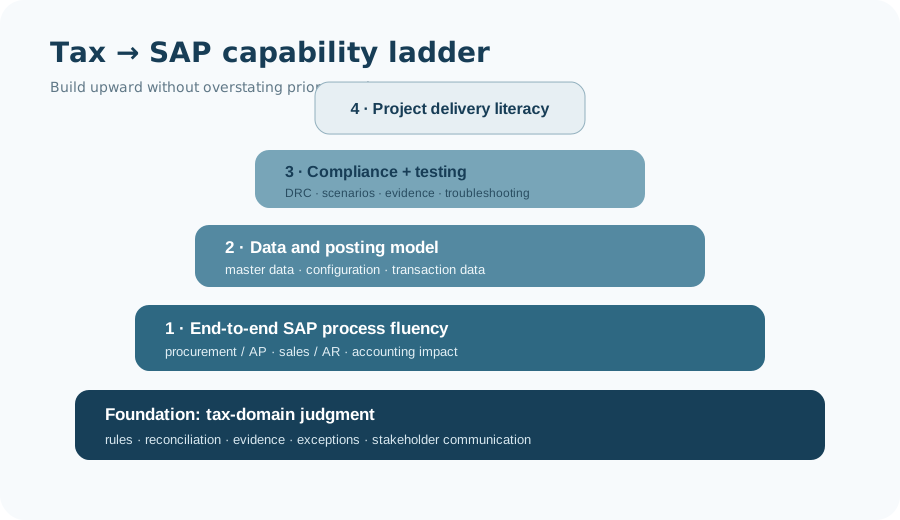
Choose one tax-relevant business process and learn it end to end. Map the business event, the important master and transaction data, expected accounting result, tax decision, compliance output and test evidence. Repeat with a small number of contrasting scenarios. This creates a stronger learning portfolio than collecting disconnected terminology.
Consultant thinking: preserve the domain advantage
The goal is not to discard tax expertise and start again. It is to add enough SAP process and delivery literacy that the domain expertise becomes usable inside system design, testing and support. The strongest career story is therefore a tax professional building verified SAP capability, not someone presenting prior tax work as implementation work.
Continue with Tax Professional Moving Into SAP: Best-Fit SAP Paths, Which Existing Skills Transfer?, explore the SAP FI / FICO hub, and return to Careers & Career Switching.