
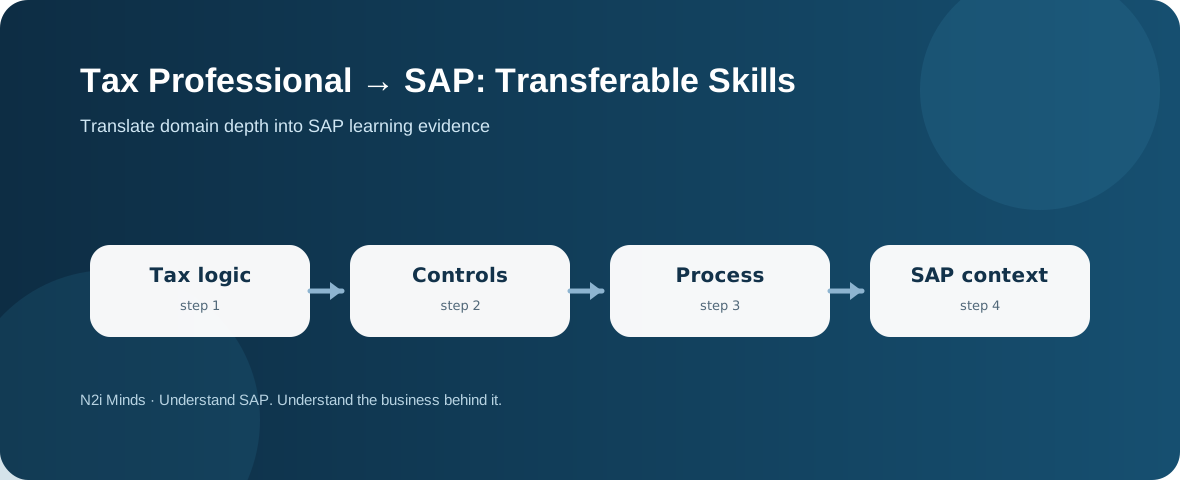
Several tax skills transfer directly into SAP-oriented work: interpreting tax rules, reconciling calculated amounts, reviewing evidence, investigating exceptions, documenting decisions and communicating with finance or business stakeholders. What does not transfer automatically is SAP configuration or implementation experience; that must be learned and demonstrated separately.
Tax logic becomes process reasoning
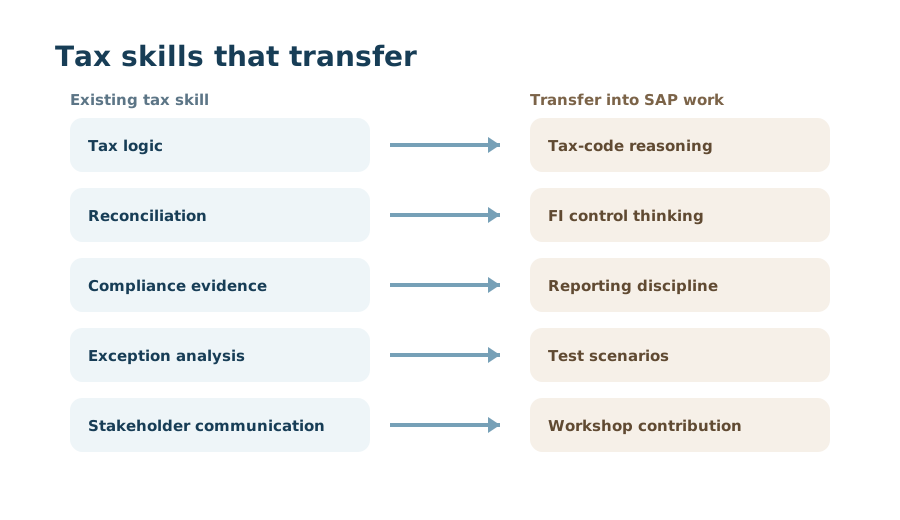
Tax professionals are used to asking what rule applies, what the taxable base is, which rate or treatment is appropriate and what evidence supports the conclusion. In SAP Finance, tax codes and tax-related configuration help drive calculation, posting and checks. A career switcher who already understands the business logic can focus on learning how that logic is represented in SAP.
Reconciliation is a strong transferable habit
Tax work often involves tying reported amounts back to transactions, ledgers or supporting schedules. That discipline maps well to SAP consulting because consultants regularly compare expected process outcomes with actual postings and identify why differences exist. The transferable skill is the habit of tracing a result back to its source and documenting the explanation.
Compliance evidence maps to control thinking
Tax teams work with filing evidence, supporting documents, deadlines and review trails. SAP projects also need control-minded thinking: what data is required, who can change it, what approval is needed, and what evidence proves the process worked. This gives tax professionals a useful foundation for finance transformation and compliance-oriented work.
Exception analysis is consulting-friendly
Real tax work includes unusual transactions, incorrect rates, missing registrations and inconsistent source data. That experience supports SAP testing and support work, where consultants need to isolate whether a problem comes from master data, transaction data, configuration, process design or user behavior.
Stakeholder communication already matters
Tax professionals often explain technical rules to finance, operations, auditors or external advisers. The same skill is important in SAP workshops: translate complex logic into a business decision, confirm assumptions and record what must be implemented or tested.
What still needs to be learned
Transferable skills reduce the distance to SAP work, but they do not replace hands-on learning. A tax professional still needs SAP process fluency, master-data concepts, posting logic, tax-code behavior, testing practice and project vocabulary. A credible interview story distinguishes prior tax experience from new SAP learning evidence instead of presenting one as the other.
Consultant thinking: use domain experience as a lens
The best transition question is not how to become an SAP expert overnight. It is which business problems you already understand deeply and how SAP represents them. That framing makes the learning path more focused and keeps the career story honest.
Compare this with Tax Professional Moving Into SAP: Best-Fit SAP Paths, Auditor Moving Into SAP: Which Existing Skills Transfer?, explore the SAP FI / FICO hub, and return to Careers & Career Switching.