
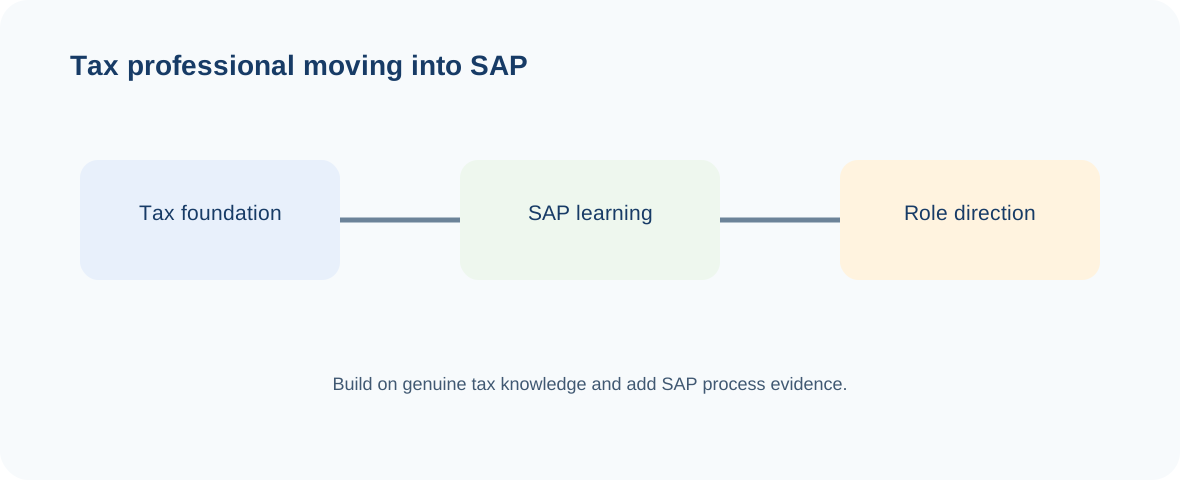
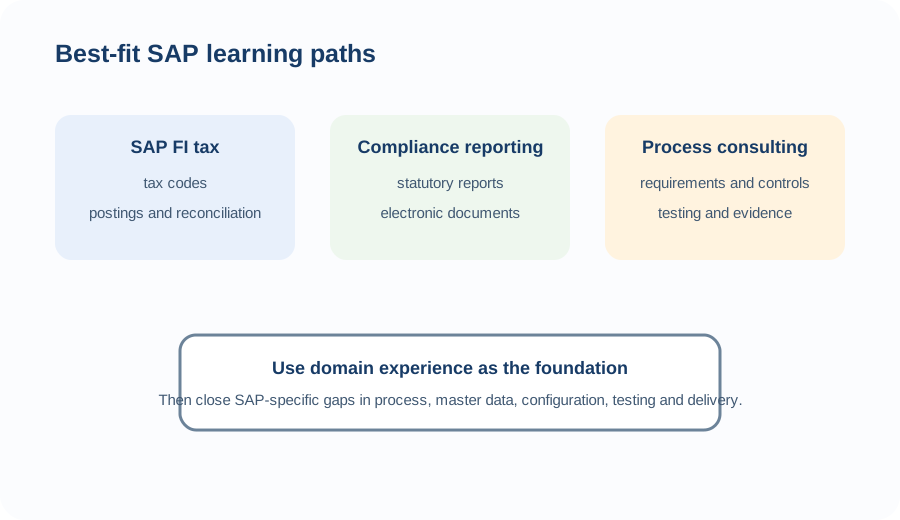
For many tax professionals, the most natural SAP directions are SAP FI with a tax focus, statutory and document reporting, and broader finance-process consulting where tax rules influence postings and controls. The best fit depends on your tax background: transaction tax, indirect tax, withholding tax, statutory reporting and tax operations each connect to SAP differently.
Start from the work you already understand
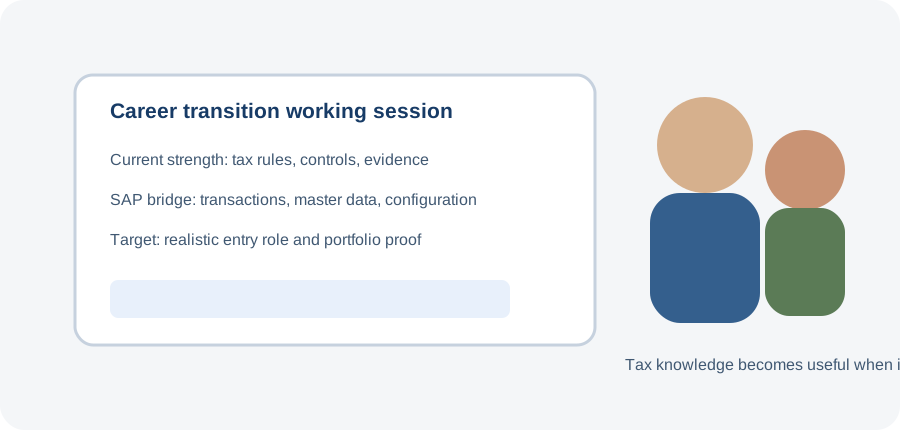
A tax professional may already be strong in interpreting rules, validating tax treatment, reviewing invoices, reconciling tax accounts, preparing filings, managing evidence and responding to exceptions. Those skills transfer because SAP embeds tax consequences inside ordinary business processes such as procure-to-pay, order-to-cash and record-to-report.
The gap is usually not business discipline; it is SAP-specific fluency. You need to understand how master data, tax codes, account determination, document flow, configuration choices, reporting and testing fit together.
Path 1: SAP FI with a tax focus
This path is often the closest fit for professionals who work with input/output tax, withholding tax, tax postings and reconciliation. SAP S/4HANA Financial Accounting supports tax calculation and posting through tax codes and tax accounts, and tax consequences appear in AP, AR and G/L processes.
Learning should therefore go beyond “tax configuration.” Build process understanding around supplier invoices, customer billing, journal entries, payments, account reconciliation and period close. That broader finance context helps you explain why tax is calculated, where it posts and how errors affect downstream reporting.
Path 2: document and statutory reporting compliance
Professionals who work heavily with filings, e-invoicing, statutory submissions or local compliance may find SAP Document and Reporting Compliance especially relevant. SAP documentation describes capabilities for electronic documents and statutory reports, with country-specific legal requirements, reporting entities, data preparation and submission workflows.
Path 3: process and controls consulting
Tax expertise can also support broader consulting roles where the value lies in requirements, controls, testing and business-process design. A tax professional can help teams ask the right questions: Which fields determine tax? Which master-data attributes matter? What evidence proves the expected treatment? Which scenarios must be tested before go-live?
This path requires stronger project skills: workshop participation, process mapping, test design, defect analysis and clear documentation. Domain expertise is useful, but it does not by itself equal SAP implementation experience.
How to choose between the paths
If your strongest experience is invoice and accounting treatment, start with SAP FI. If your work centers on statutory reporting, e-documents and filings, study Document and Reporting Compliance alongside the underlying finance process. If you enjoy requirements, controls and testing across processes, build toward functional or business-process consulting while retaining tax as your differentiator.
Consultant thinking: keep the experience boundary clear
A career switch is stronger when you say exactly what is transferable and exactly what is new. “I understand tax controls and reconciliation; I am now learning how SAP represents those controls through transactions, master data and configuration” is credible. Claiming implementation experience you have not had is not.
Compare this transition with Auditor Moving Into SAP: Best-Fit SAP Paths, Accounts Receivable Professional Moving Into SAP: Best-Fit SAP Paths, explore the SAP FI / FICO hub, and return to Careers & Career Switching.