
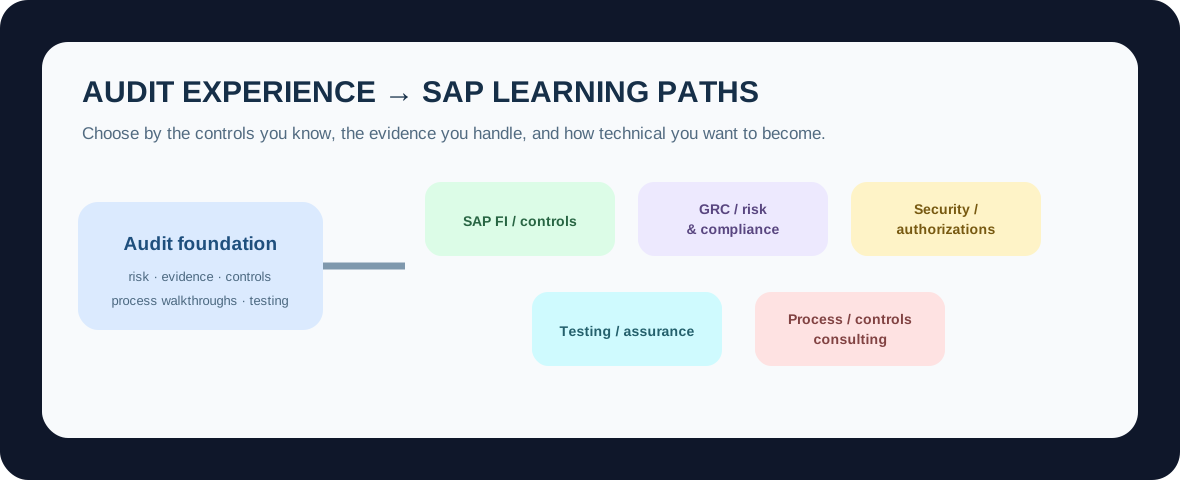
Auditors can build toward SAP FI and finance-control work, governance/risk/compliance topics, testing and process-assurance roles. A financial auditor may be closest to FI and closing controls; a technology-controls auditor may lean toward governance and compliance; a process auditor may fit testing and transformation assurance. These are learning directions, not guarantees of role eligibility or employment.
Start from the evidence you already know how to evaluate
Auditors are trained to ask whether a process happened as intended, whether evidence supports the conclusion, whether responsibilities are clear and whether exceptions are investigated. Those habits are valuable in SAP work because enterprise processes create postings, approvals and audit trails that must be understandable and controlled.
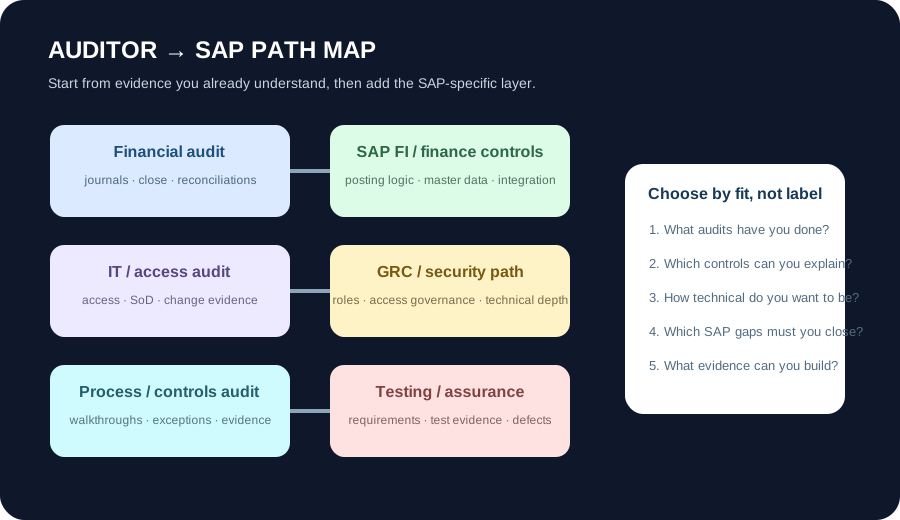
Financial audit can connect naturally to SAP FI
If your experience includes journals, reconciliations, payables, receivables, fixed assets, period-end close or financial-statement evidence, SAP FI can be a practical learning direction. The additional work is system-specific: organizational structures, master data, document logic, subledger integration, posting controls and how business events appear in SAP. Audit knowledge helps with the business purpose; it does not replace learning the system.
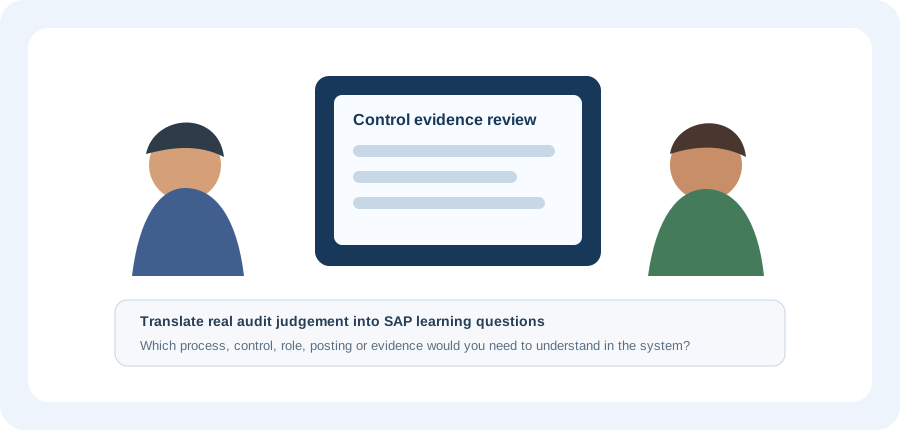
Technology-controls audit can point toward governance and compliance
Auditors who have worked with access reviews, change controls, governance evidence or technology risk may find SAP governance, risk and compliance concepts familiar. SAP learning material on GRC provides a structured foundation, while role-specific technical depth still has to be learned separately.
Process audit and assurance can connect to testing and transformation work
Process auditors already practice walkthroughs, evidence review, exception analysis and control validation. Those capabilities can support SAP testing, requirements validation, process-control review and project assurance once the person learns SAP process flows, test design, defect handling and project-delivery language. The transferable asset is disciplined evidence-based reasoning, not a claim of prior implementation delivery.
How to choose a path without overstating experience
List the audits and controls you can genuinely explain. Separate financial-process knowledge from technology-control knowledge. Decide how technical you want to become. Then build SAP learning evidence around realistic scenarios: a journal-control review, a governance analysis, a finance-process walkthrough or a test-evidence review. Label self-study and portfolio work honestly; do not present it as client configuration or implementation experience.
Continue with the Careers & Career Switching hub, the SAP FI / FICO hub, the SAP GRC hub, and How Test Evidence Is Maintained.