
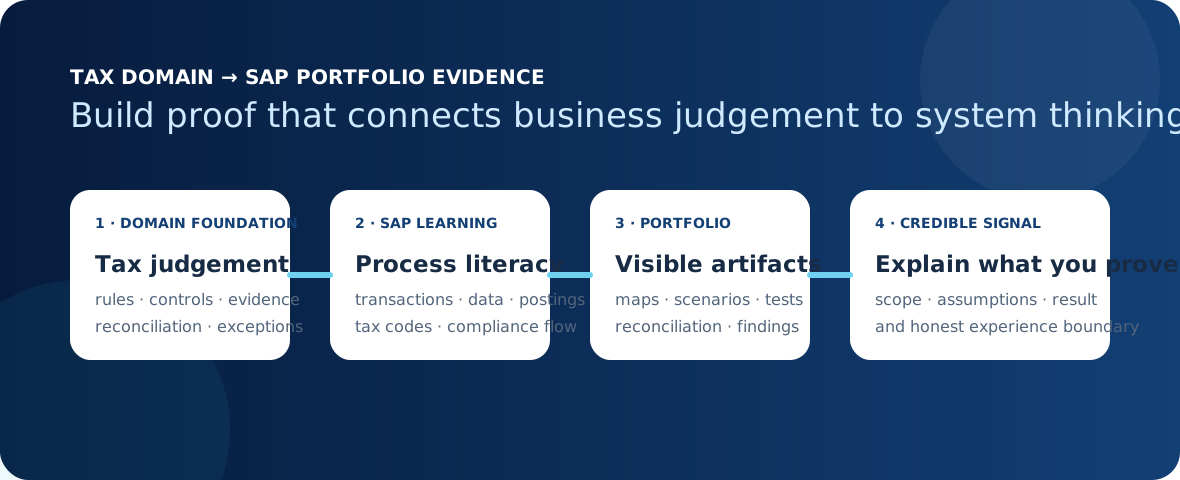
Build a tax-to-SAP transition portfolio around a few realistic business scenarios rather than a collection of screenshots. For each scenario, show the business event, relevant process and data, expected tax and accounting outcome, the test or reconciliation evidence you would inspect, and what you would conclude. Label the work accurately as learning or portfolio evidence unless it came from genuine project experience.
Start with the tax work you already understand
Your strongest starting point is not an SAP screen; it is a business question you can already reason about. Examples include how a supplier invoice is treated for tax, why two transactions receive different tax treatment, how a statutory output can be traced back to source transactions, or how an exception should be reconciled. That domain judgement gives each portfolio artifact a real decision to explain.
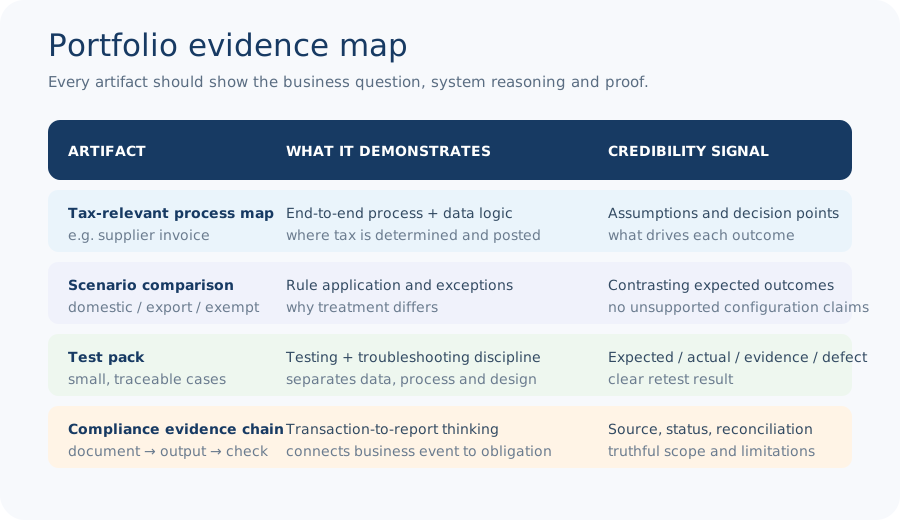
Artifact 1: an end-to-end process and data map
Map one transaction from business event to accounting and compliance outcome. Distinguish master data, configuration assumptions and transaction data. SAP documentation shows that tax codes and tax configuration influence tax calculation and posting, while Document and Reporting Compliance can create, process and monitor electronic documents and statutory reports. Your portfolio does not need to reproduce configuration screens; it should show how the pieces conceptually connect.
Artifact 2: a small tax-scenario comparison
Choose two or three contrasting cases and explain why the expected treatment differs. Keep the scope controlled: state assumptions, identify the decision inputs, and show the expected posting or compliance consequence at a conceptual level. The value is the comparison itself—demonstrating that you can reason from facts to outcome rather than memorizing one happy path.
Artifact 3: a compact test pack
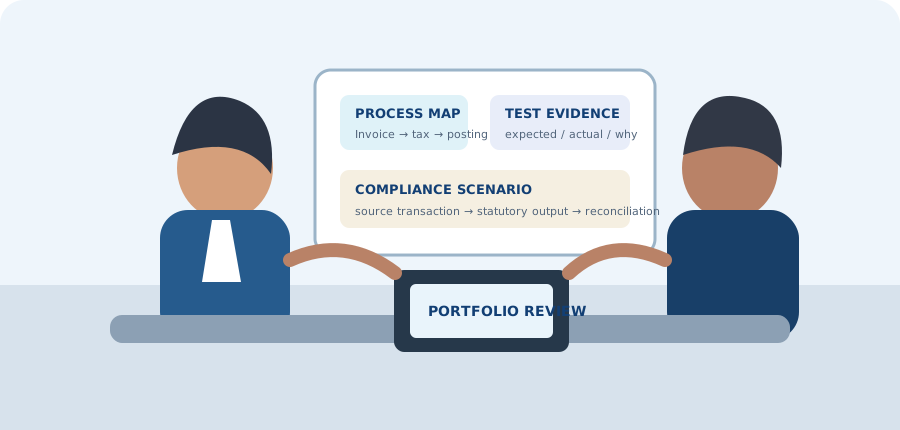
Create a few test cases with preconditions, input data, expected result, actual result and evidence. Add one negative or exception case. If the result differs from expectation, record the investigation path: is the cause data, process understanding, configuration, localization or the test assumption itself? This shows the testing discipline expected in project work without claiming that the case came from a client system.
Artifact 4: a transaction-to-compliance evidence chain
SAP Document and Reporting Compliance is designed around electronic documents and statutory reporting. Use that concept to build a simple evidence chain: source business transaction, data required for the compliance output, status or validation point, and reconciliation check. This makes your tax background visible while showing that you understand compliance as an operational system process rather than only a filing deadline.
Package each artifact so another person can review it
A strong artifact can be understood without narration. Include a short problem statement, assumptions, process scope, the evidence produced, what you learned and any limitation. Avoid exposing confidential employer data. Use fictional or sanitized examples, and never present copied client material as a personal portfolio.
What not to put in a transition portfolio
Do not manufacture project names, customer logos, implementation roles, production screenshots or certifications you do not hold. Also avoid oversized documents that prove effort but not judgement. A small artifact that clearly links a business question to process, data, evidence and conclusion is more credible than a large slide deck of generic terminology.
Consultant thinking: make your reasoning inspectable
The portfolio is useful when a reviewer can challenge your assumptions and still follow the logic. That is the bridge from tax expertise to SAP credibility: not claiming experience you do not have, but showing that your existing judgement can be applied through SAP process, data, testing and compliance concepts.
Continue with Best-Fit SAP Paths, Which Existing Skills Transfer?, Skills Gaps to Close, and the Careers & Career Switching hub.