
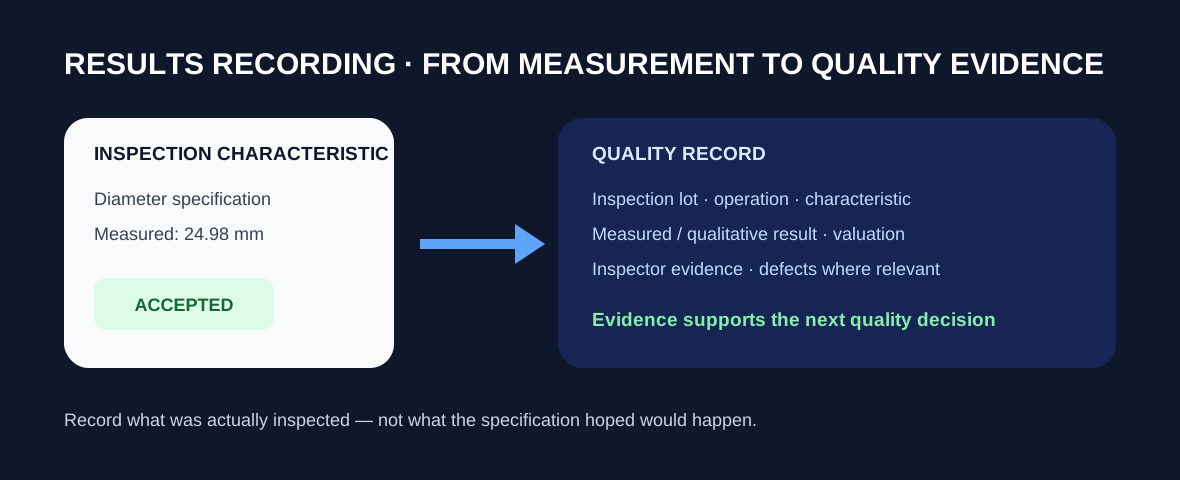
Results recording in SAP QM captures inspection results for inspection characteristics and stores them in the inspection context, typically an inspection lot. Results can be quantitative measurements or qualitative/attribute outcomes depending on the characteristic setup. The recorded evidence supports characteristic valuation, defect handling, quality analysis, and ultimately the usage decision.
Where results recording fits
An inspection lot defines the inspection event. Inspection specifications—often drawn from an inspection plan and its characteristics—define what should be checked. Results recording captures what the inspector actually found. SAP Help describes the inspection lot as the reference object for results recording and notes that the recorded results document product quality and support evaluation.
Results can also be recorded in process-appropriate contexts such as inspection points, physical samples, equipment, or functional locations. For production inspection points, SAP documents that results are recorded for each inspection characteristic and stored in the inspection lot.
Quantitative and qualitative evidence
A quantitative characteristic can capture measured values such as length, weight, pressure, or concentration. A qualitative characteristic can use codes or attribute outcomes such as appearance acceptable/not acceptable. SAP also supports different recording forms: summarized values, individual values, and classed recording, depending on characteristic controls and the sampling design.
What happens after a result is entered
Recording is not just data entry. The result is evaluated against the characteristic rules, producing an acceptance or rejection context where applicable. A rejected characteristic may require defect recording or follow-up. Accepted and rejected characteristics contribute to the evidence used for inspection completion and the later usage decision. SAP's current Record Inspection Results app also supports central recording for one or more inspection lots and manual defect creation for relevant categories.
Controls that matter
- Correct inspection context: record against the intended lot, operation, inspection point, or sample.
- Specification discipline: do not change the target merely to make an actual result pass.
- Measurement credibility: test equipment, method, sample, and units must be appropriate.
- Completeness: open characteristics should be resolved or deliberately managed before inspection completion.
- Defect linkage: significant failures should create usable follow-up evidence, not disappear as an unexplained rejection.
- Authorization and traceability: recorded and changed results should have accountable ownership.
Consultant thinking: design for the person recording the result
A theoretically perfect inspection design can fail if shop-floor users cannot record results quickly and unambiguously. Good design minimizes unnecessary fields, uses meaningful characteristic descriptions and units, aligns sampling with the real process, and separates actual measurements from commentary. If operators repeatedly bypass or postpone results recording, investigate the process design before blaming users.
Key takeaway
Results recording is the evidence layer of SAP QM. It converts inspection activity into traceable characteristic results that can be evaluated, analyzed, linked to defects, and used for controlled disposition.