
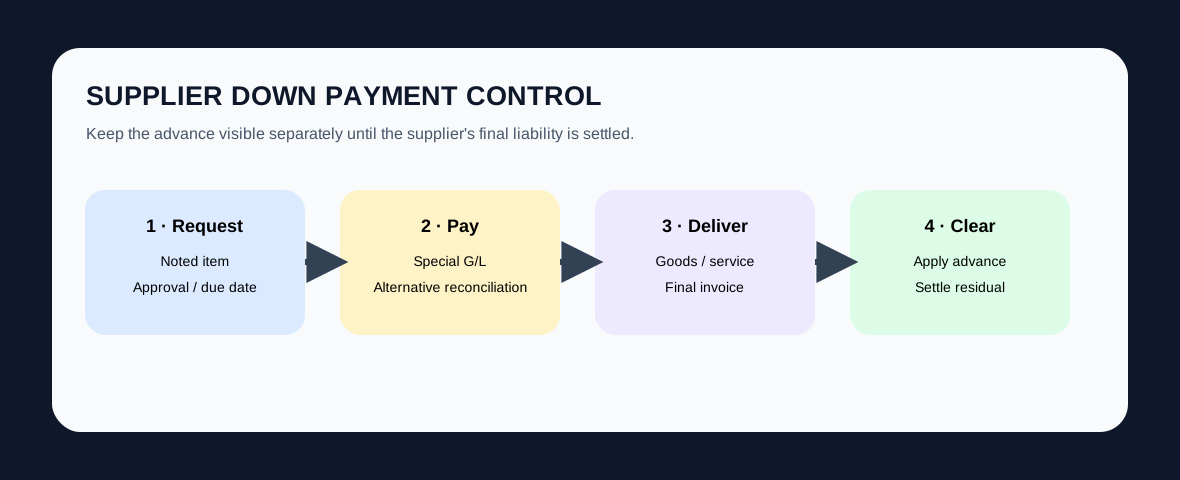
In SAP FI, supplier down payments are handled as Special G/L transactions because an advance is economically different from a normal trade payable. A down payment request can be used as a noted item to support payment without updating ordinary account balances, while the actual down payment is posted with Special G/L logic to an alternative reconciliation account. When the final supplier invoice arrives, the advance is transferred or cleared so only the remaining liability is settled.
Why the advance must stay separate
Ordinary Accounts Payable represents an amount owed for goods or services already invoiced. A supplier advance is different: cash has left the business before the final commercial liability is complete. SAP documentation treats down payments as Special G/L transactions that can be displayed separately in the subledger and general ledger through alternative reconciliation accounts. This gives Finance a clearer view of outstanding advances than mixing them with routine supplier open items.
Request is not the same as payment
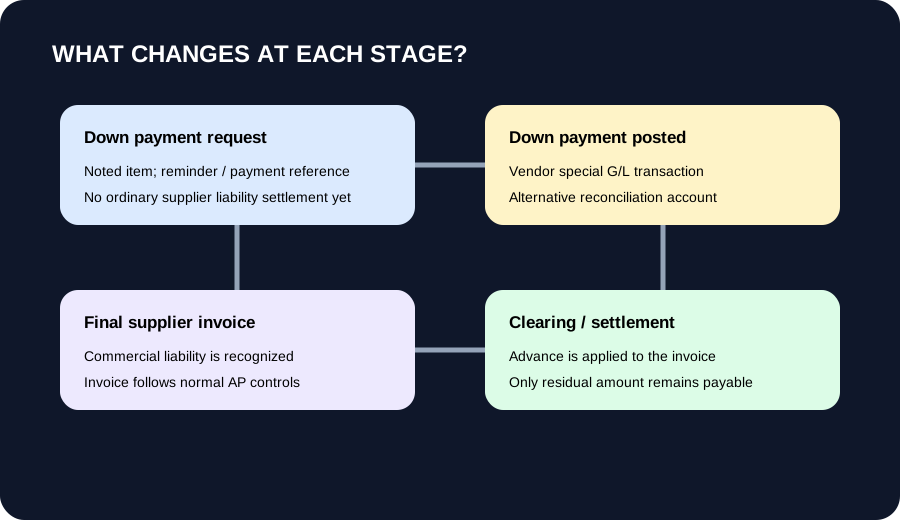
A down payment request is a control and execution signal rather than the cash movement itself. SAP describes the request as a noted item: it reminds the organization to make the payment and can be used by the payment program, but it does not update ordinary transaction figures like a normal accounting posting. The actual down payment is the financial event that moves cash and creates the Special G/L item.
How Special G/L changes the accounting path
Special G/L indicators and posting logic let SAP determine an alternative reconciliation account instead of treating the advance exactly like a normal supplier payable. The exact account design depends on configuration and the nature of the advance. Finance should be able to explain which supplier advances are outstanding, why they were paid, what they relate to and how they will be cleared.
What happens when the final invoice arrives
After the supplier delivers the goods or services, the final invoice establishes the normal payable. At that point the advance should not remain indefinitely as a separate down-payment balance. The business clears or transfers the down payment against the final invoice so the supplier account reflects only the residual amount still payable. Old advances with no matching delivery or invoice deserve period-end investigation.
Consultant and process-owner control questions
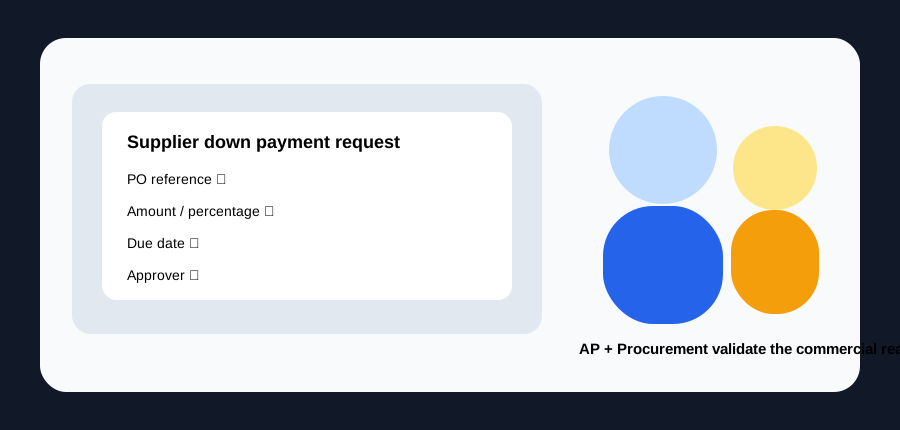
Ask whether the down payment is commercially justified, whether the request references the right supplier and purchasing document, which approvals are required, which Special G/L indicator and alternative reconciliation account apply, whether tax treatment is correct for the jurisdiction, and how clearing will occur when the final invoice arrives. In SAP S/4HANA Cloud scenarios, approval workflows can add an explicit verification step before supplier down payment requests are paid.
Continue with Automatic Payment Program, Payment Blocks and Release Controls, Withholding Tax in Accounts Payable, and the SAP FI / FICO hub.