
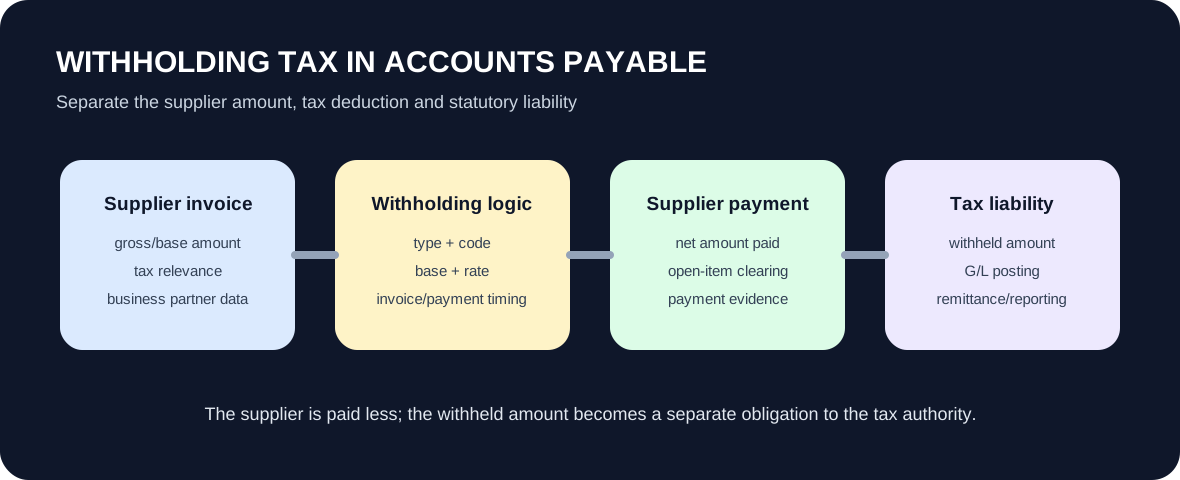
Withholding tax is tax deducted at the beginning of a payment flow in jurisdictions that require the payer to withhold part of an amount due. In Accounts Payable, the supplier is paid the net amount, while the withheld amount is posted separately and later remitted or reported according to local requirements. SAP supports withholding-tax calculation and posting at different stages, including invoice or payment time, depending on the configured method and legal rules.
Why Accounts Payable needs a separate control
A supplier invoice may establish the commercial liability, but local tax law can require the payer to retain part of the amount instead of transferring the full gross value to the supplier. That means AP must distinguish three values: the taxable base, the amount payable to the supplier, and the amount owed to the tax authority. Treating the deduction as an ordinary payment difference would misstate both supplier settlement and tax liability.
What SAP has to determine
Withholding-tax processing depends on master data and configuration that identify whether the business partner and transaction are subject to withholding, which withholding-tax type and code apply, what base and rate are relevant, and when the tax is posted. SAP documentation also distinguishes classic and extended withholding tax; extended withholding tax supports more scenarios, including multiple withholding taxes on one document item and posting at invoice or payment time.
Where the posting lands
SAP requires account determination for withholding-tax postings. The withholding-tax type and code drive the tax calculation, while configured G/L accounts capture the withholding-tax liability or related offsetting entries where applicable. Finance therefore needs both correct tax logic and correct account determination; a mathematically correct deduction can still be wrong if it posts to the wrong liability account.
What consultants and process owners should validate
Start with the legal requirement, then confirm the company-code withholding-tax method, supplier or business-partner tax data, applicable type and code, base and rate logic, posting time, exemptions or thresholds, and the G/L accounts used for the tax posting. Also confirm how payment proposals, clearing and certificates or reports should behave. Country-specific tax rules can change, so configuration should follow current legal and tax guidance rather than a copied template from another entity.
Continue with Automatic Payment Program, Payment Blocks and Release Controls, Payment Methods and Payment Media and the SAP FI / FICO hub.