
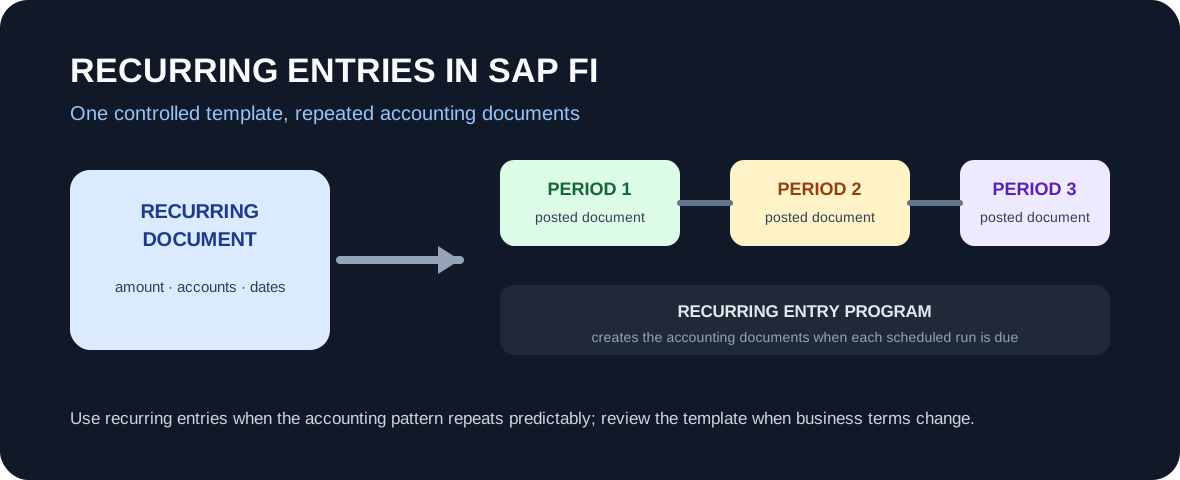
In SAP FI, a recurring entry is used when the same accounting pattern needs to be posted repeatedly at known intervals. Finance creates a recurring entry document containing the recurring posting data and schedule. The recurring-entry program then creates the actual accounting documents for the due dates. The recurring document itself is a special reference document and does not update transaction figures; the generated accounting documents do.
Why recurring entries exist
Many finance teams face predictable postings that repeat with little or no structural change: fixed monthly rent, a standard service charge, a regular reclassification, or another journal pattern with the same accounts and amount. Re-entering the complete document manually every month adds effort and creates avoidable keying risk.
SAP documents recurring entries as a standard Financial Accounting posting option for journal entries that repeat regularly. The useful mental model is template plus schedule: define the repeatable accounting pattern once, then generate the real FI documents when the scheduled dates arrive.
The recurring document is not the final posting
SAP distinguishes the recurring entry document from the accounting documents that are ultimately posted. SAP Help states that recurring entry documents are special documents used to create accounting documents and that transaction figures are not updated by the recurring document itself. This distinction matters because a recurring document is closer to a controlled posting instruction than to a booked journal entry.
When the recurring-entry program is run for a due period, it creates the accounting document for that posting date from the recurring data. That generated document is the item that enters normal FI posting and reporting.
Where recurring entries fit well
They fit best where the posting pattern is stable and predictable. Examples include a fixed monthly charge, a regular internal allocation or another journal whose structure repeats. SAP Learning also illustrates recurring supplier invoices where a template can generate accounting documents on daily, weekly or monthly recurrence patterns.
The important condition is repeatability. If the amount, accounts, tax treatment, cost object, business partner, or timing changes frequently, a static recurring pattern may create more correction work than it saves.
Recurring entry versus accrual functionality
Recurring entries can be used for some accrual-style postings, but they are not the same as a dedicated accrual engine. SAP Help notes that Manual Accruals can support calculation rules and variable accrual amounts, whereas recurring entries are better suited to simpler repeated postings. This is a useful design boundary: use recurring entries for a stable repetitive pattern, not as a substitute for a more complex calculation process.
Controls consultants should think about
A consultant should ask who owns the recurring document, how often the business reviews it, what ends the recurrence, what happens when source terms change, and how exceptions are monitored. The efficiency benefit comes from controlled reuse—not from setting up a template and forgetting it.
Recurring entries also connect to the wider posting-control environment. Posting period variants still govern whether the generated document can post in the relevant period. Validations and substitutions can affect supported posting rules, while parked and held documents solve a different problem: unfinished document entry rather than repeated scheduled postings.