
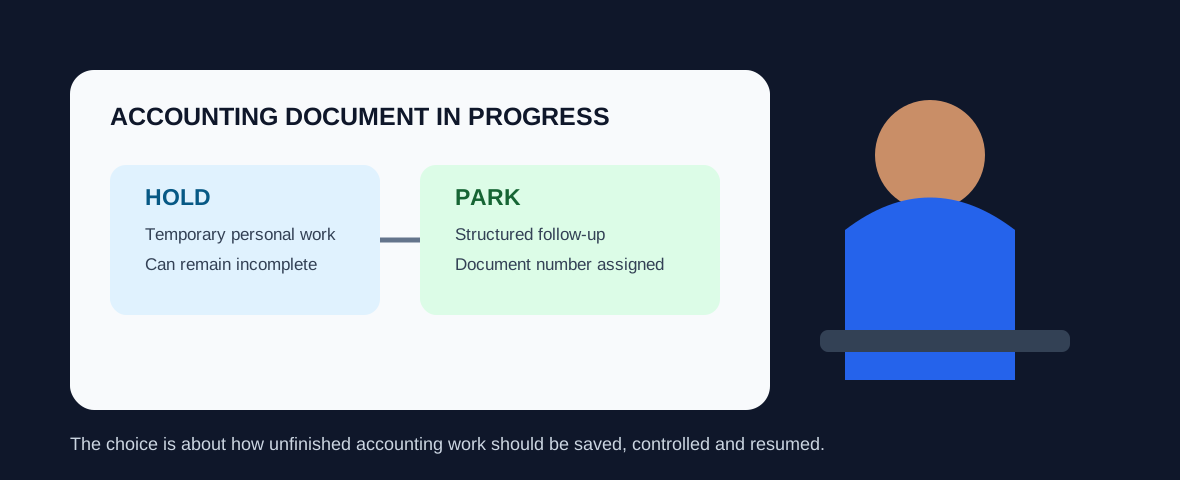
In SAP FI, holding and parking both save document data without posting it to the accounts. A held document is primarily a temporary work-in-progress save: it may be incomplete, receives no regular accounting document number in classic FI holding, does not update account balances and is not available for normal evaluation. A parked document is stored more formally, receives a document number, can be changed and later posted, and can support structured review or workflow scenarios. Exact behavior can vary by application and SAP edition, so the business context matters.
The business difference is control, not just “save later”
Imagine an accountant entering an expense document and discovering that the correct cost center is still unknown. If the objective is simply to preserve unfinished entry work and return later, holding is the lighter option. SAP describes held FI documents as temporary saves that do not need to be complete; balances are not updated and the held data is not available for evaluation.
Parking is intended for a more durable intermediate state. SAP documentation explains that parked documents can be completed, changed, checked and later posted. In classic FI parking, the system assigns a document number while normal posting updates do not yet occur. This makes parking more suitable when unfinished accounting work needs structured follow-up rather than merely preserving a user's draft.
Held and parked documents compared
What happens to financial balances?
Neither option should be confused with posting. SAP's FI documentation states that held documents do not update account balances. Parked documents also do not perform the normal accounting updates of a posted document; the usual account movements occur when the parked document is actually posted. SAP notes application-specific exceptions and additional informational updates in some parking scenarios, which is why consultants should distinguish the general FI concept from a specific invoice-processing application.
Why parking fits review and workflow better
A parked document can be changed and later posted, and SAP provides workflow/release concepts around document parking in relevant scenarios. That makes parking useful when one person captures information and another person may review, complete or release it. Holding is better understood as preserving interrupted data entry rather than creating a formal review queue.
A practical decision rule
Use Hold when the user is not ready to create a structured intermediate accounting document and simply needs to resume incomplete entry later. Use Park when the organization needs the document to exist in a controlled pre-posting state for completion, checking, review or later posting.
Then ask a second question: which application are you actually using? Supplier invoice processing, classic G/L entry and other SAP processes can expose hold/park behavior differently. Do not transfer a rule from one application blindly into another.
How this connects to other FI controls
Holding or parking decides what happens to unfinished document entry. Other FI controls answer different questions. Posting period variants determine whether a period is open for posting. Field status variants influence whether fields are required, optional or suppressed. Validations and substitutions enforce or derive business rules during supported posting contexts.