
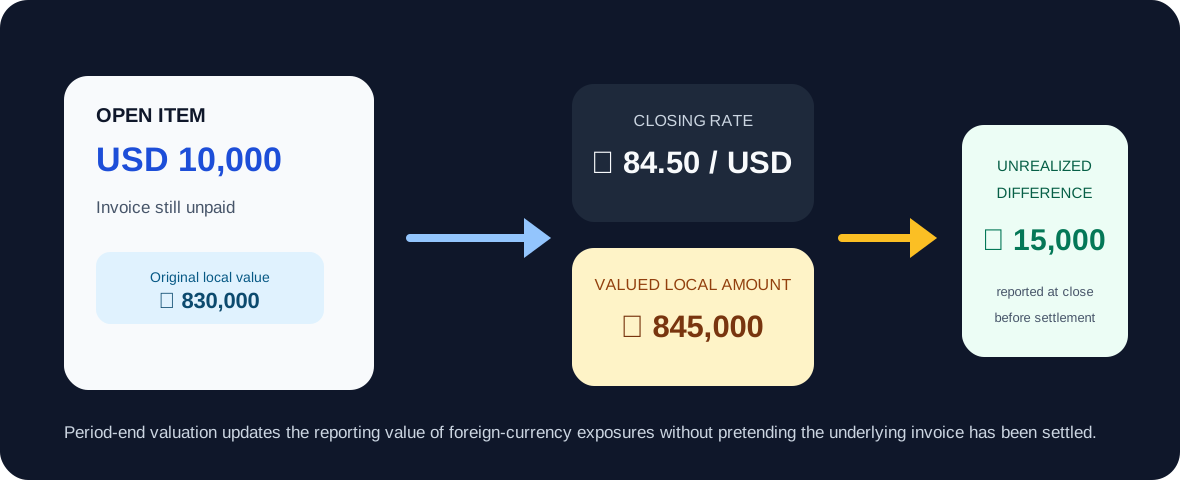
Foreign currency valuation in SAP FI is a period-end process that remeasures eligible foreign-currency open items and balance-sheet balances using the configured valuation method and exchange-rate basis. The difference between the previously recorded local-currency value and the closing valuation is recognized through valuation postings, typically as unrealized exchange gain or loss until the underlying exposure is later settled or otherwise resolved.
Why valuation is needed
Consider a supplier invoice for USD 10,000 posted when one US dollar equals ₹83.00. The accounting document records a local-currency value of ₹830,000. If the invoice is still unpaid at month end and the closing rate is ₹84.50, the same USD obligation now represents ₹845,000 in local-currency terms. Without valuation, the balance sheet would continue to show the earlier local-currency amount even though the reporting value of the liability has changed.
SAP documents foreign currency valuation as part of closing operations. Valuation methods define the procedure, the exchange-rate basis, and how differences are posted. For foreign-currency balance-sheet accounts, SAP also documents that valuation differences can be posted to the account or an adjustment account, with the offset recorded to exchange-rate difference expense or revenue accounts.
What can be valuated
Two common categories are foreign-currency open items and foreign-currency balance-sheet accounts. Open items can include receivables and payables that remain outstanding at the valuation date. Balance-sheet accounts managed in a foreign currency can also require valuation of their foreign-currency balances. Which items and currencies are included depends on the accounting setup and the valuation process being used.
This is why open item management matters: the system must know which transactions are still economically unresolved. Clearing the item later is a different step handled through the normal clearing process.
What the valuation method controls
SAP's valuation method defines important accounting choices rather than merely supplying a rate. Depending on the supported process, it can govern the valuation procedure, the exchange-rate type used, and how the resulting differences are posted. Organizations align those settings to their accounting principles and closing policy.
SAP S/4HANA Cloud also documents an Advanced Foreign Currency Valuation capability with its own activation and configuration requirements. That is a reminder not to assume that every SAP landscape uses the same valuation mechanics. The exact process should be confirmed against the product edition, release, accounting principle, ledger setup, and approved configuration.
Controls that matter at close
- Valuation date and rate source: the close must use the approved rate basis for the relevant accounting principle.
- Scope: accounts, company codes, currencies and open items should be included consistently and intentionally.
- Valuation method: configuration should reflect the approved accounting treatment and product capability.
- Posting period: valuation postings must fall in an open period under the applicable posting period controls.
- Review of material differences: large or unexpected movements can reveal incorrect exchange rates, stale open items, wrong currencies, or master-data issues.
- Reconciliation: valuation output should reconcile to the exposures Finance expected to be in scope.
Valuation is not the same as currency translation
Valuation answers what a foreign-currency exposure is worth at the valuation date. Currency translation addresses reporting amounts across currency types or reporting contexts. SAP documentation connects currency translation with foreign currency valuation, but the two concepts solve different reporting questions. Keeping that distinction clear helps avoid treating every currency difference as the same accounting event.
Consultant thinking: start from the accounting exposure
When a valuation result looks wrong, the fastest diagnostic route is usually not to start with the posting document generated by the run. Start with the exposure: which foreign-currency item or balance was in scope, what original local value was recorded, which closing rate and valuation method applied, and what accounting principle or ledger context was intended. Then trace the resulting difference.
Recurring valuation surprises often point upstream—to incorrect currency in master or transaction data, uncleared items that should have been resolved, wrong rate maintenance, or a close process that lacks ownership. Valuation is therefore both an accounting process and a useful control signal.
Key takeaway
Foreign currency valuation keeps period-end reporting aligned with current exchange-rate conditions while leaving the underlying business transaction intact. The quality of the result depends on correct open items and balances, approved valuation rules, reliable rates, controlled posting periods, and disciplined close review.