
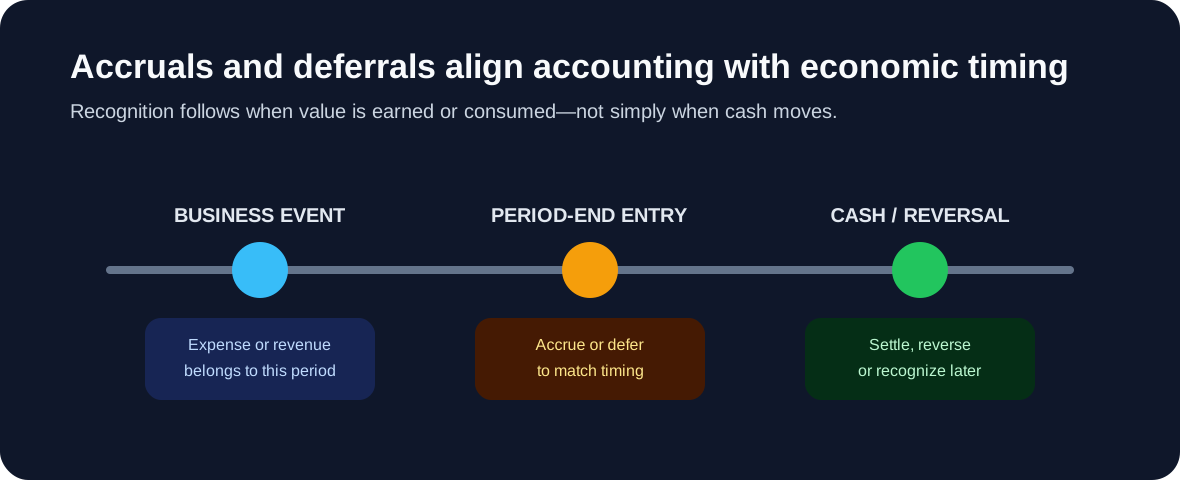
An accrual records an expense or revenue in the period in which the economic activity occurred even when the related invoice or cash movement happens later. A deferral moves recognition out of the current period when cash or an invoice arrives before the related expense or revenue should be recognized. In SAP FI, these timing adjustments can be handled through controlled journal entries and, for suitable scenarios, through Accruals Management processes that calculate and post periodic amounts.
Why accruals and deferrals exist
Period-end reporting should reflect what happened economically during the period, not just which documents happened to arrive before the closing date. A company may receive a service in September but receive the supplier invoice in October. Without an accrual, September expenses may be understated. Conversely, a business may pay a multi-period cost in advance; recognizing the full amount immediately can overstate the current-period expense.
The accounting problem is therefore a timing mismatch. The control objective is to align recognition with the period that received or delivered the economic value.
Accrual versus deferral
Accrual: recognition is brought forward because the business activity has already occurred but the accounting document or cash movement is later. A common example is a service already consumed before the supplier invoice arrives.
Deferral: recognition is postponed because payment or billing has occurred before the related benefit or obligation belongs in profit and loss. A prepaid annual service can require part of the cost to remain on the balance sheet and be recognized across future periods.
Both are period-allocation mechanisms, but the direction of the timing difference is opposite.
How SAP supports periodic accrual processing
SAP Help documents Manual Accruals as an Accruals Management process in General Ledger Accounting. An accrual object stores the information for the business transaction, calculation methods determine periodic amounts, and a periodic accrual run can calculate and post the relevant entries. SAP also supports simulation and account determination for the resulting postings.
This is more structured than simply copying a manual journal every month. It is particularly useful when a business needs controlled calculation logic, recurring period runs, parallel accounting, approvals, or systematic utilization and release of accrual amounts.
Recurring entries are related but not identical
Recurring entries are useful when the posting pattern is stable and repeatable. SAP Help notes that Manual Accruals provides more flexible calculations and can support amounts that vary across periods. That makes the choice a design question: use the simplest controlled mechanism that accurately reflects the accounting requirement.
Controls consultants should ask about
- What business event proves that the expense or revenue belongs to this period?
- How is the amount estimated, and who reviews the estimate?
- Should the entry reverse automatically, be utilized by actual postings, or be released manually?
- Which balance-sheet and profit-and-loss accounts should be used through account determination?
- How are old or unsupported accrual balances identified and cleared?
- Do parallel ledgers or accounting principles require different calculations?
These controls sit within the wider FI close environment. Posting period variants determine whether the adjustment can be posted in the intended period, while G/L account master data provides the account framework used by the posting. Validations and substitutions may also support posting controls in appropriate business contexts.
Key takeaway
Accruals and deferrals are not merely closing entries. They are a disciplined way to separate economic timing from document and cash timing. SAP can support that discipline with controlled journal processing and Accruals Management, but the quality of the result still depends on sound evidence, calculation logic, ownership and review.