
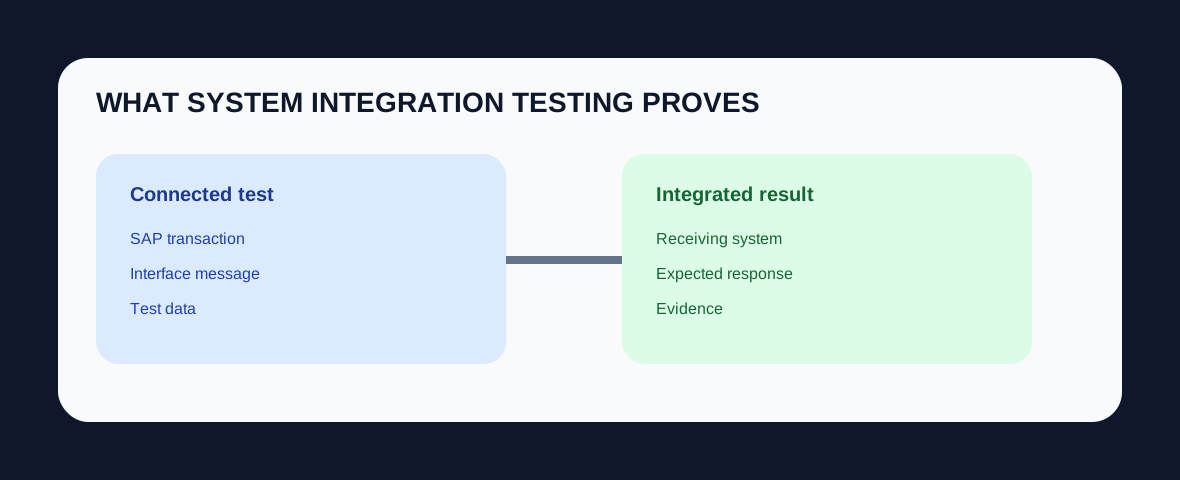
System integration testing (SIT) proves that connected SAP components, interfaces and dependent systems work together for the scenarios executed. It checks whether data is exchanged correctly, process handoffs occur in the expected sequence, and integrated outcomes are produced. It does not by itself prove business acceptance; UAT validates complete business processes against approved requirements with business users.
SIT starts where unit testing stops
A unit test can show that one configured rule or development behaves correctly in isolation. SIT expands the scope to multiple connected steps. SAP Learning describes integration testing as confirming that interfaced data is exchanged with other systems.
What a passing SIT scenario proves
For the scenario tested, a pass gives evidence that prerequisite data was valid, interfaces exchanged the intended information, mappings and sequencing worked, and the connected business outcome matched the expected result. Negative scenarios should also prove how errors, retries or rejected messages are handled.
What SIT does not prove
SIT does not automatically prove every possible integration path, production-scale performance, complete security coverage or business-user acceptance. Those questions may require additional non-functional testing, security testing, performance testing and UAT.
Evidence that matters
Good SIT evidence records the scenario, systems in scope, prerequisite master and transactional data, interface messages or identifiers, expected and actual results, defects, retests and downstream outcomes. A green status without traceable evidence proves very little.
Continue with What Unit Testing Proves, How Transactional Data Is Prepared for Testing, How Testing Scope Is Defined, and the Consulting & ERP Projects hub.