
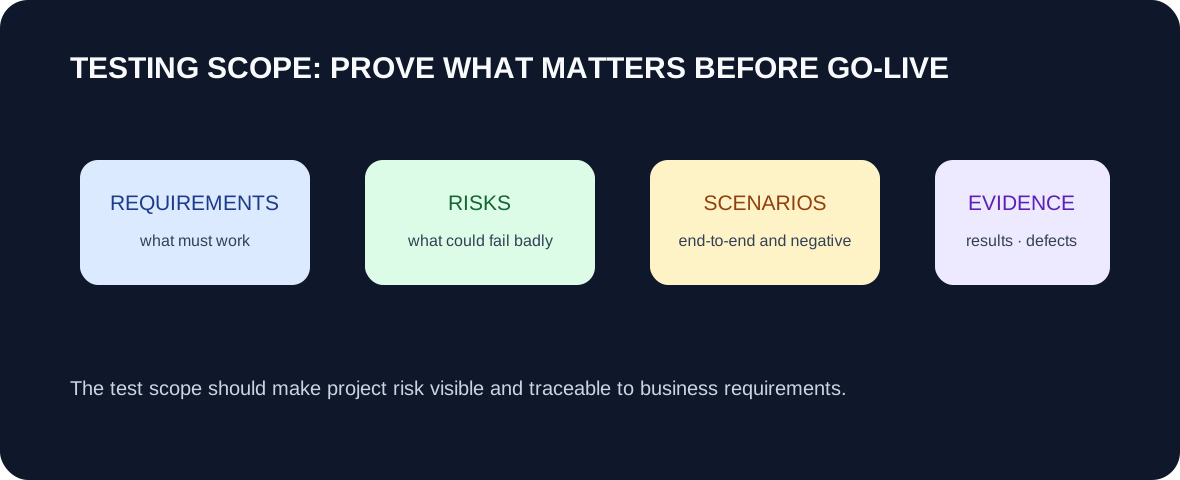
Define testing scope by tracing in-scope requirements and business processes to the risks that must be controlled, then selecting the test levels, scenarios, users, integrations, data conditions and evidence needed to prove the solution works. Include both expected paths and meaningful failure or exception cases.
Testing scope comes from implementation scope
A project should not invent testing independently of what it is changing. SAP Cloud ALM supports requirements, test cases, test plans, testers, manual and automated execution, and result monitoring. That structure reflects the core idea of traceability: the team should be able to show which requirement or process a test protects.
Cover the right levels of testing
Unit testing proves individual configuration or development works. System integration testing proves cross-process and cross-system handoffs. User acceptance testing confirms that representative business users can complete agreed scenarios and outcomes. Regression testing protects working areas from unintended change. The exact mix depends on project scope and risk.
Prioritize end-to-end and exception scenarios
Happy-path tests are necessary but not enough. Scope should consider approvals rejected, credit or availability blocks, interface failures, missing master data, authorization restrictions, reversals and other realistic exceptions where business continuity is at risk.
Define evidence and exit criteria
Scope is incomplete without proof. The project should agree what constitutes a passed test, how defects are classified, which unresolved defects can block release, what evidence is retained and who accepts the result. SAP’s test-management capabilities support test plans, assignments, execution outcomes and progress monitoring for this reason.
Think like a consultant
For every major process, ask: what could fail, who would notice, what business consequence would follow, and which test would detect the failure before production? That question produces more useful scope than counting test cases.