
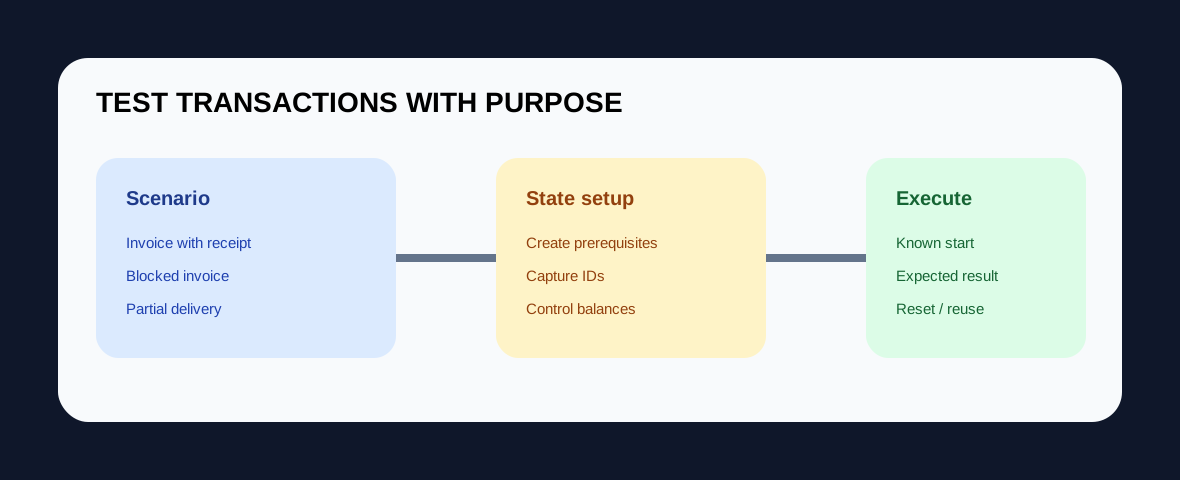
Transactional data for SAP testing is prepared by defining the exact business state required for each test case, creating or loading prerequisite transactions, recording document identifiers and balances, and ensuring the data can be reset or recreated for repeatable execution. The goal is not to reproduce all production activity; it is to create representative transaction states that prove normal, exception and boundary scenarios.
Transactional data is different from master data
Master data defines relatively stable business objects such as customers, suppliers, materials and organizational assignments. Transactional data records business events: purchase orders, goods receipts, invoices, sales orders, deliveries, payments, production orders and journal entries.
SAP Learning guidance for implementation testing explicitly says teams should identify in advance which business scenarios, master data and transactional data are relevant for testing. This matters because a scenario often depends on both the master record and the correct transaction state.
Build from the test condition backward
If the test is “post an invoice after a full goods receipt,” the prerequisite state is different from “post an invoice before goods receipt” or “post an invoice for a partial quantity.” Start with the expected test condition and work backward to the transactions needed to create it.
Use representative, not random, documents
A useful test pack deliberately covers meaningful variants: currencies, plants, document types, partial quantities, blocked statuses, approvals, open balances, returns and other business conditions that influence system behavior. Random documents can create false confidence because they may all follow the same easy path.
Record the state before execution
Testers should know which document IDs, quantities, values and statuses are expected before the test starts. This gives the team a reference point for diagnosing whether a failure comes from the scenario, configuration, data preparation or the software itself.
Plan for reset and reuse
Some test transactions cannot simply be reused because the first execution changes their state. The team may need cancellation, reversal, fresh document creation, environment refresh or parallel data sets. Define the reset approach before a large test cycle starts.
Related concepts
Continue with How Master Data Is Prepared for Testing, How Testing Scope Is Defined, How Reports Are Validated, and the Consulting & ERP Projects hub.