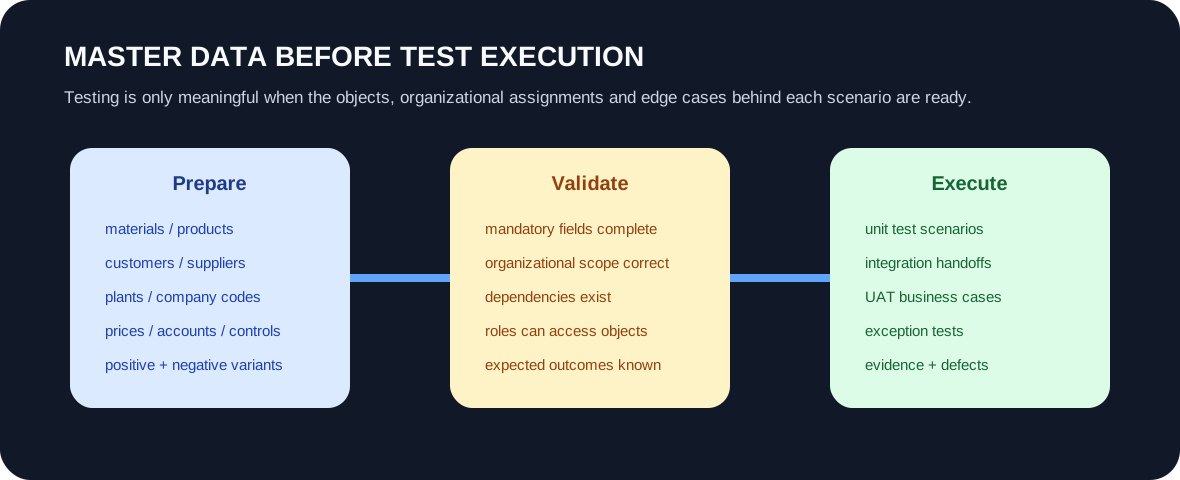
Master data for SAP testing is prepared by starting from approved test scenarios, identifying the records and attributes those scenarios need, creating or loading representative records in the test environment, checking dependencies and authorizations, and documenting which data set each test uses.
Start from scenarios
SAP Learning guidance for implementation testing calls out business scenarios, master data and transactional data as inputs that must be identified in advance.
Choose representative variants
A test set should cover meaningful business differences: organizational units, countries, currencies, tax treatment, account assignments, material types, customer or supplier groups and other attributes that change system behavior.
Check dependencies and governance
Master data is interconnected. A supplier may need company-code and purchasing extensions; a material may need plant and sales views. Missing dependencies can look like process defects. Assign owners for creation, validation and reset, and follow privacy or masking policies where production-derived data is used.
Prepare for repeatability
Document record IDs, prerequisite transactions, expected statuses and reset steps. When a test fails, distinguish configuration, code, authorization and data defects before logging a product defect.
Continue with How Testing Scope Is Defined, How Forms and Outputs Are Validated, How Reports Are Validated, and the Consulting & ERP Projects hub.