
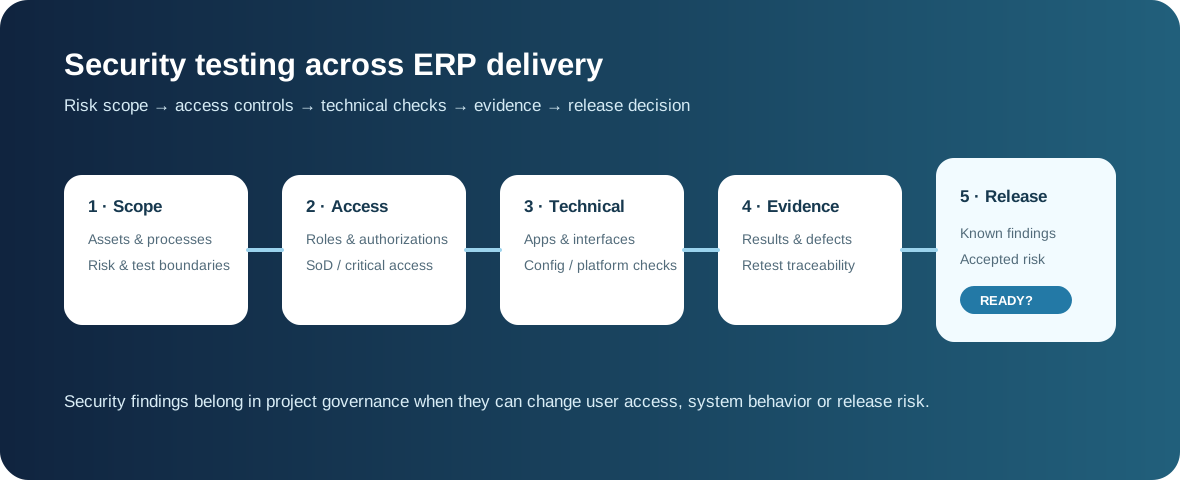
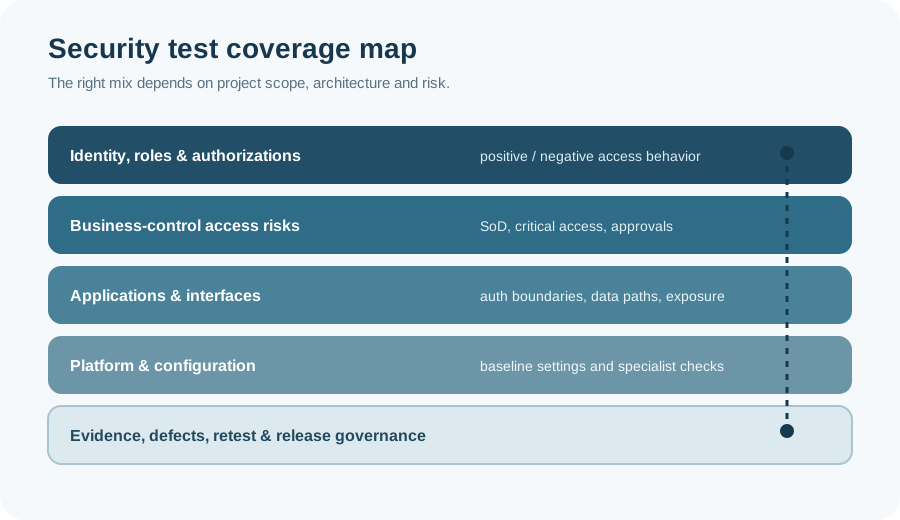
Security testing in an ERP project should be treated as risk-based project work, not as a single late-stage activity. The scope can include role and authorization behavior, segregation-of-duty or critical-access risks, security-relevant business controls, application and interface boundaries, and specialist technical assessments where the architecture requires them. Findings should flow into evidence, defects, retesting and release-readiness decisions.
Start with risk and scope, not a generic checklist
An ERP program contains different technologies, integrations and business processes, so security testing should begin by identifying what is in scope and what risk the project needs to reduce. Finance approvals, privileged administration, external interfaces, identity flows and custom applications may need different forms of assurance. The project should also define who is authorized to perform each test and which environments and data can be used.
Authorization testing belongs close to business-process testing
Role and authorization tests should confirm that intended users can perform the work they need and that inappropriate actions are denied. Positive and negative scenarios matter because a role can fail either by blocking legitimate work or by granting excessive access. Business owners, functional consultants and security specialists often need to review these results together because authorization behavior is tied to the process design.
Access-risk analysis is different from transaction correctness
Segregation-of-duty and critical-access reviews ask whether combinations of access create unacceptable risk, even if each individual transaction works correctly. SAP Access Control learning content describes access risks, rule sets, mitigation and critical-access concepts. These checks complement functional testing; they do not replace it.
Technical security assessment needs specialist ownership
ERP projects may also require technical examination of applications, interfaces, platform configuration or connected services. The exact methods depend on the architecture, project authorization and risk model. Standards such as NIST SP 800-115 provide planning and assessment guidance, while OWASP publishes web-application testing guidance. These specialist activities should be explicitly scoped and performed only by authorized teams in approved environments.
Evidence and defects should use the project testing discipline
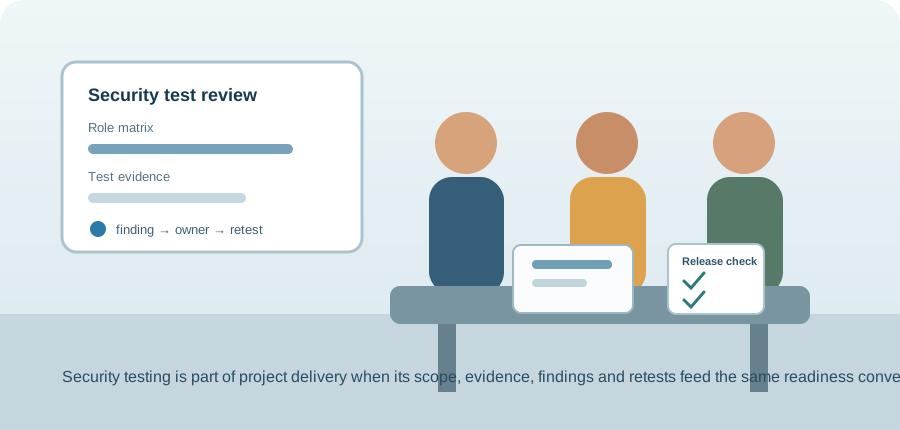
SAP Cloud ALM supports prepared test cases, expected results, evidence and defects for project testing. Security-related scenarios that fit the project test model can use the same traceability principles: define the expected behavior, record the result, link a defect when needed, and retest after correction. Specialized security tools may produce separate reports, but their findings should still have owners, decisions and closure evidence.
Security testing is not just UAT
User acceptance testing validates that business users can perform agreed processes. Security testing asks additional questions about who should be able to do what, whether conflicting access is controlled, and whether the technical solution meets the security expectations defined for the project. Some checks happen during design and build, some during formal test cycles, and some near release depending on the risk and environment.
Release readiness should make unresolved risk visible
Before go-live, teams should know which security findings are closed, which require retest, which are accepted with documented mitigation, and which are blockers. The goal is not a claim of zero risk; it is a transparent decision based on verified evidence, agreed ownership and the project’s risk tolerance.
Continue with How Test Cycles Are Planned, How Negative Test Cases Are Designed, How Test Evidence Is Maintained, How Performance Testing Differs from Functional Testing, and the Consulting & ERP Projects hub.