
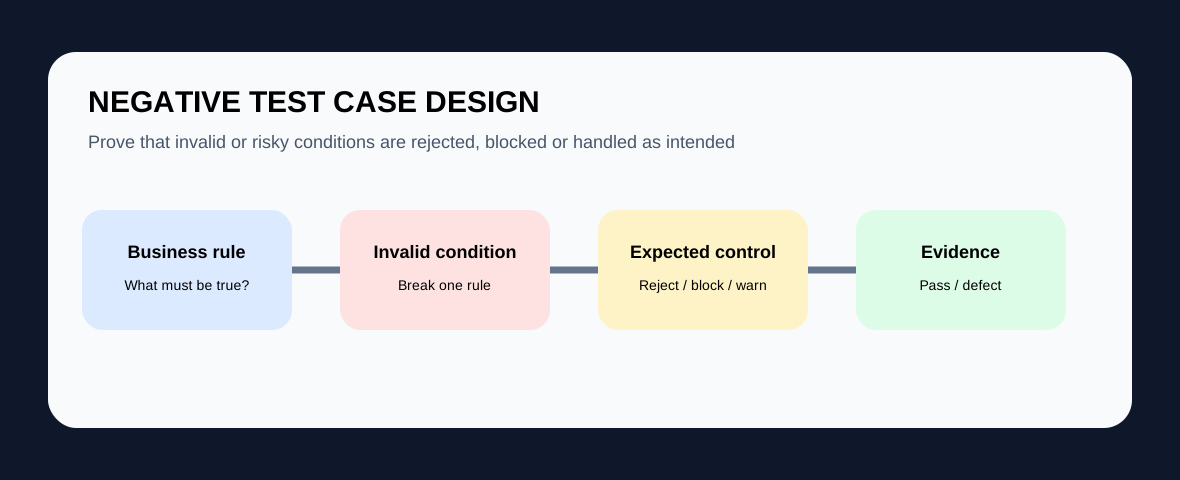
Negative test cases are designed by starting with a business rule, precondition or control that should prevent an invalid outcome. The tester changes one relevant condition—such as missing data, an unauthorized role, a blocked status, an invalid sequence or a boundary value—and defines the expected rejection, warning, block or exception handling. The test passes when the observed result matches that expected behavior.
Start from the rule, not from random bad data
Good negative testing is traceable to a requirement, user story, process rule or known control. In SAP Cloud ALM, test cases can be related to requirements and user stories, which supports this traceability. That connection makes the test defensible: the team knows exactly which rule is being challenged and why the result matters.
Change one condition deliberately
A focused negative case normally keeps valid preconditions stable and changes the condition that should trigger protection. Examples include omitting a mandatory field, entering a value outside an allowed boundary, attempting an action in the wrong status, using a user without the required authority, or processing data that violates a defined business dependency.
Expected results must be observable
SAP Cloud ALM manual test actions support expected results and pass/fail execution status. A negative test should therefore state something a tester can objectively observe: a document is not posted, an approval cannot proceed, an error message appears, a status remains unchanged, or a transaction is routed into an exception path. “System should fail” is too vague.
Use risk to choose which negative cases matter
Not every possible invalid combination deserves a separate case. Prioritize failures that could create financial misstatement, unauthorized activity, incorrect master or transactional data, broken integrations, unusable workflow states or significant operational delay. Boundary cases are most valuable where the boundary itself reflects a real business control.
Continue with How End-to-End Scenarios Are Selected, What System Integration Testing Proves, What User Acceptance Testing Proves and the Consulting & ERP Projects hub.