
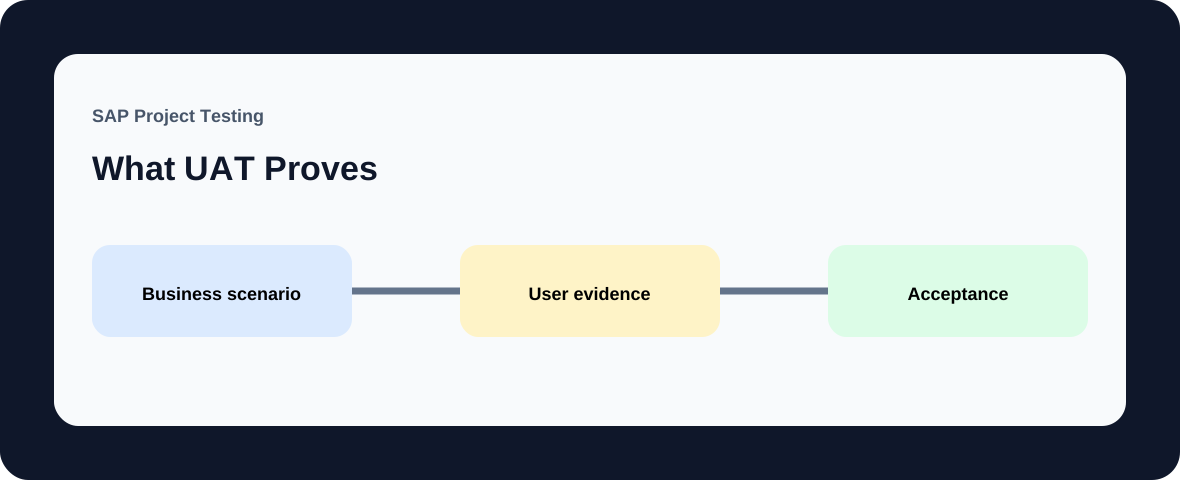
UAT proves that representative business users can execute agreed business scenarios in the configured solution and obtain acceptable outcomes against defined acceptance criteria. It is a business acceptance activity; it does not replace unit testing, system integration testing, security testing, performance testing or cutover rehearsal.
What UAT should validate
UAT focuses on the business use of the solution: whether roles can complete important scenarios, controls behave as expected, outputs are usable, exceptions are understood and the result matches the approved process design. The test evidence should connect back to requirements or acceptance criteria.
Who owns acceptance
Business process owners, key users and subject-matter experts normally provide the business judgment. The project team prepares the environment, data, scripts and defect support, but technical delivery teams should not substitute their own sign-off for business acceptance.
What a defect means during UAT
A failed scenario may reveal configuration, data, integration, authorization, output or training problems. Teams should classify the cause, fix it where required, retest and preserve evidence. Not every observation is a defect; some expose an unclear requirement or readiness issue.
What UAT does not prove
UAT cannot by itself prove load capacity, cybersecurity, technical component correctness or production cutover readiness. Those questions require other test types and readiness controls.
Continue with What System Integration Testing Proves, What Unit Testing Proves and the Consulting & ERP Projects hub.