
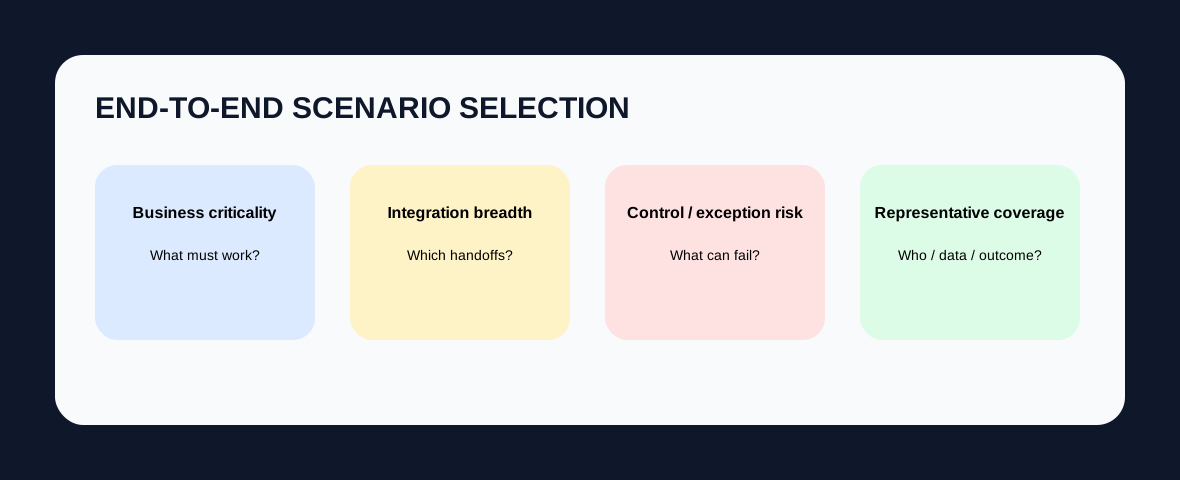
SAP project teams select end-to-end scenarios from the approved process scope and requirements, then prioritize journeys that are business-critical, cross important system or organizational boundaries, carry material control or financial risk, use representative master and transactional data, and include meaningful exception paths. The goal is defensible coverage of real business behavior rather than the largest possible number of test cases.
Begin with scope and requirements
The first boundary is what the project has agreed to implement. Requirements, solution processes and user stories identify changed behavior that needs evidence. Test preparation should trace scenarios back to that scope so the team can explain why each scenario exists and what business outcome it proves.
Prioritize the journeys that matter most
Teams normally give more attention to high-volume or high-value processes, regulatory and financial controls, customer- or supplier-critical outcomes, and sequences where an issue would stop downstream work. A local transaction may need focused functional testing, while a journey that crosses Sales, Logistics and Finance can justify an end-to-end scenario.
Include normal and exception paths
A happy path alone can hide the situations users encounter most often. Representative coverage may include approvals, blocks, rejections, reversals, partial quantities or missing data where those conditions matter to the process. The chosen exceptions should reflect actual business risk rather than random negative testing.
Make the data and roles realistic
An end-to-end scenario should exercise the roles, organizational units, master data and transaction states needed for the journey. Formal testing becomes more meaningful after relevant integrations are connected and the data needed by the process is available. That lets the team validate a sequence closer to expected operation.
Continue with What System Integration Testing Proves, What User Acceptance Testing Proves, How Transactional Data Is Prepared for Testing and the Consulting & ERP Projects hub.