
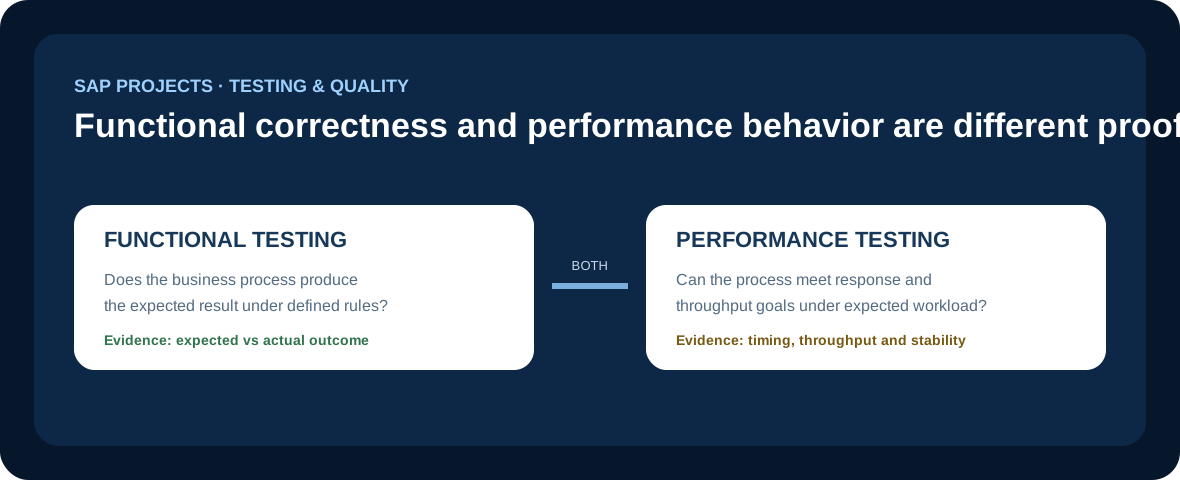
Functional testing asks whether SAP produces the correct business result for defined scenarios and rules. Performance testing asks whether the solution can meet response-time, throughput and stability expectations when representative workload is applied. The two test types use different evidence and acceptance criteria, and one cannot substitute for the other.
Functional testing starts with business behavior
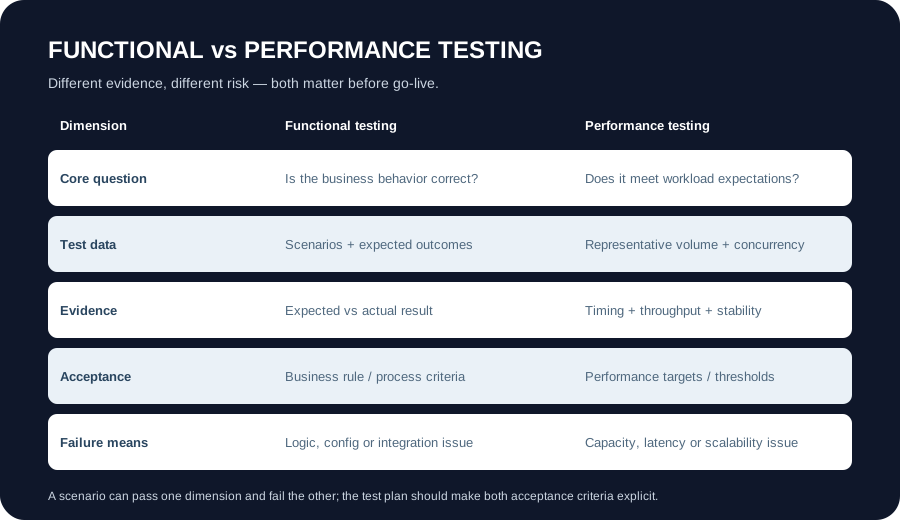
A functional test has a scenario, preconditions, data, actions and an expected business outcome. It may validate posting logic, status changes, calculations, interface behavior, authorizations or downstream consequences. The evidence is usually expected versus actual behavior and the resulting business data.
Performance testing starts with workload behavior
A performance test adds workload assumptions: transaction volume, concurrent users or processes, timing windows, response targets and representative data. Its evidence focuses on how quickly and consistently the solution responds and whether throughput remains acceptable as demand increases. The scenario still has to be functionally valid; otherwise timing a wrong result has little value.
Different test types use different acceptance criteria
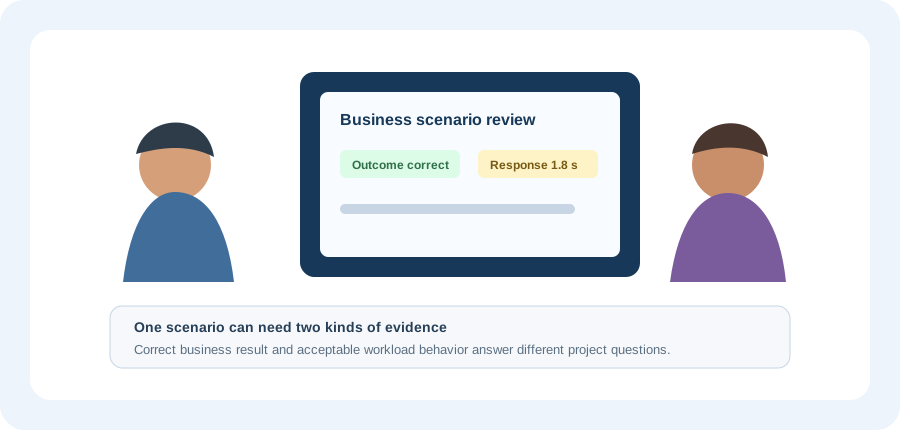
In functional testing, a pass means the observed application behavior matches the expected business result for the test action. SAP Cloud ALM manual test execution, for example, records expected versus actual behavior and lets testers capture evidence and defects. Performance testing instead works with measurable workload targets such as response time, throughput, concurrency and sustained stability. A page can be functionally correct for one user yet still fail a performance objective when realistic demand is applied.
The same business process can be tested in two ways
Consider a sales-order scenario. A functional test might verify that the order uses the intended customer, pricing, availability and follow-on processing. A performance test could use a representative transaction mix to observe how that same process responds when many users or integrations execute similar work over a defined period. The functional test protects business correctness; the performance test protects operational usability and capacity assumptions.
Representative workload matters in performance testing
Performance results are meaningful only in the context of the workload and environment used to produce them. Teams therefore define a realistic mix of transactions, concurrency or message rates, data volumes, ramp-up, think time and critical business windows. SAP's performance-testing guidance emphasizes simulating legitimate business usage rather than flooding a system unrealistically. Environment differences, data shape and background activity should also be understood before results are treated as production predictions.
They reveal different classes of risk
Functional failures usually point toward business logic, configuration, authorization, integration or test-data problems. Performance failures may reveal latency, resource contention, capacity limits, inefficient processing or a workload assumption that the design cannot meet. Because the causes differ, the people diagnosing them may differ too: functional consultants and business testers often lead correctness analysis, while technical, platform, integration and performance specialists may join workload diagnosis.
Project teams should not treat one as a substitute for the other
Performance testing is most useful when the tested business flow is sufficiently stable that timing a run produces meaningful evidence. It should also happen early enough to allow tuning, correction and retesting before go-live decisions. Functional cycles, regression coverage and user acceptance can establish that processes work; they do not by themselves prove behavior under peak or sustained workload.
Continue with How Test Cycles Are Planned, How End-to-End Scenarios Are Selected, How Regression Testing Works, and the Consulting & ERP Projects hub.