

Project teams test a data migration mock load by running a defined data set through the intended migration process, reviewing load messages, validating record counts and key business values, checking relationships and dependencies, reconciling results to the source, measuring execution time, and recording corrections for the next rehearsal. SAP migration tools can support simulation and migration runs; the broader project mock load also tests people, sequence and validation responsibilities.
Start with a controlled migration baseline
A useful mock begins with a known scope: which migration objects are included, which source extract is being used, which mappings and transformation rules are approved, which dependencies must already exist, and which validation owners will review the result. If the team changes source data, mappings and scope during the rehearsal without control, it becomes difficult to know what actually improved.
Load execution is only one part of the test
SAP documentation for migration tooling describes preparation, mapping and migration steps and provides simulation capabilities in supported scenarios. A mock load uses that technical execution as one piece of a larger rehearsal. Teams observe whether objects can be processed in the required sequence, whether mapping values are complete, whether errors are understandable, and whether the procedure can be repeated consistently.
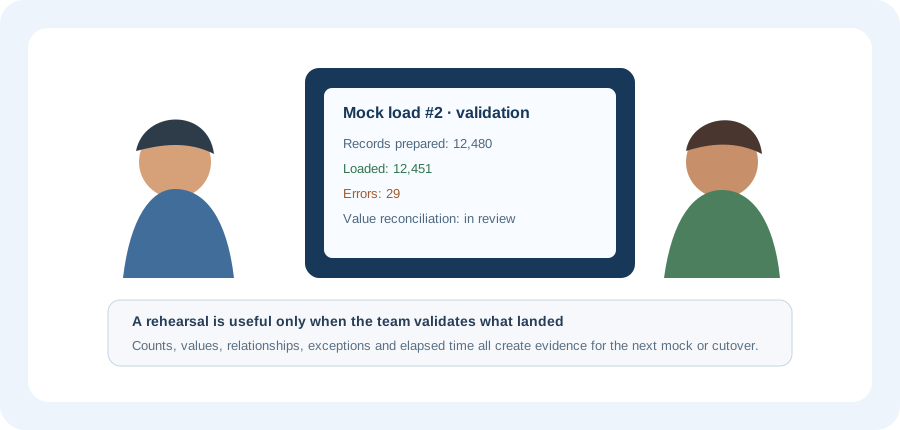
Validation checks both technical and business correctness
Record counts are a starting point, not the finish line. Teams also test critical field values, mandatory relationships, balances, dates, organizational assignments and representative business use. For financial or transactional data, reconciliation may include totals and open positions. For master data, validation may focus more on completeness, key attributes and whether dependent processes can use the migrated records as intended.
Errors become inputs to the next rehearsal
Each failed or questionable record should have a reason that can be assigned and corrected: source-data quality, transformation logic, missing mapping, object dependency, configuration, sequencing or validation criteria. Corrections should be traceable so the next mock proves that the issue is resolved rather than simply hidden by a different extract.
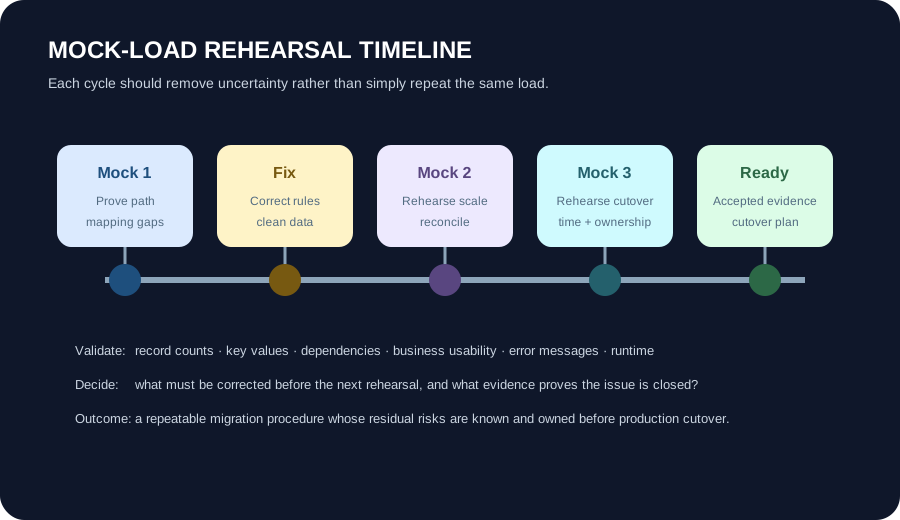
Mock loads also test cutover readiness
As go-live approaches, the rehearsal should measure elapsed time, handoffs, decision points, validation windows and ownership. A technically correct migration that takes too long, depends on unclear approvals or produces reconciliation that cannot be completed in the cutover window is not yet operationally ready. The final mock should make those constraints visible before production data is at stake.
Continue with How Data Migration Scope Is Defined, How Master Data Is Prepared for Testing, How Transactional Data Is Prepared for Testing, and the Consulting & ERP Projects hub.