
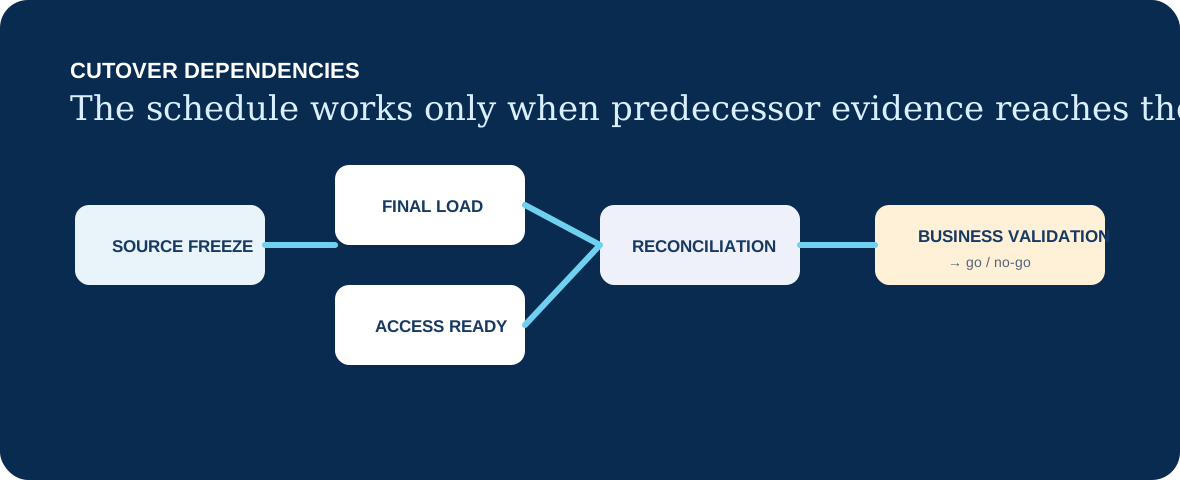
Project teams manage cutover dependencies by identifying which tasks must finish before others can start, linking dependencies across workstreams, defining the evidence that proves each predecessor is complete, and monitoring the small number of chains that can delay the go-live decision. Rehearsals expose hidden dependencies and unrealistic timings; contingency plans define what to re-sequence, defer or escalate when a predecessor slips.
Why dependencies matter more during cutover
Cutover runs in a constrained transition window. SAP guidance emphasizes a detailed cutover schedule, resource planning, reconciliation, business readiness and go/no-go evidence because late tasks can compress the time available for every successor. A task can therefore be “nearly done” and still create material risk if another workstream is waiting for its completion.
Start with logical predecessor relationships
Typical chains are easy to describe but difficult to execute under pressure. A source-system freeze can enable the final extract; the extract enables transformation and load; the load enables reconciliation; reconciliation enables business validation; validation contributes to go/no-go. Teams should document these relationships explicitly rather than relying on the order of rows in a spreadsheet.
Cross-workstream dependencies are often the hidden ones
Data work may depend on technical access. Business validation may depend on reports, user roles and migrated balances. Interface checks may depend on external systems and network availability. SAP cutover guidance also treats business and people readiness as part of preparation, so dependencies can span technical, data, operational and organizational workstreams.
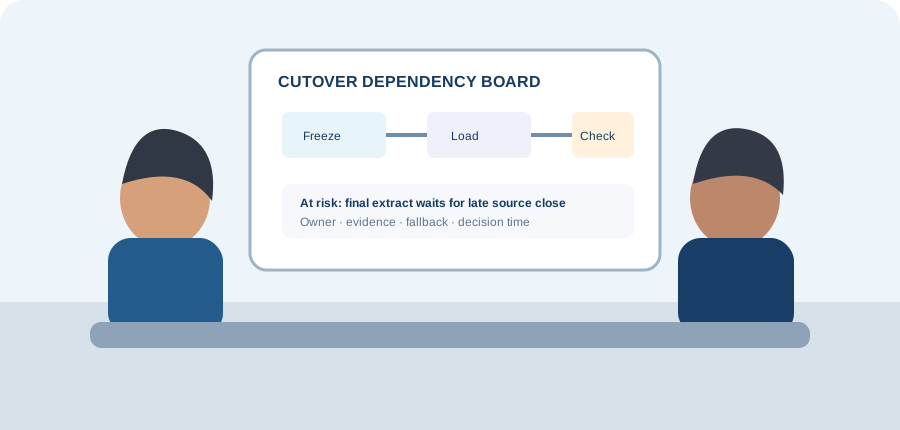
Define evidence, not just status words
“Complete” should mean something objective. A load may require control totals and error review; a reconciliation may require agreed balances; an access task may require successful role validation; a business-readiness task may require named sign-off. Evidence prevents a predecessor from being declared finished while its successor is still unable to proceed.
Track impact, not only lateness
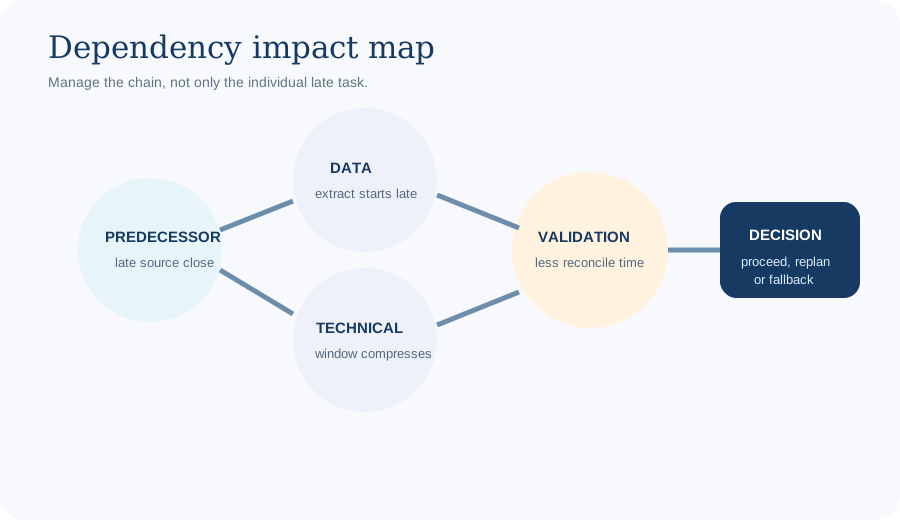
Not every late task threatens go-live. The key question is what the delay touches next. Teams should distinguish a task with float from one that blocks a critical downstream gate, then focus escalation on the latter. The impact can be time, validation capacity, business readiness, data integrity or the ability to make a defensible go/no-go decision.
Use rehearsal to discover hidden dependencies
Dry runs and migration rehearsals are not only timing exercises. They reveal access hand-offs, missing approvals, manual steps, report dependencies and assumptions that were invisible in planning. SAP guidance recommends preparing and testing the required steps in advance; measured timings and discovered dependencies should be fed back into the final runbook.
Design escalation and fallback before the window opens
For critical dependencies, define who decides, how long the team can wait, what alternative sequence is possible and when fallback becomes the safer option. This avoids inventing decision rights under pressure. A contingency does not need to be identical for every task: some items can be deferred, some can be worked around, and others are genuine go-live blockers.
Keep the dependency picture current during execution
As tasks complete, the team should update not only task status but also the readiness of successors. If a predecessor finishes late, the plan may need to compress, re-sequence or add resources downstream. The command structure needs a single current view of these consequences so that local optimizations do not create a larger cutover risk.
Consultant thinking: manage chains of evidence
A mature cutover plan is not a long checklist. It is a network of owned tasks whose completion evidence unlocks the next piece of work. The consultant’s job is to make that chain visible, challenge unsupported “green” status, and surface dependency risk early enough for the program to act.
Continue with What SAP Cutover Means, How a Cutover Plan Is Built, How Business Readiness Is Assessed Before Go-Live, How Open Defects Are Evaluated Before Go-Live, and the Consulting & ERP Projects hub.