
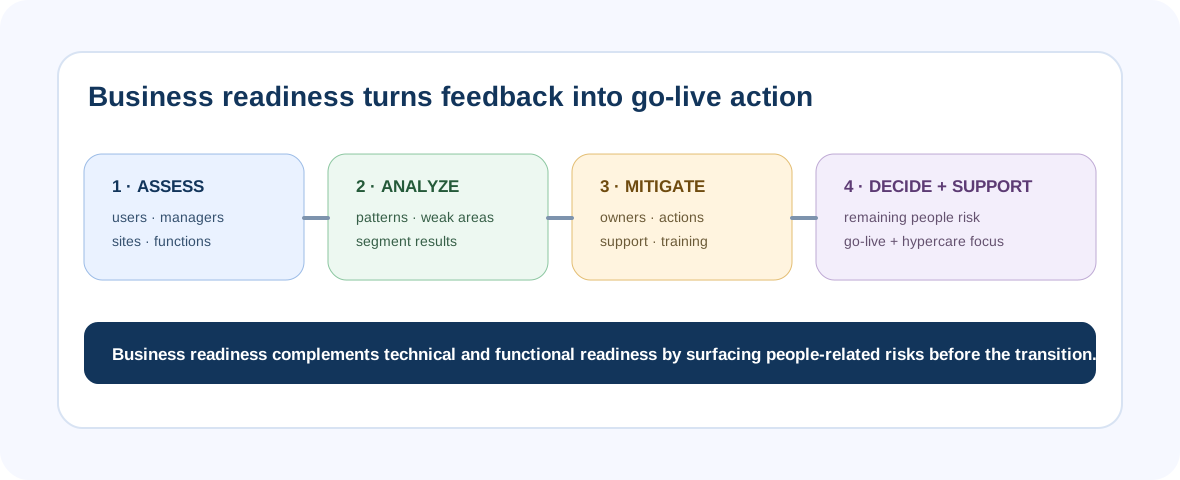
Before go-live, project teams assess business readiness by gathering structured feedback from impacted users and leaders, analyzing the results by business unit, role or location, identifying weak areas, and assigning mitigation actions with owners and deadlines. The objective is to surface remaining people-related risks that could undermine the transition even when the solution itself is technically ready.
Business readiness is not the same as technical readiness
SAP learning material places business readiness in the Deploy phase alongside the broader preparation for switching operations to the new solution. Technical and functional teams may be focused on production setup, testing, data and cutover, while change-management work asks whether the affected business can actually absorb the new processes, roles and ways of working.
Assess what people need in order to operate on day one
A business readiness assessment can look at awareness of the upcoming change, understanding of role and process impacts, training confidence, manager and key-user readiness, support awareness, local concerns and confidence in the transition. The exact questionnaire varies by project, but the point is to measure preparedness and the factors influencing it rather than asking a generic “are you ready?” question.
Use more than one level of evidence
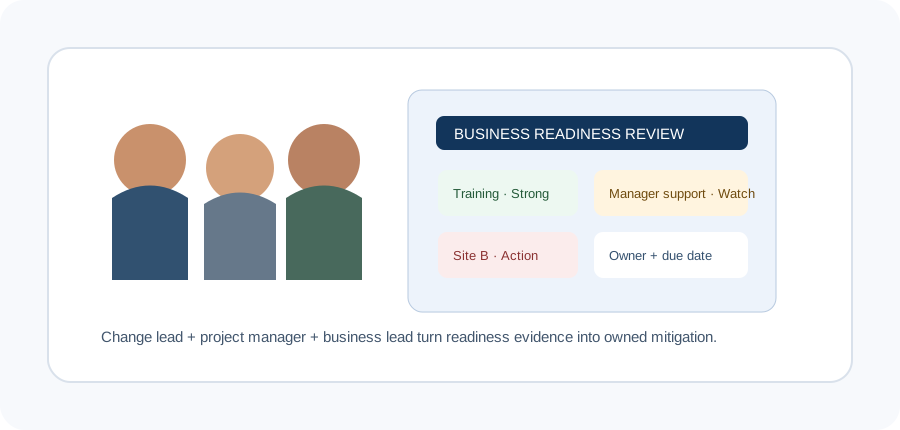
Surveys can provide broad coverage, but readiness is stronger when the team also uses manager feedback, key-user input, workshops, training completion evidence, support preparation and direct conversations with impacted groups. Qualitative comments help explain why a score is low and often reveal local issues that a project-wide average would hide.
Segment the results to find where risk is concentrated
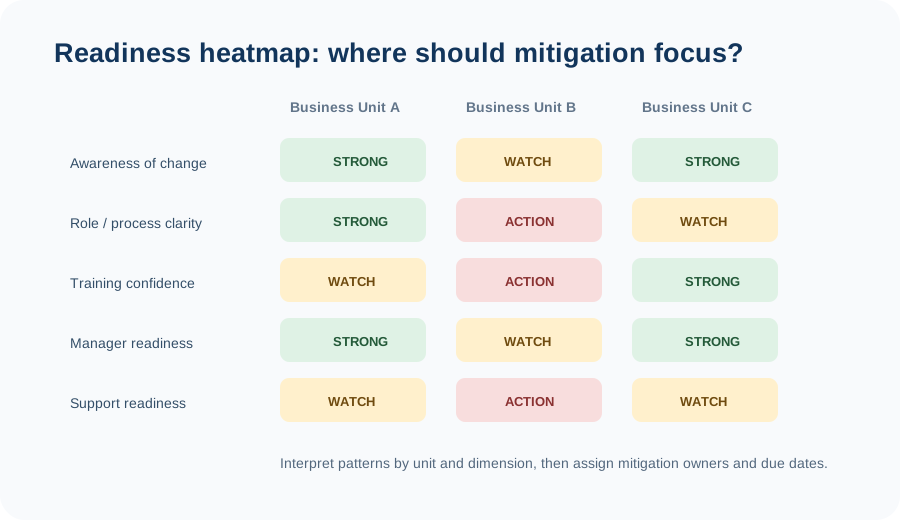
SAP’s business-readiness guidance emphasizes analyzing the collected data to identify challenges across different business units. A project-wide average can look healthy while one plant, function or role group remains unprepared. Segmenting the results helps the team focus scarce time and resources where additional communication, training, local leadership support or process clarification is most needed.
Convert weak areas into mitigation with owners
Low readiness is not automatically a reason to delay go-live, and a high score is not proof that risk has disappeared. Each material gap should be translated into a concrete mitigation action: additional role-based training, manager briefings, process clarification, local support coverage, communication, rehearsal or targeted coaching. The action needs an owner, due date and evidence that it has been completed.
Feed readiness into the wider go-live decision
Business readiness should be considered alongside testing, data, cutover, technical readiness and support readiness. It contributes a distinct view: whether the organization is prepared to adopt the new solution and sustain operations through the transition. Where residual people-related risks remain, they should be visible to governance and reflected in hypercare priorities.
Consultant thinking: ask where readiness is weakest, not whether the average is green
A useful readiness discussion identifies the most exposed population, the reason for the weakness, the mitigation owner and the consequence if nothing changes. That makes business readiness a decision-support mechanism rather than a ceremonial checkpoint.
Continue with How Training Systems Are Prepared, How Test Evidence Is Maintained, How Test Cycles Are Planned, How Security Testing Fits Into an ERP Project, and the Consulting & ERP Projects hub.