
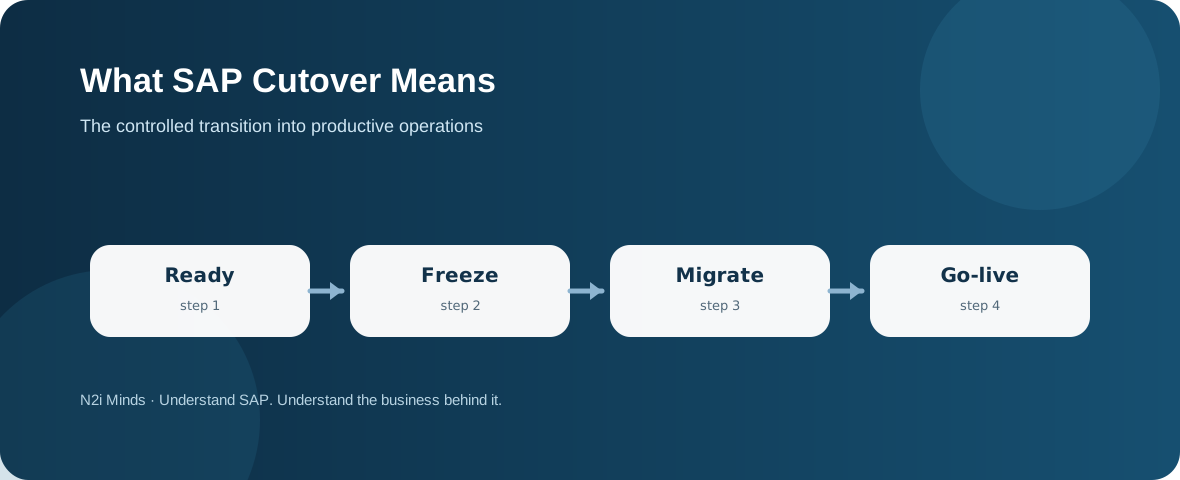
SAP cutover is the coordinated set of activities that prepares and executes the move into productive use. It commonly includes final readiness checks, business or legacy-system freeze points, final data migration and reconciliation, production setup, interface or job activation, user readiness, go/no-go decisions and the hand-off into go-live support.
Cutover is broader than data migration
Data migration is often one of the most visible cutover activities, but cutover also coordinates people, systems, integrations, business operations and decision-making. A migration can be technically successful while the overall cutover still fails if users are not ready, interfaces are not activated, reconciliation is incomplete or the business cannot resume critical processes.
The plan is a time-ordered runbook
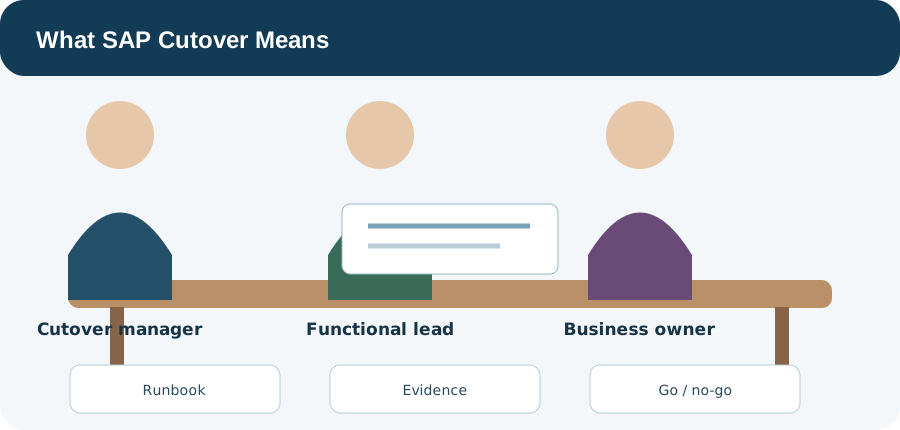
SAP guidance emphasizes detailed preparation because cutover tasks often run in a small time window. A cutover plan should state what must happen, in what sequence, who owns each task, what evidence proves completion and what dependencies must be satisfied before the next task begins.
Readiness precedes execution
Cutover should not be used to discover whether the project is ready. Critical testing, data rehearsals, training, operational preparation and unresolved-risk decisions should already have progressed far enough to support a controlled transition. The cutover window then executes the agreed transition rather than improvising the entire go-live strategy.
Freeze points protect consistency
Many transitions require a controlled point after which selected legacy or source-system changes are restricted so final migration and reconciliation can be performed against a stable baseline. The exact approach depends on the transition method and business model. The important design question is how the organization prevents transactions from falling into a gap or being processed twice.
Go/no-go is an evidence-based decision
A cutover plan should surface whether critical activities have completed, which risks remain and what fallback options are still viable. Go-live acceptance criteria help business and project leadership make that decision consistently. The schedule saying it is time is not the same as being ready.
Cutover ends in operational ownership
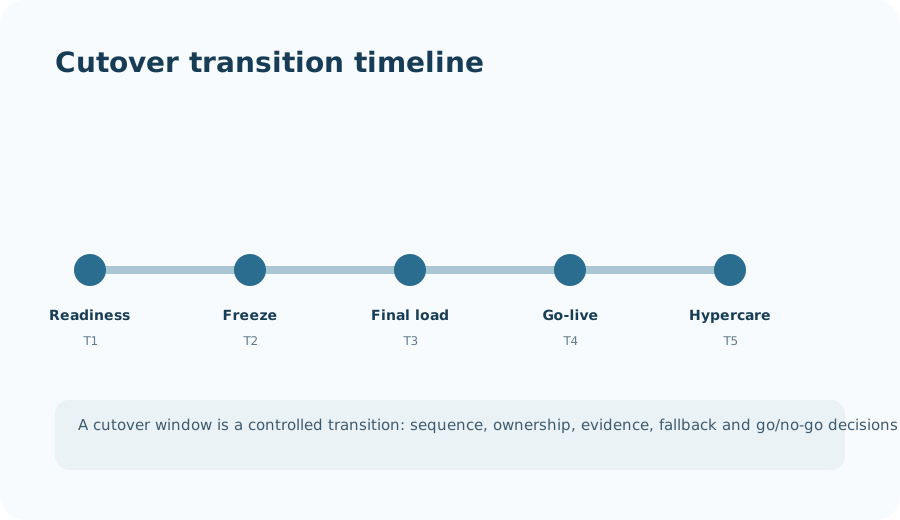
After the technical switch, the business must be able to operate. That is why hypercare, support ownership, monitoring and issue escalation sit close to cutover planning. A successful cutover is not simply a production system that is online; it is a business that can execute critical processes and resolve early issues with clear ownership.
Consultant thinking: manage dependencies, not just tasks
The hardest cutover problems usually sit between activities. A final data load may depend on a freeze; reconciliation may depend on the load; business validation may depend on reconciliation; go/no-go may depend on all three. Strong cutover management therefore focuses on dependency logic and evidence, not only a long checklist.
Continue with How Build Completion Is Formally Accepted, How Business Readiness Is Assessed Before Go-Live, How Open Defects Are Evaluated Before Go-Live, and the Consulting & ERP Projects hub.