
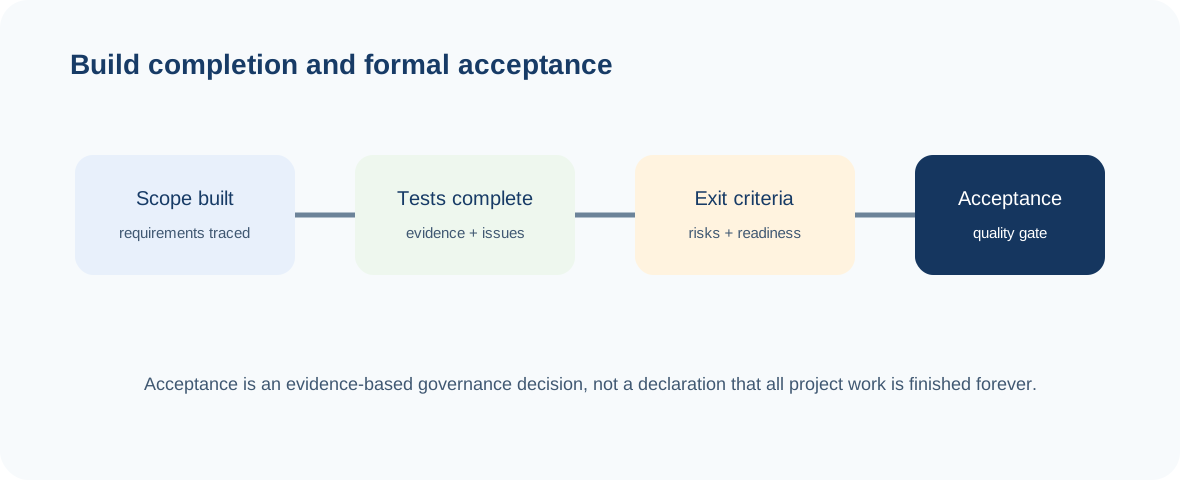
Build completion is formally accepted when the project reviews agreed exit criteria and confirms that the planned scope has been delivered to the required level, necessary testing and documentation are complete, unresolved issues are understood and owned, and the responsible stakeholders approve progression to the next phase. In SAP Activate, quality gates provide the governance framework for this kind of phase-transition decision.
Build complete is a project decision, not a system status
SAP Activate describes the Realize phase as the period in which the team iteratively builds, configures, integrates and tests the solution. The transition toward Deploy therefore depends on more than a technical statement that configuration is finished. The project needs evidence that the release is fit to move forward.
The exact approval mechanism depends on the customer and project governance model. Some teams use formal phase-gate sign-off, some use quality-gate checklists, and some combine steering approval with workstream acceptance. What matters is that the decision is based on predefined criteria rather than an informal statement that work is done.
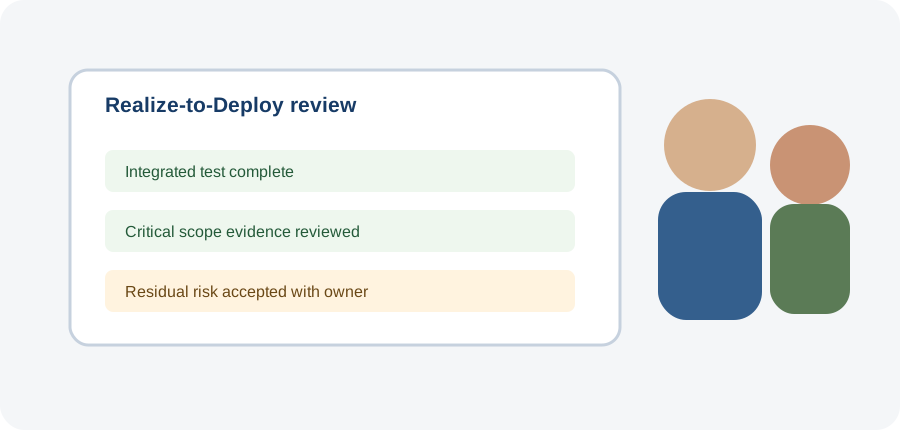
What evidence should support acceptance
Typical evidence includes traceability from approved scope or backlog to the delivered solution, completion of required unit and integration testing, user acceptance evidence where applicable, resolved or consciously accepted open issues, updated solution documentation, and readiness of dependent activities such as data, security, operations and training.
The objective is not to prove perfection. It is to show that the agreed release criteria have been satisfied and that remaining risk is visible and controlled.
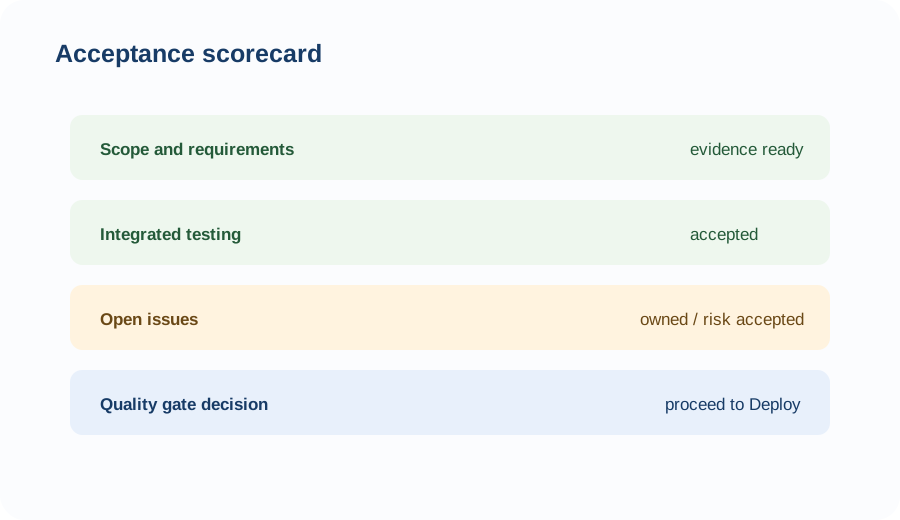
Quality gates provide the governance structure
SAP learning content describes quality gates as checkpoints where key deliverables, criteria and project readiness are reviewed before progressing to the next phase. Stakeholders use the gate to evaluate whether required deliverables have been completed and whether outstanding risks are acceptable.
For a Realize-to-Deploy transition, the project should connect acceptance to the actual release scope and test evidence. A green status that cannot be traced to evidence is weaker than a documented exception with an explicit owner and approved treatment.
Do not confuse phase acceptance with final project closure
Accepting build completion means the release is ready to proceed under the agreed governance model. It does not mean no change will ever occur, no issue can emerge in cutover, or no post-go-live support is needed. Deploy still contains production preparation, business readiness, cutover and transition activities.
Consultant thinking: define the exit criteria early
The safest time to decide what complete means is before the final week of Realize. If exit criteria are agreed early, workstreams know what evidence they must produce and stakeholders know what they will be asked to approve. Late, vague acceptance criteria invite arguments and hidden risk.
Continue with How Test Cycles Are Planned, How Test Evidence Is Maintained, How Open Defects Are Evaluated Before Go-Live, How Business Readiness Is Assessed Before Go-Live, and the Consulting & ERP Projects hub.