
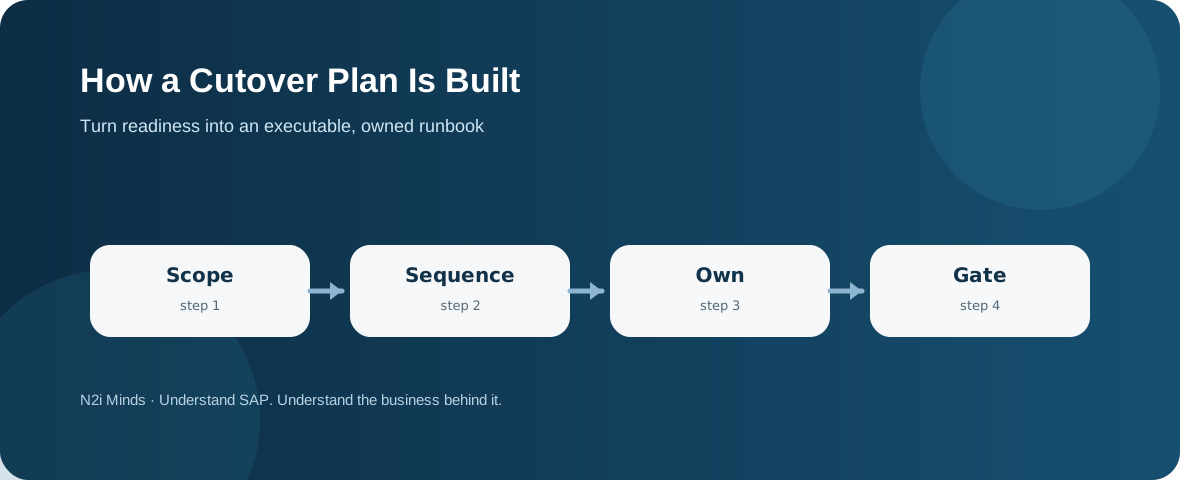
An SAP cutover plan is built by translating go-live scope into a time-ordered runbook. Teams identify critical workstreams and tasks, define predecessors and dependencies, assign accountable owners, estimate timing, specify completion evidence, place freeze and migration windows, add reconciliation and business-validation checkpoints, and define the conditions for go/no-go and contingency decisions.
Start with cutover scope and workstreams
The plan begins by defining what must change during the transition and what can remain outside the cutover window. Typical workstreams can include final data migration, technical activation, integrations, finance and operational reconciliation, user access, business communications and support readiness. The exact workstreams depend on the implementation and transition method rather than a universal template.
Decompose the transition into executable tasks
Each workstream is broken into specific activities that someone can complete and verify. A useful task states the action, owner, planned start and finish, dependency, expected evidence and escalation path. This is more operational than a milestone list: the cutover team needs enough detail to run the transition without inventing the sequence during go-live.
Build the dependency chain before optimizing the clock
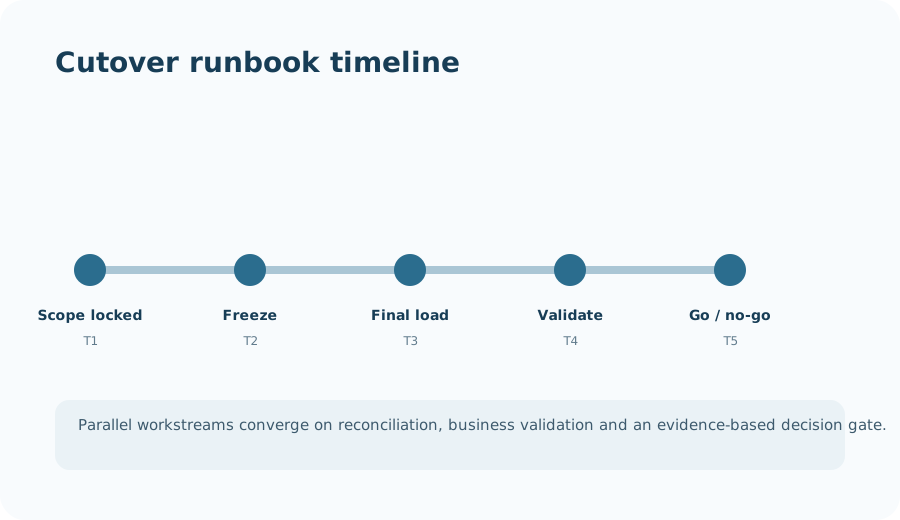
Cutover tasks form a network. A source-system freeze may enable a final extract; the extract enables transformation and load; the load enables reconciliation; reconciliation enables business validation; validation may feed the go/no-go decision. Sequencing these dependencies first prevents a schedule that looks compressed but is logically impossible.
Define freeze points and data controls
Final migration commonly needs a stable source baseline. The plan therefore identifies when selected business or legacy changes stop, what exceptions are allowed, who approves them and how late transactions are handled. SAP cutover guidance emphasizes final data-load preparation and reconciliation because transition speed is only useful when the resulting production data can be trusted.
Add reconciliation and business validation as explicit tasks
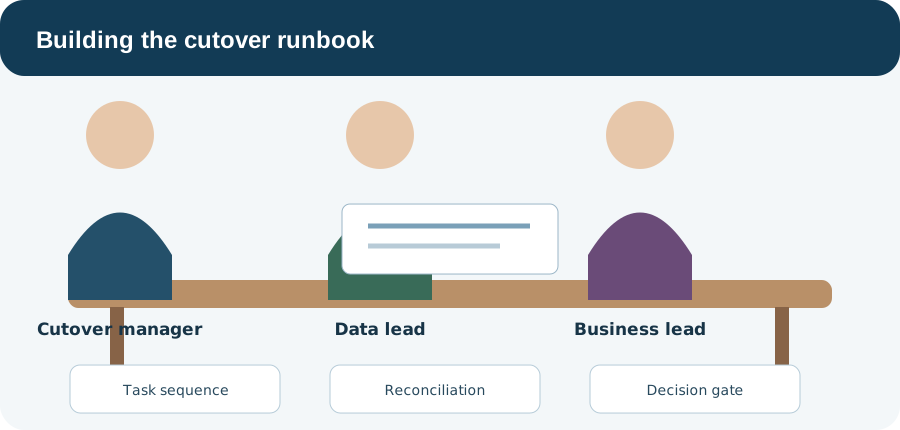
A successful technical load is not enough. The plan should include the reports, totals or business checks that demonstrate completeness and correctness. Reconciliation owners need to know what evidence is required, which tolerances are acceptable and what happens if a result does not match before the next gate.
Plan people, communications and decision coverage
SAP guidance also treats business and people readiness as part of cutover preparation. Critical tasks need named owners and backups, and the team needs a command structure for escalations. Business users should know freeze rules, expected downtime or operating changes, validation responsibilities and where early production issues will be routed.
Rehearse the plan before the final window
Dry runs and migration rehearsals test whether durations, dependencies, access and reconciliation steps are realistic. The plan should be updated with measured timings and lessons from those rehearsals. Tasks that repeatedly overrun or depend on manual hand-offs need explicit mitigation rather than optimistic final-window estimates.
Define go/no-go and contingency logic
The plan should state what evidence leadership needs to decide whether to proceed, pause or invoke a fallback. Critical defects, unreconciled balances, failed integrations or missing business readiness may have different severity thresholds. The purpose is to make the decision criteria visible before pressure peaks, not invent them during the final hour.
Connect cutover completion to hypercare
The last tasks hand ownership into productive operations: monitoring, support coverage, issue triage, business communications and early-life validation. A cutover plan is complete when the organization can operate and support the new environment, not merely when the technical switch has occurred.
Consultant thinking: build the runbook around evidence and dependencies
A long task list is not yet a cutover plan. The practical test is whether every critical task has a clear predecessor, owner, time window, completion signal and escalation path, and whether decision makers can see which unfinished items genuinely block the next gate.
Continue with What SAP Cutover Means, How Business Readiness Is Assessed Before Go-Live, How Open Defects Are Evaluated Before Go-Live, and the Consulting & ERP Projects hub.