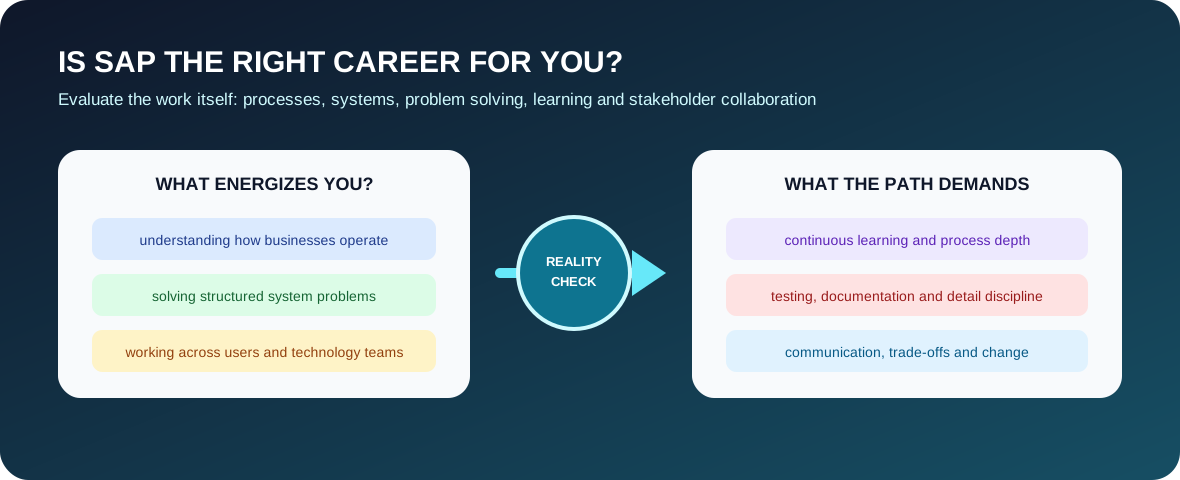
SAP may suit you if you are interested in how business processes, data, controls and technology fit together; you can tolerate detail and continuous learning; and you enjoy solving problems with different stakeholders. Evaluate the actual work of functional, technical, data, security, testing and project roles before committing. Do not choose SAP only because someone promises a particular salary, certification outcome or guaranteed job.
Start with the work, not the brand
SAP careers cover many different kinds of work. A functional consultant may spend time understanding business processes, configuring solutions, testing, documenting and speaking with users. A developer may build extensions or services. Security, data, integration, analytics, Basis and project roles have different daily demands.
That means “Do I like SAP?” is too broad a question. A better question is, “Which kind of enterprise problem do I want to solve?” Our guide to what an SAP consultant actually does is useful because it separates project work from the idea that SAP is simply a set of transactions to memorize.
Five signals that SAP may fit you
- You like business processes: you are curious about why procurement, finance, sales, manufacturing or HR processes work the way they do.
- You enjoy structured problem solving: you can investigate an issue, separate symptoms from causes and verify a solution.
- You can work with detail: enterprise systems depend on master data, configuration, controls, integration and exceptions.
- You can communicate across roles: much SAP work requires translating between business users and technical teams.
- You accept continuous learning: products, cloud services, business requirements and project methods evolve.
Signals that should make you investigate further
If your main reason is a promised salary, a short course, or the belief that one certification guarantees employment, gather more evidence before spending heavily. SAP certification can help in some situations, but a credential does not replace process understanding, practical capability or credible interview evidence.
Likewise, if you strongly dislike business ambiguity, stakeholder communication, documentation or sustained learning, some SAP roles may feel frustrating. A technical role may reduce certain business-facing tasks but still requires enterprise context, collaboration and disciplined delivery.
Run a small evidence-based experiment
Before making a major commitment, learn one end-to-end business process at a high level and study how SAP supports it. Try to explain the actors, master data, documents, approvals, exceptions and downstream effects. If legitimate system practice is available to you, perform a small set of guided tasks and then explain what happened in business terms.
Compare a functional and a technical path using functional consultant vs technical consultant. If one direction consistently feels more natural, explore it more deeply rather than collecting unrelated modules.
Consider your existing background without becoming trapped by it
Domain experience can change your SAP starting point. Existing finance, procurement, manufacturing, sales or technology experience can make some concepts easier and give you stronger examples. But you are not permanently restricted to the module closest to your current job.
Ask practical questions about the entry path
- What entry-level roles actually exist in the market you can access?
- What evidence do those roles expect beyond course completion?
- Can you build legitimate hands-on or project-style practice without inventing experience?
- Do you have enough time and financial capacity for the learning path?
- Are you comfortable beginning with support, testing, analyst or junior delivery work rather than an idealized consultant title?
Reviewing what entry-level SAP roles look like can help make this assessment more realistic.
Consultant thinking: decide with reversible steps
You do not need to make the entire career decision on day one. Start with low-risk evidence: learn the business-process foundation, sample representative work, speak to credible practitioners, review real job descriptions and assess your progress. Increase your commitment only as the evidence improves.
Key takeaway
SAP is the right career only if the work, learning demands and realistic entry path fit you. Evaluate your interest in enterprise processes, problem solving, detail and communication; sample the work; then choose a role direction based on evidence rather than hype.