
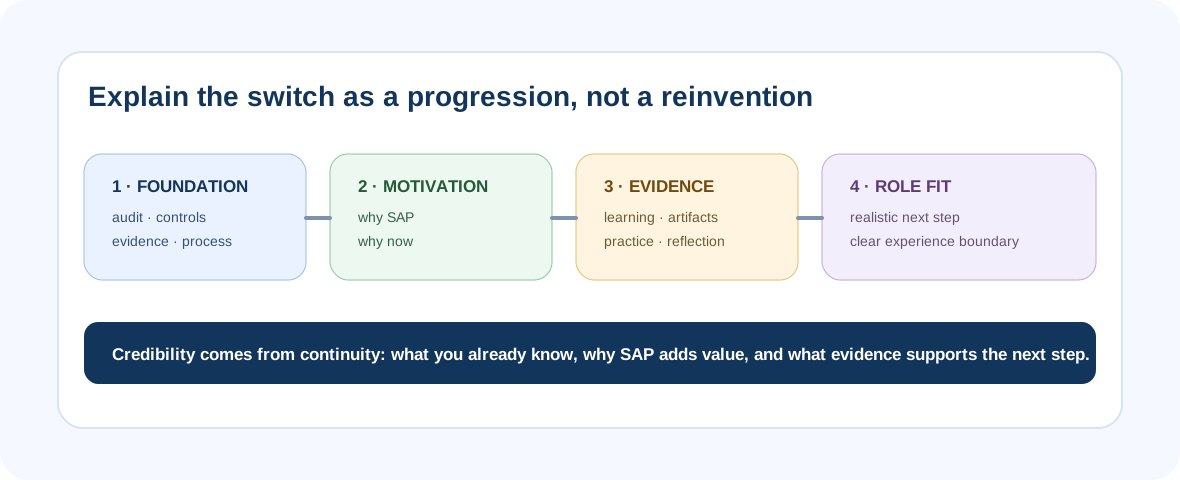
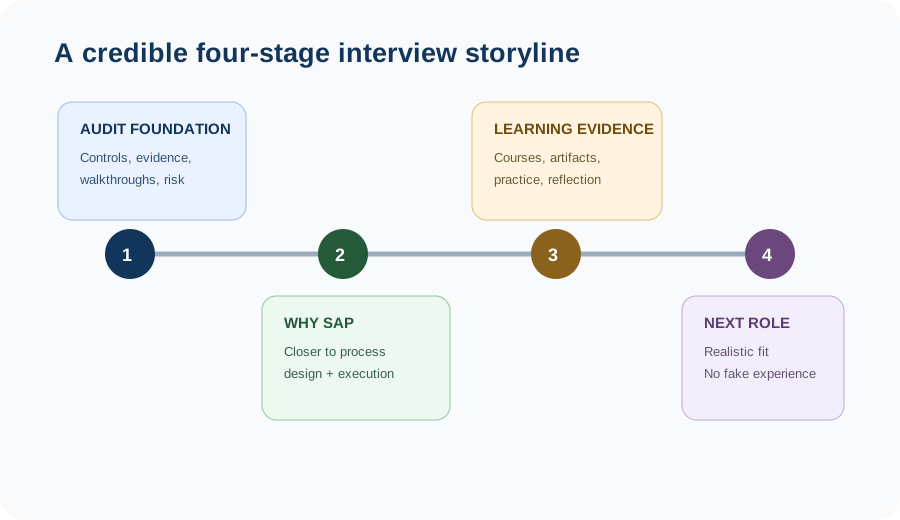
Explain the switch in four parts: your genuine audit foundation, the reason you want to work closer to business processes and SAP-enabled operations, the concrete learning evidence you have built, and the realistic role or workstream you are targeting next. Keep a clear line between transferable audit experience and SAP implementation experience you have not yet had.
Start with continuity, not rejection
A weak answer sounds like you are abandoning audit because you dislike it. A stronger answer explains what audit taught you—process walkthroughs, control thinking, evidence, stakeholder questioning and risk judgement—and why you now want to work closer to how those processes are designed, executed and improved in SAP.
Explain why SAP specifically
Be concrete. SAP projects connect business process decisions, system behavior, data, testing, change and operational readiness. SAP Activate learning also shows that implementation work is organized through phases, workstreams, tasks and deliverables. That gives you a credible reason for the transition: you want to apply your process-and-control perspective inside the delivery lifecycle rather than only reviewing outcomes after the fact.
Prove the learning with evidence
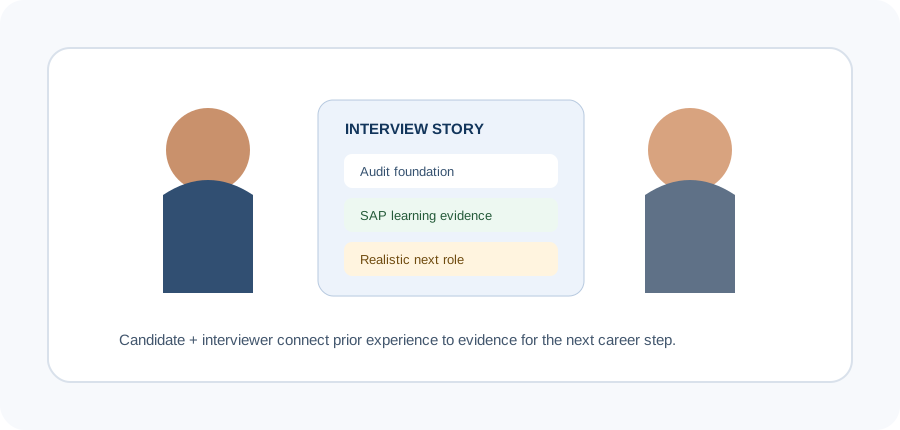
Do not stop at “I am learning SAP.” Point to specific evidence: an end-to-end process map, a control matrix, a practice test case, a finding-to-action example, notes from SAP Learning content, or a portfolio artifact that shows how you approached a business scenario. State clearly whether the work is self-study, practice or project experience.
State the experience boundary before the interviewer has to find it
You can say that your audit experience gives you a useful foundation while SAP configuration, project delivery and product-specific depth are areas you are still building. This is more credible than implying that reviewing controls around an ERP system is the same as configuring or implementing that system.
Connect the story to a realistic next role
Your final step should answer “what are you trying to do next?” The role might be process-focused finance work, controls and assurance, testing, governance, or another path supported by your background and current learning. Avoid promising a job title you cannot yet support with evidence. The goal is to show direction, not certainty.
Use examples instead of slogans
Replace “I am passionate about SAP” with a short example of what you learned or built. Replace “my audit skills are transferable” with one concrete transfer: how a process walkthrough helped you map business steps, how evidence discipline improved a test artifact, or how risk thinking shaped a control analysis. Evidence makes the answer memorable.
Consultant thinking: be precise about the next learning curve
A credible candidate knows both the value they bring and the gaps they still need to close. That combination is useful in project environments because it supports better escalation, collaboration and learning. Your interview story should therefore show confidence in your foundation and precision about what comes next.
Continue with Best-Fit SAP Paths, Which Existing Skills Transfer, Skills Gaps to Close, How to Build a Transition Portfolio, and the Careers & Career Switching hub.