
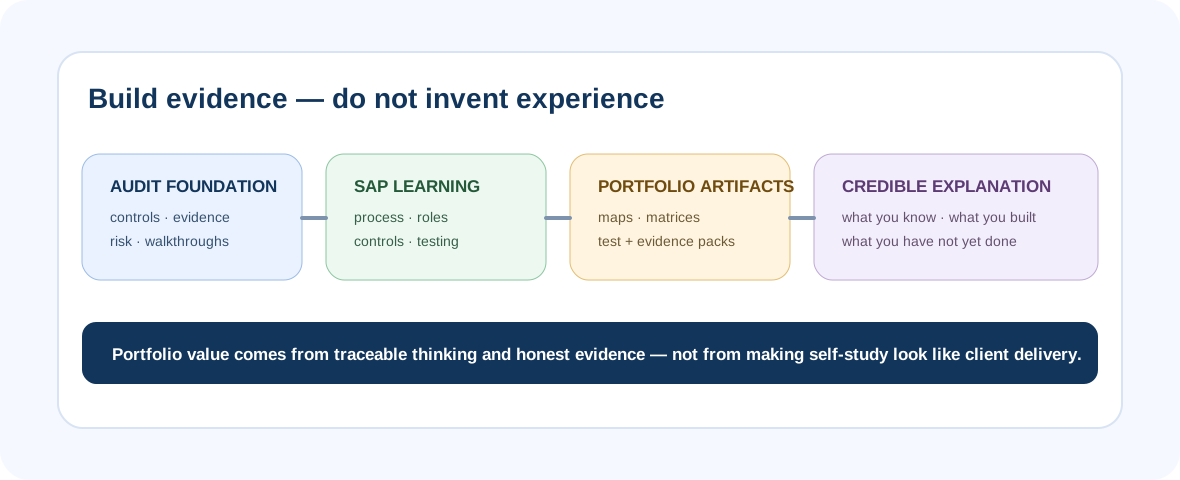
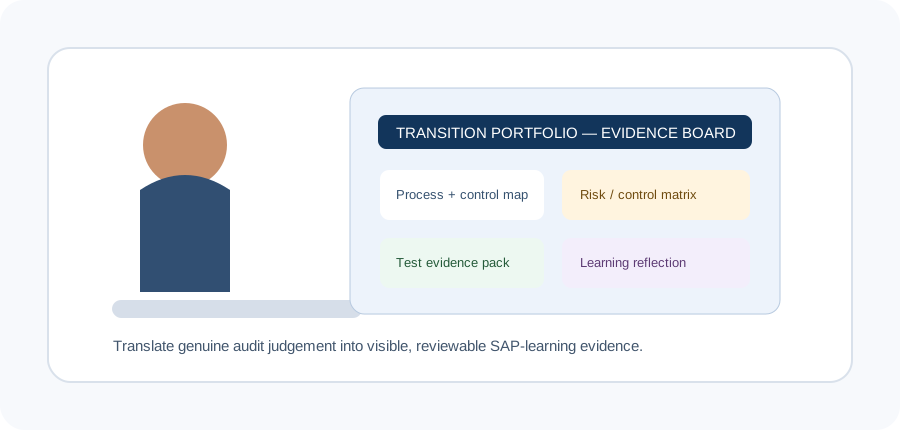
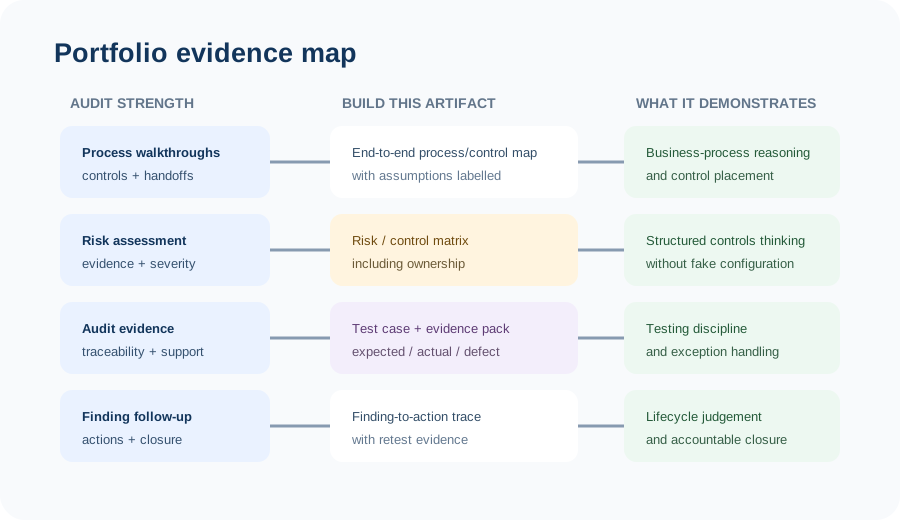
An auditor moving into SAP can build a useful transition portfolio by turning transferable strengths such as process walkthroughs, control analysis, evidence discipline, risk assessment and finding follow-up into SAP-oriented learning artifacts. Useful examples are a process-and-control map, a risk/control matrix, a test case with evidence and exception handling, and a finding-to-action trace. Label every artifact honestly as self-study, practice or demonstration work.
Start with evidence you genuinely own
Audit experience does not automatically equal SAP implementation experience. Its value is the disciplined thinking it brings: structured questions, evidence tracing, control analysis and risk judgement. A transition portfolio should preserve that credibility while showing how those skills transfer into SAP-related reasoning.
Map a business process and its controls
Choose a familiar process such as procure-to-pay, order-to-cash or financial close. Show business steps, handoffs, key data, risks and control points, then identify where SAP concepts such as master data, approvals, postings or system evidence appear. Keep assumptions visible and do not claim configuration you have not performed.
Build a risk and control matrix with ownership
SAP Process Control learning illustrates risk-based scoping and control risk assessment. Use that concept to create a small example that distinguishes business risk, control objective, control owner, evidence and the consequence of control failure. The artifact should show the logic behind the control rather than merely listing control names.
Show testing and evidence discipline
Create a concise test case for a control-relevant scenario. State the precondition, test steps, expected result, actual result, evidence and the next action if the test fails. This shows how audit evidence discipline can be expressed in a project-testing format.
Demonstrate finding-to-action thinking
SAP Audit Management learning shows findings and action plans continuing into follow-up, where management action is evaluated for adequacy and timeliness. A portfolio example can show a finding, responsible owner, agreed action, target date, evidence and closure criteria.
Make provenance obvious
Use labels such as self-study scenario, practice artifact or demonstration based on public SAP learning content. Do not use confidential client evidence, fake screenshots or language that implies implementation responsibility you did not have. Be ready to explain what you learned, what you built and what you still need to experience in a real project.
Consultant thinking: show judgement, not volume
A small set of artifacts that reveal decisions, assumptions and control logic is stronger than a folder of generic screenshots. For each item, explain the business problem, the risk, the SAP concept studied, the evidence created and the experience boundary.
Continue with Auditor Moving Into SAP: Best-Fit SAP Paths, Which Existing Skills Transfer, Skills Gaps to Close, How Test Evidence Is Maintained, and the Careers & Career Switching hub.