
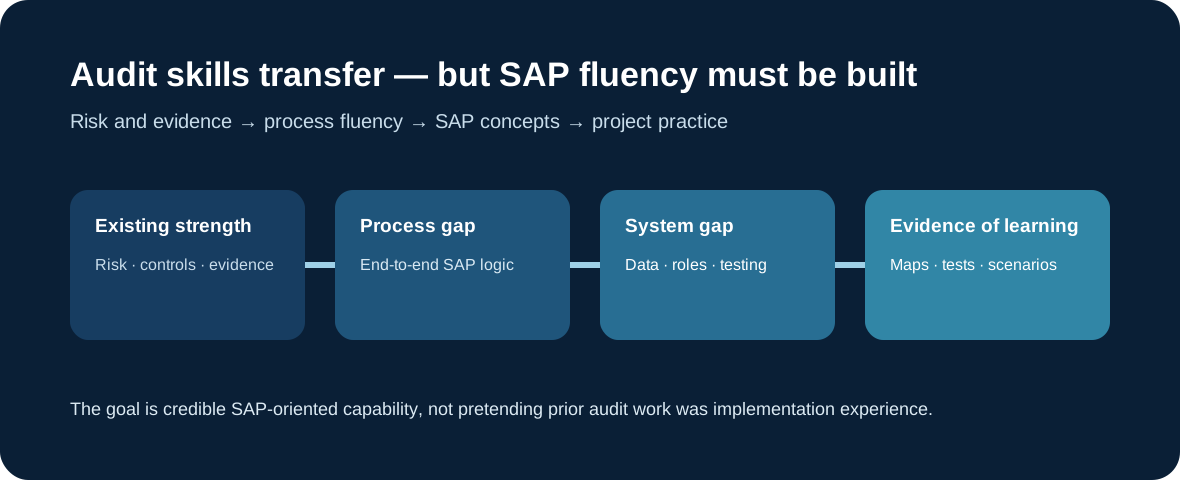
An auditor moving into SAP should keep the strengths that already transfer—control thinking, evidence discipline, process walkthroughs and risk analysis—while deliberately closing the SAP-specific gaps in end-to-end process logic, organizational and master data, system transactions, roles and authorizations, testing, configuration context and project delivery. The goal is to add SAP fluency, not to relabel audit experience as implementation experience.
Gap 1: understanding the end-to-end process behind the control
Auditors often enter through a control objective or exception. SAP work requires understanding the business process around that control: the initiating event, master data, document flow, approvals, postings, handoffs and downstream consequences. A control makes more sense when you can explain the process it protects.
Gap 2: organizational structures and master data
SAP behavior depends heavily on structures such as company codes, plants, purchasing organizations and other organizational units, plus master data such as business partners, materials and G/L accounts. Auditors should learn how these structures shape transactions and reporting rather than treating every control as a standalone rule.
Gap 3: knowing the difference between business control and system configuration
An auditor may know that a control is required without knowing which SAP settings, workflow, master-data rules or authorization objects support it. That distinction matters. Learn enough configuration context to understand where behavior comes from, while being precise about what you have actually configured yourself.
Gap 4: roles, authorizations and access-risk concepts
Audit concepts such as segregation of duties and least privilege transfer well, but SAP-specific role design, access-risk rules, mitigation and review processes need dedicated study. SAP GRC and Access Control content is useful for learning how risks and controls are represented in the system rather than only in audit documentation.
Gap 5: testing and project delivery
Evidence discipline helps, but ERP projects add requirements, prepared test cases, expected results, defects, retesting, data migration, cutover and release-readiness decisions. Learn how evidence is produced inside a project lifecycle, not only how it is inspected after the fact.
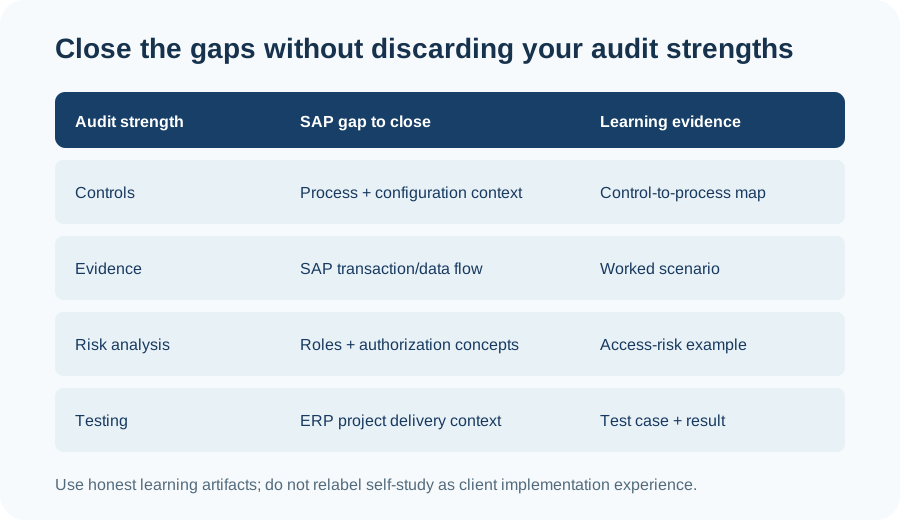
Build evidence that is honest and specific
Create process maps, control-to-process analyses, access-risk examples, test cases and worked SAP scenarios that demonstrate learning. Label self-study, sandbox work and portfolio exercises accurately. That makes the transition more credible than claiming client configuration or implementation experience that has not happened.
Consultant thinking: turn the gap list into a learning sequence
Choose the SAP path that fits your audit background, then learn one end-to-end process deeply enough to connect transactions, data, controls and evidence. Add project and testing context next. The objective is not to know every SAP module; it is to become useful in a defined problem space while continuing to expand depth.
Continue with Auditor Moving Into SAP: Best-Fit SAP Paths, Auditor Moving Into SAP: Which Existing Skills Transfer, How Test Evidence Is Maintained, and the Careers & Career Switching hub.