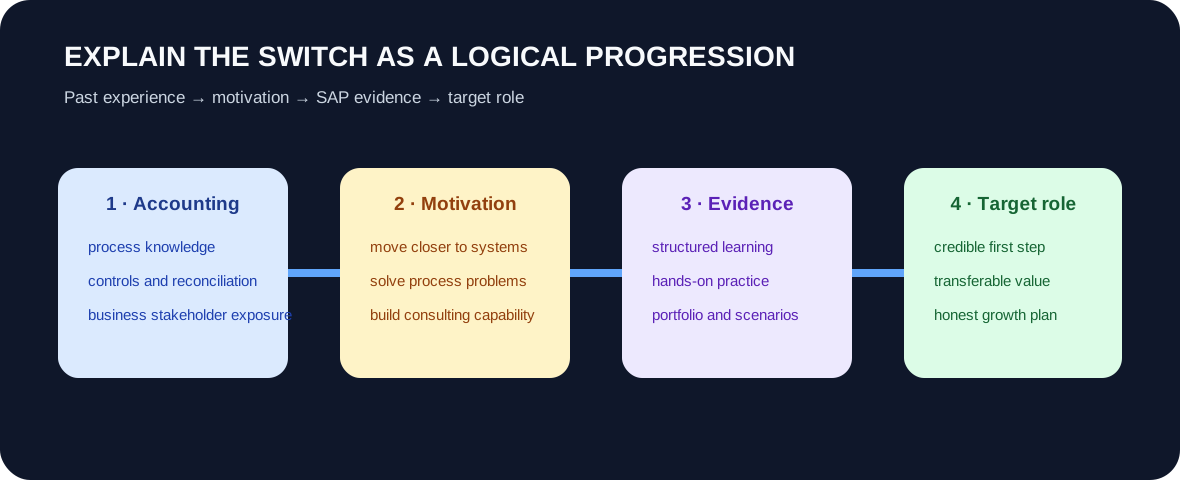
Explain the switch as a progression from accounting execution toward process-and-system problem solving. Show which finance experiences transfer, why SAP is the next environment you want to work in, what SAP-specific gaps you have started closing, and what concrete learning evidence supports your claim.
Use a four-part story
A simple structure works well: foundation—what accounting taught you; trigger—what made ERP or SAP interesting; action—how you built SAP capability; and target—the role where the combination is useful.
Lead with transferable evidence
Useful examples include journal logic, reconciliations, close controls, payables and receivables, stakeholder coordination and exception handling. Business-process understanding helps with configuration and testing reasoning, but it does not equal implementation experience.
Avoid weak explanations
Avoid claiming expertise after only short training, criticizing your accounting career, focusing only on salary, or describing copied exercises as project work.
Review best-fit SAP paths, skills gaps to close, how to build a transition portfolio, and the Careers hub.