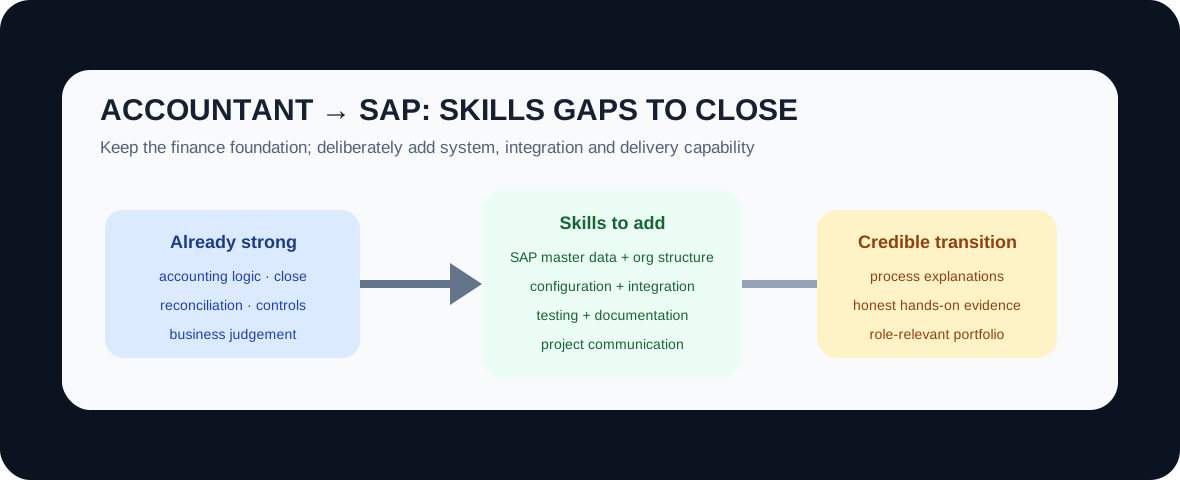
Accounting experience gives strong domain context, but an SAP career switch still requires system, integration, testing, project and hands-on capability.
Why this distinction matters
Accounting foundation and SAP capability solve different parts of the business problem. Teams get better results when they define the purpose, ownership and evidence required before configuring or testing the system.
What teams should define
Start with the business event and the decision it supports. Identify who owns the data or result, which organizational scope applies, what controls are mandatory and what evidence proves correctness. Then map those requirements to the SAP or ERP structure.
Common failure modes
Problems usually appear when teams treat the object as isolated configuration: ownership is unclear, organizational scope is misunderstood, source data is inconsistent, exceptions are not tested, or users cannot explain why the result is correct. Good design and validation therefore trace the result back to its business source.
Practical consultant thinking
Ask how the object or result behaves across realistic organizational boundaries and exceptions. Test the normal case, a changed condition and a failure case. Document the expected business consequence rather than only the technical step.
Useful related reading includes transferable accounting skills and best-fit SAP paths.
Key takeaway
Accounting experience gives strong domain context, but an SAP career switch still requires system, integration, testing, project and hands-on capability. Strong implementation work connects that concept to ownership, controls, integrated process consequences and verifiable evidence.