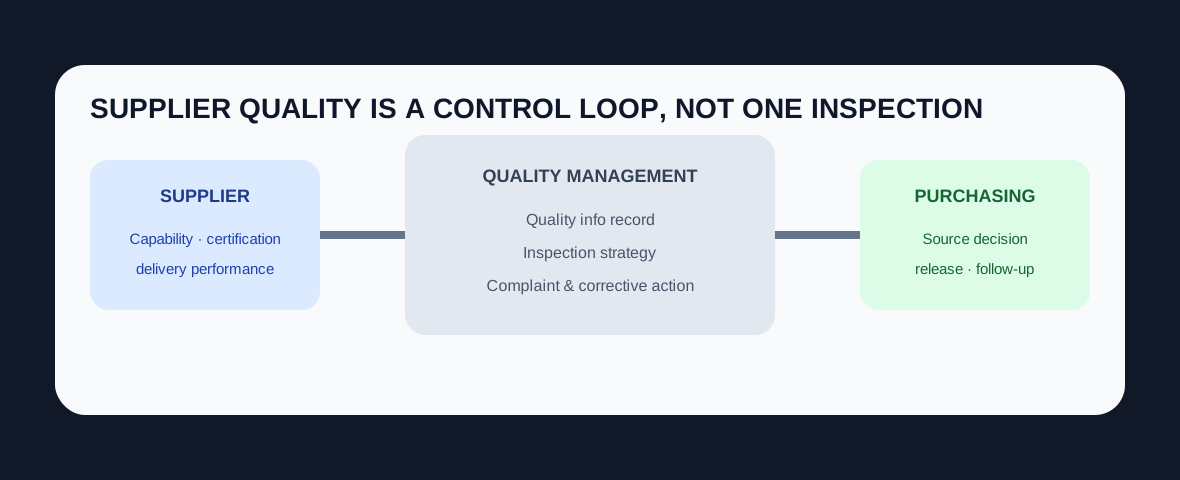
Vendor quality management in SAP QM is the set of controls used to govern supplier-material quality before, during and after procurement. Depending on the process, this can include quality info records, supplier QM-system information, source or goods-receipt inspections, quality notifications for complaints against vendors, and follow-up actions that influence how the supplier is managed.
Why supplier quality needs more than inspection
Inspection tells you whether a particular delivery meets requirements. Vendor quality management asks a broader question: what controls should apply to this supplier-material relationship based on capability, history, risk and contractual expectations?
SAP Help documents supplier QM-system information and inspection-skip scenarios for certified suppliers. That illustrates an important principle: inspection intensity can depend on governed supplier information rather than being identical for every receipt.
Key control points
Quality info records can govern quality-related procurement behavior for a supplier-material relationship. Inspection controls determine where and when quality checks happen. Quality notifications give the organization a structured way to record a complaint against a vendor, capture defect causes, assign tasks and monitor follow-up.
These elements belong together. A repeated defect should not disappear after the immediate lot is dispositioned; it may need supplier corrective action and a change in future control strategy.
Example: recurring incoming defects
Suppose a supplier repeatedly delivers a dimensionally nonconforming component. The immediate receipt may be blocked through goods receipt inspection. The broader response may involve a complaint against the vendor, corrective-action tasks and review of the supplier-material quality controls. If performance later stabilizes under an approved quality system, inspection strategy may be revisited according to policy.
Relationship with other SAP QM topics
Quality in procurement explains how QM is embedded in purchasing. Quality notifications provide the structured follow-up record when a supplier problem needs formal ownership. Inspection results and usage decisions remain important evidence, but they are only one part of the supplier-quality lifecycle.
Controls that matter
- Supplier-material specificity: avoid assuming one supplier rating fits every material and risk profile.
- Clear escalation: define when an inspection failure becomes a formal supplier complaint.
- Task ownership: corrective actions need named owners and closure evidence.
- Evidence-based inspection strategy: tighten or relax inspection only through governed criteria.
- Procurement linkage: quality outcomes should influence sourcing decisions where policy requires it.
Consultant thinking: connect quality evidence to business consequences
The technical setup matters, but the design question is operational: what should happen when supplier performance is good, borderline or unacceptable? Build the SAP controls around those business decisions so the process does not end with a recorded defect that nobody acts on.
Key takeaway
Vendor quality management turns supplier quality from a one-time inspection activity into a controlled relationship. SAP QM can connect supplier information, inspection strategy, complaints and corrective action so future procurement decisions reflect actual quality evidence.