
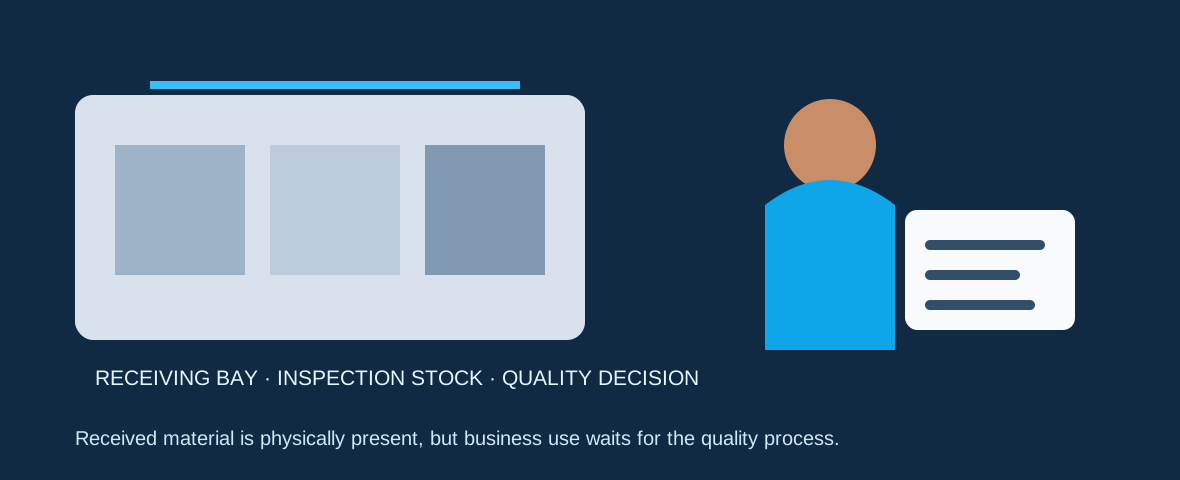
In SAP S/4HANA Quality Management, a goods receipt for a quality-managed material can automatically create an inspection lot. Depending on the material's inspection settings, the received quantity may be posted to inspection stock so it cannot be consumed like unrestricted stock while the quality team records results, defects and a usage decision.
Where the process begins
The business event is not “quality starts an inspection” in isolation. Procurement places the purchase order, the supplier delivers, and the warehouse posts the goods receipt. When the relevant goods-receipt inspection type is active, SAP can create the inspection lot as part of that event. This is why goods receipt inspection sits at the intersection of quality in procurement, inventory movement and inspection processing.
Inspection lot and inspection stock are not the same thing
SAP Learning explicitly distinguishes inspection-lot creation from posting to inspection stock. The inspection lot is the quality object that carries the inspection context. Inspection stock is an inventory status that prevents ordinary downstream use while quality work is pending. A design can create an inspection lot without necessarily forcing the stock into inspection stock, so consultants should treat the two controls separately.
What happens after the lot is created
The system can determine an inspection specification such as an inspection plan, calculate the sample size, and provide characteristics for results recording. Inspectors may record characteristic results and defects. The quality engineer then makes a usage decision that closes the inspection and can trigger the appropriate stock posting, such as release to unrestricted use or movement to blocked stock.
Prerequisites that matter
SAP Help identifies several dependencies: QM must be active for the goods movement, the relevant inspection type must be active in the material's inspection settings, and supplier-related quality controls can influence whether receipt is allowed. If a specification cannot be determined automatically, the lot may require manual assignment before results can be recorded.
Practical example
A plant buys steel coils from a supplier. The warehouse posts receipt against the purchase order. The material is configured for goods receipt inspection, so an inspection lot is created and the quantity enters inspection stock. Quality technicians measure thickness and surface condition; the quality engineer records the usage decision. Accepted coils move to unrestricted stock, while rejected stock is blocked for further action.
Common mistake
Do not assume “inspection lot created” automatically means “stock unavailable.” Check the Post to Inspection Stock behavior and the process risk. SAP Learning warns that material moved directly to unrestricted stock can be consumed before the inspection is completed.