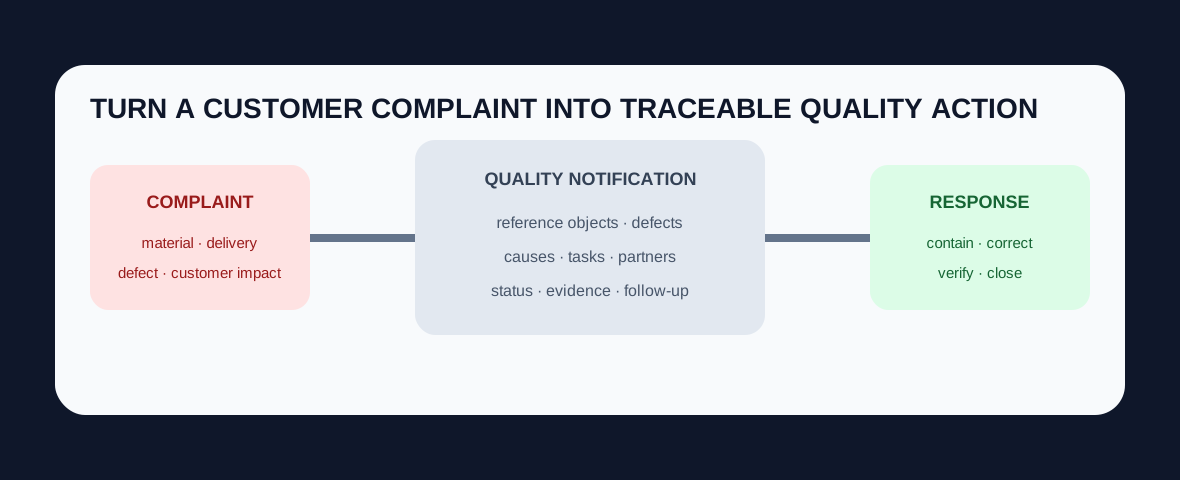
In SAP QM, a customer complaint can be recorded as a quality notification. The notification can identify the affected material, delivery or other reference object, record defect items and causes, assign partners and tasks, monitor follow-up, and support controlled completion.
Why the notification matters
A complaint may begin as a phone call, service message or returned product. Without a structured record, teams can lose the link between what the customer experienced and what Quality, Sales, Logistics or Engineering did next.
SAP Help describes quality notifications as records for quality problems that support structured problem descriptions, reference objects, partners, defects, causes, tasks, activities, status management and follow-up.
From complaint to controlled closure
The first task is to capture the issue accurately: what failed, which material or delivery is affected, and how severe the customer impact is. Defect items and cause analysis then make the problem more specific. Tasks and partner assignments establish ownership for containment, investigation and corrective action.
Relationship with other QM records
Defect recording captures the nonconformance itself. Quality notifications add broader problem ownership, causes, tasks and activities. Where an inspection lot is involved, the usage decision handles lot disposition; it does not replace wider complaint follow-up.
Controls that matter
- Reference accuracy: link the complaint to the correct customer, material, batch, delivery or order where relevant.
- Problem coding: use structured defect and cause information consistently enough to support analysis.
- Ownership: assign tasks to responsible people with due dates and evidence.
- Containment before closure: protect the customer while root-cause work continues.
- Closure discipline: do not complete the notification while required actions remain outstanding.
Consultant thinking: design for learning, not just recording
A complaint system should help the business learn which products, customers, batches or causes recur. That means notification design, catalog coding and task ownership should support trend analysis and corrective action, not merely prove that a complaint number was created.
Key takeaway
Customer complaints become operationally useful when they are traceable from the reported problem through containment, analysis, corrective action and closure. SAP QM quality notifications provide the structure to manage that lifecycle.