
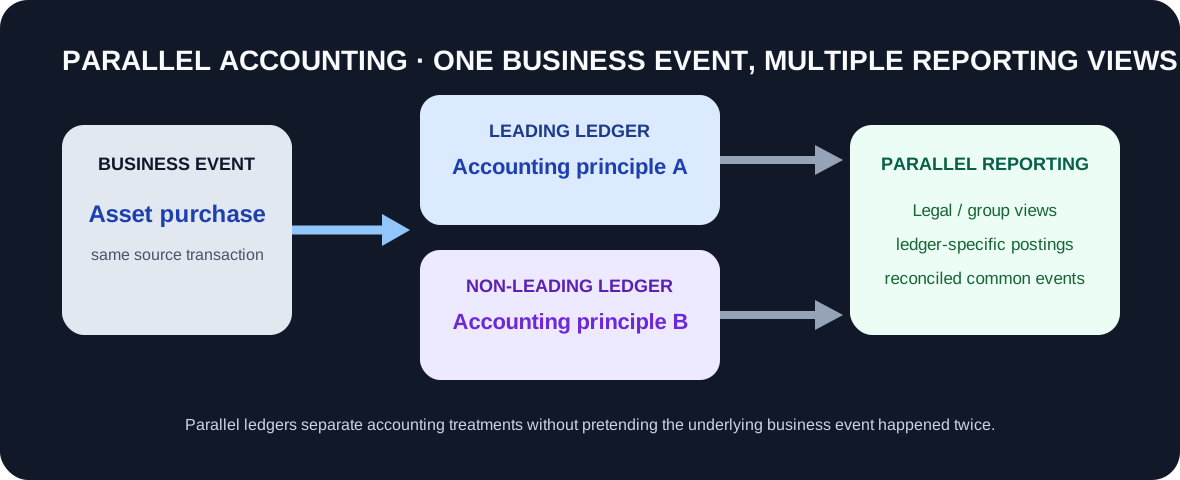
In SAP General Ledger Accounting, parallel accounting can be represented with multiple ledgers assigned to different accounting principles. The leading ledger is the primary ledger and is assigned across company codes; additional non-leading ledgers can represent other accounting principles. A posting can update all relevant ledgers, a ledger group, or only a specific ledger depending on the business and accounting purpose.
Why parallel ledgers exist
The same business transaction can have different accounting treatments under different reporting frameworks. A lease, asset valuation, provision, revenue treatment, or other accounting event may be recognized or measured differently for group reporting and local statutory reporting. If every difference were forced into one accounting view, the company would lose clarity over which principle produced which value.
SAP documents the parallel-ledger approach as a way to portray different accounting principles in General Ledger Accounting. One accounting principle is assigned to the leading ledger, while additional principles can be represented by additional ledgers for the relevant company codes. This allows common postings and principle-specific adjustments to coexist in a controlled structure.
Leading and non-leading ledgers
The leading ledger is mandatory in SAP's ledger model and is the primary ledger for the company. SAP Help describes it as being assigned to all company codes and integrated with Controlling. Additional standard ledgers can be created to represent other accounting principles. Ledger groups can be used to address one or more ledgers together for postings and reporting.
The important business idea is that “leading” does not mean “more correct.” It identifies the primary ledger in the design. A non-leading ledger can still be essential for statutory or group reporting. The accounting policy determines which principle belongs where.
How postings can differ by ledger
Many operational transactions affect multiple ledgers because the underlying business event is common. Where an accounting treatment differs, ledger-specific postings can adjust only the relevant reporting view. That separation lets Finance explain why two principles report different amounts without duplicating the operational transaction itself.
This is especially important at close. A valuation or adjustment should be posted to the ledger or ledger group that reflects the intended accounting principle. Period controls still matter, so the relevant posting periods must permit the entry. Company-code design also matters because ledger assignments are maintained in company-code context; see company code in SAP FI.
Accounting principles and configuration choices
SAP documents two broad approaches for parallel accounting: a ledger approach, where an accounting principle is assigned to a ledger/company-code combination, and an account approach using G/L accounts. Current SAP guidance recommends the ledger approach in many scenarios, but the correct design depends on the product edition, release, legal requirements, and existing architecture.
Currency and fiscal-year settings are also structural decisions. SAP warns that some ledger settings cannot simply be changed after postings exist. That makes early design important: parallel accounting is not merely a reporting toggle added at the end of an implementation.
Controls that matter
- Accounting-policy ownership: Finance must define which principle each ledger represents.
- Ledger assignment: company-code and ledger assignments must match the intended reporting perimeter.
- Posting logic: common versus ledger-specific postings need documented rules and appropriate authorizations.
- Currency and fiscal year: structural ledger settings must support the reporting requirement; related fiscal-year design should be aligned early.
- Close reconciliation: material differences between ledgers should be explainable by policy, not mystery.
- Valuation scope: period-end processes such as foreign currency valuation must run in the correct accounting context.
Consultant thinking: start with the reporting obligation
A weak design starts by asking how many ledgers the system can create. A strong design starts with the reporting obligations: which accounting principles must be supported, which company codes need them, which transactions differ, who owns those differences, and how they will be reconciled. Only then should ledger configuration be finalized.
Parallel ledgers reduce ambiguity when their purpose is explicit. They create confusion when teams cannot explain why a posting appears in one ledger but not another.
Key takeaway
Parallel ledgers are a structural mechanism for parallel accounting. They let one operational reality support multiple accounting-principle views while preserving clear ownership of shared and principle-specific postings.