
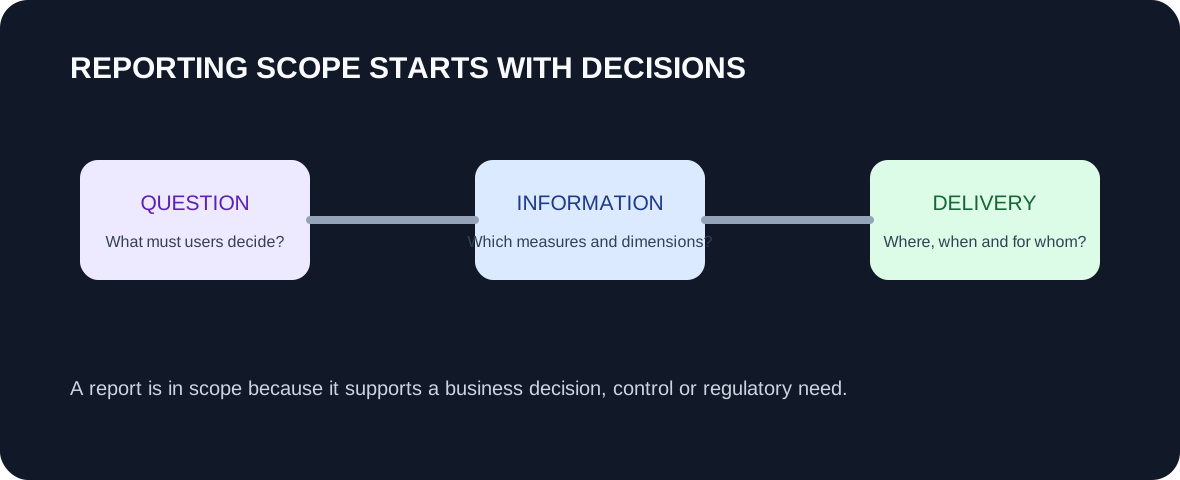
Define reporting scope by identifying the business decisions and controls that need information, then specifying the audience, measures, dimensions, frequency, drill-down, source data, security and acceptance criteria. Separate standard analytics that already satisfy the need from true gaps requiring new design or extension.
Start with the business question
“We need the old sales report” is not a complete requirement. Ask what decision the report supports, who uses it, what action follows, how current the data must be and what would go wrong if it were unavailable. This reframes reporting from a document inventory into a business capability.
SAP Cloud ALM requirements can be categorized by workstreams, including Analytics, which covers design, creation and testing of reporting and analytics. Requirements can also be linked to project scope and tracked through implementation.
Define the information contract
For each in-scope need, clarify the key measures, dimensions, filters, period logic, currency or unit treatment, drill-down, refresh timing and data quality expectations. Also define who can view the information and whether the output is operational, analytical, statutory or management reporting.
Standard first, gap second
Project teams should inspect available standard capabilities before designing a custom report. A gap should exist because the standard output does not satisfy an agreed business requirement, not because a legacy format looks familiar. This is consistent with fit-to-standard thinking and reduces unnecessary custom scope.
Do not forget security and reconciliation
Reporting often exposes financially or commercially sensitive information. Scope must therefore include authorization expectations and, where needed, reconciliation back to trusted operational or financial totals. A visually attractive dashboard is not useful if users do not trust its numbers.
Think like a consultant
Ask whether the requested output changes a decision, proves a control, satisfies a legal requirement or helps run a process. If nobody can explain the action that follows from the report, challenge whether it belongs in the implementation scope.